
Ketamine for TBI: Why not?

Ketamine ICPThe 1970s were a dark time for ketamine use in patients with intracranial pathology. In patients with non-traumatic lesions, ketamine was suggested to increase intracranial pressure (ICP) using various markers as end-points to suggest this (see references below). Although this concern still remains with traditionalists, we have since seen multiple studies debunking this myth.

Now there is finally a meta-analysis supporting the suggestion that ketamine certainly does not seem to increase ICP. A systematic review of RCTs comparing the effects of ketamine vs opioids on 24-hour ICPs found that ketamine produced similar changes to ICP, MAP and CPP when compared to opioids. Surprised? Me neither.

Although this paper has some obvious flaws (small numbers, only 5 trials included, different choice of opioids, trials took place over 17 years, boluses vs infusions not addressed), this is one of the first meta-analysis to look at this surprisingly commonly misunderstood practice.

It is probably time for those Anaesthetics/Emergency Medicine/Pharmacology text books to be rewritten. And it is probably time to stop discussing whether ketamine can be used as an induction agent in TBI.

  1. Wang X, Ding X, Tong Y, Zong J, Zhao X, Ren H, Li Q. Ketamine does not increase intracranial pressure compared with opioids: meta-analysis of randomized controlled trials. J Anesth. 2014 May 24.
  2. Gardner AE, Olson BE, Lichtiger M. Cerebrospinal fluid pressure during dissociative anesthesia with ketamine. Anesthesiology 1971;35:226-8.
  3. Wyte SR, Shapiro HM, Turner P, et al. Ketamine induced intracranial hypertension. Anesthesiology 1972;36:174-6.
  4. Gibbs JM. The effect of intravenous ketamine on cerebrospinal fluid pressure. Br J Anaesth 1972;44:1298-302.
  5. Gardner AE, Dannemiller FJ, Dean D. Intracranial cerebrospinal fluid pressure in man during ketamine anesthesia. Anesth Analg 1972;51:741-5.
  6. Shaprio HM, Wyte SR, Harris AB. Ketamine anesthesia in patients with intracranial pathology. Br J Anaesth 1972;44:1200-4.
  7. List WF, Crumrine RS, Cascorbi HF, et al. Increased cerebrospinal fluid pressure after ketamine. Anesthesiology 1972; 36:98-9.
Posted in General PH&RM, Neurological | Tagged , , | Leave a comment

CGD June 4th – Toxicology

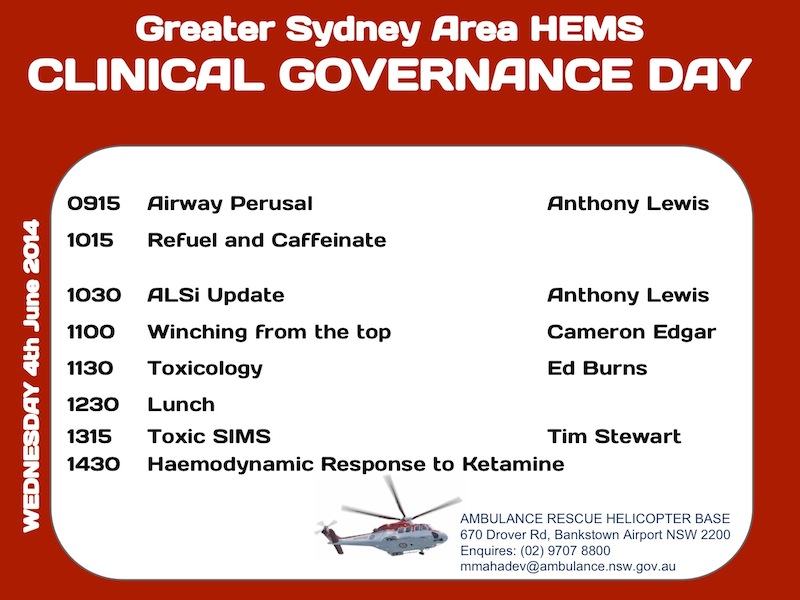
Here is the programme for next week’s CGD.

CGD Flyer (4)

We have a toxicology theme this week, so brush up on your tox knowledge with these poisonous resources:

The Toxicology Conundrum Series from LITFL

A Couple of Interesting Recent Toxinology Abstracts

Posted in General PH&RM | Leave a comment

CGD Highlights 21st May 2014

Ultrasound Workshop – The FALLS Protocol

Massive thanks to our guest speaker Dr Chris Partyka from The Blunt Dissection for delivering an excellent workshop on critical care ultrasound! The content from his workshop, including the FALLS protocol for undifferentiated shock, is available here.

Advanced ECG Workshop – Chest Pain

Below are the images from the ECG workshop on chest pain, along with some learning points discussed on the day. Follow the links for more information on each individual topic. 

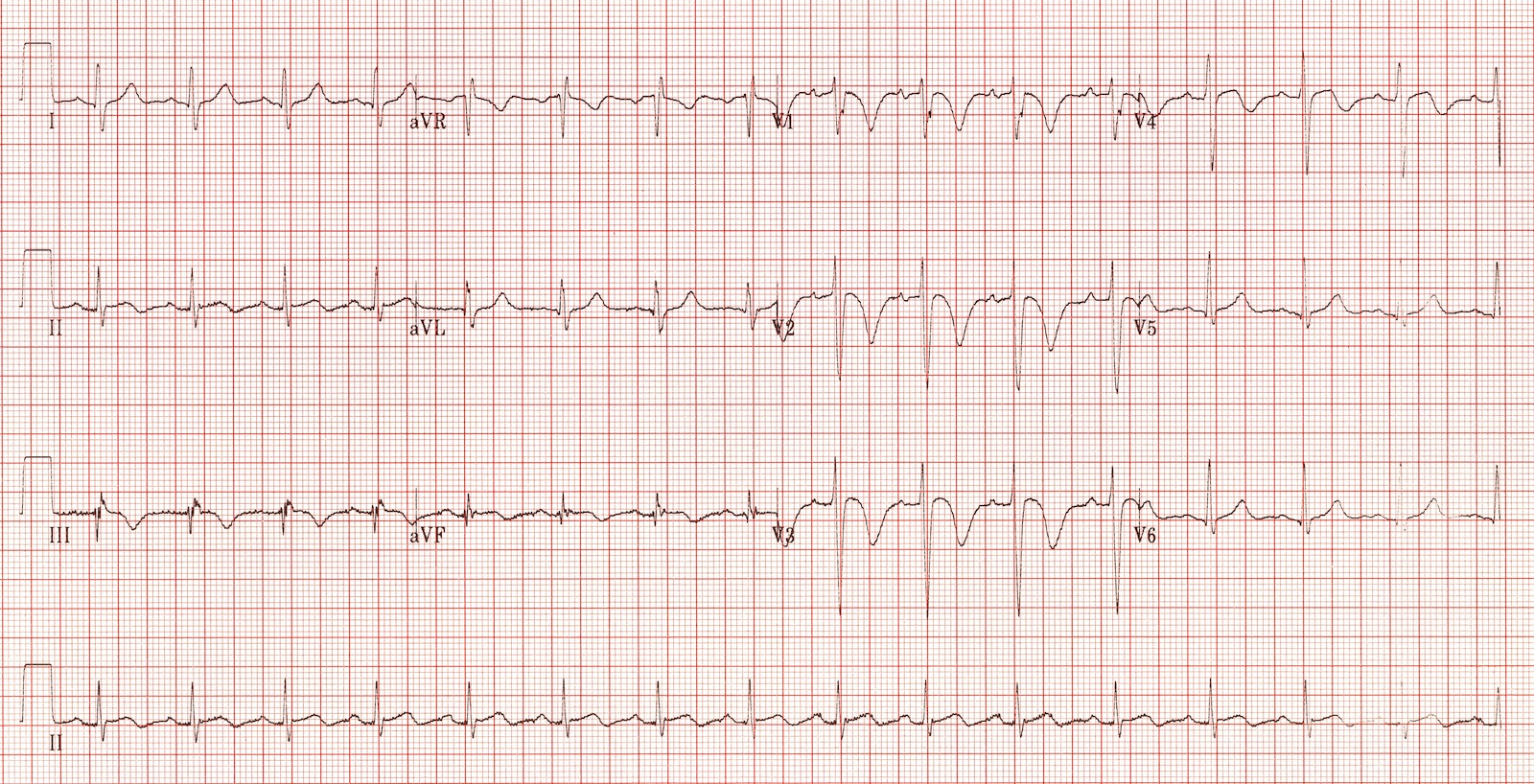
ECG 1ECG 1

  • Peaked T waves + upsloping ST depression in the precordial leads = the De Winter ECG pattern. This is a sign of acute LAD occlusion and should be treated as a STEMI equivalent.
  • Also note the ectopic atrial rhythm — P wave inversion in II, III + aVF.

 Read more about De Winter’s T waves here


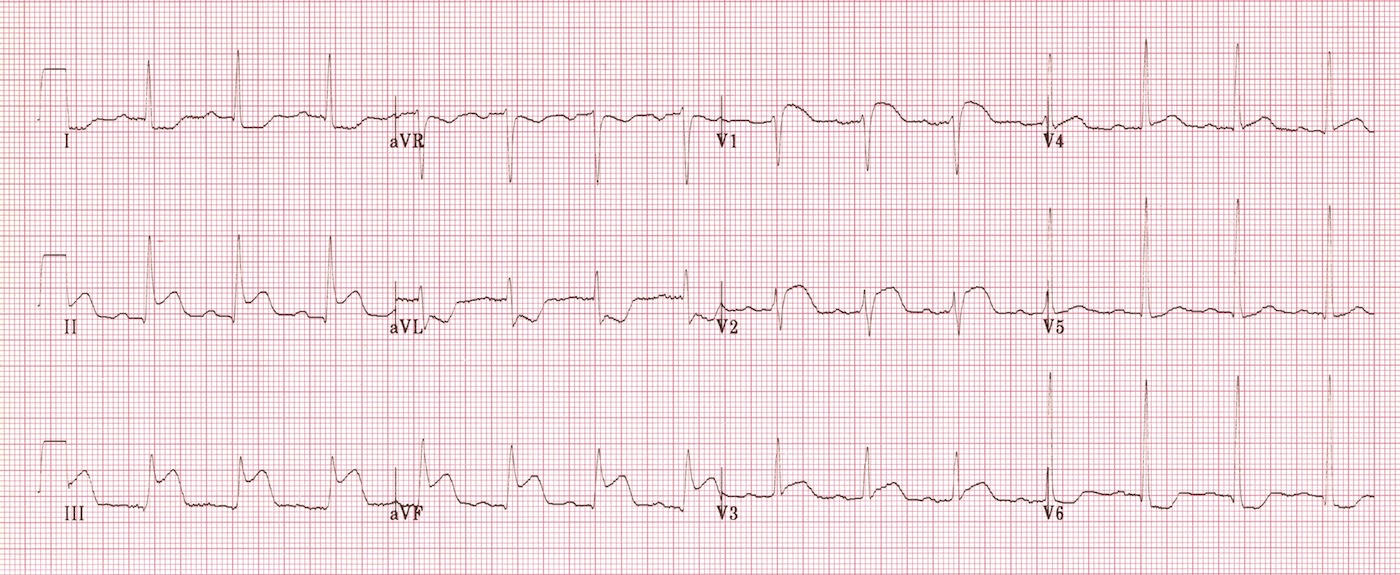
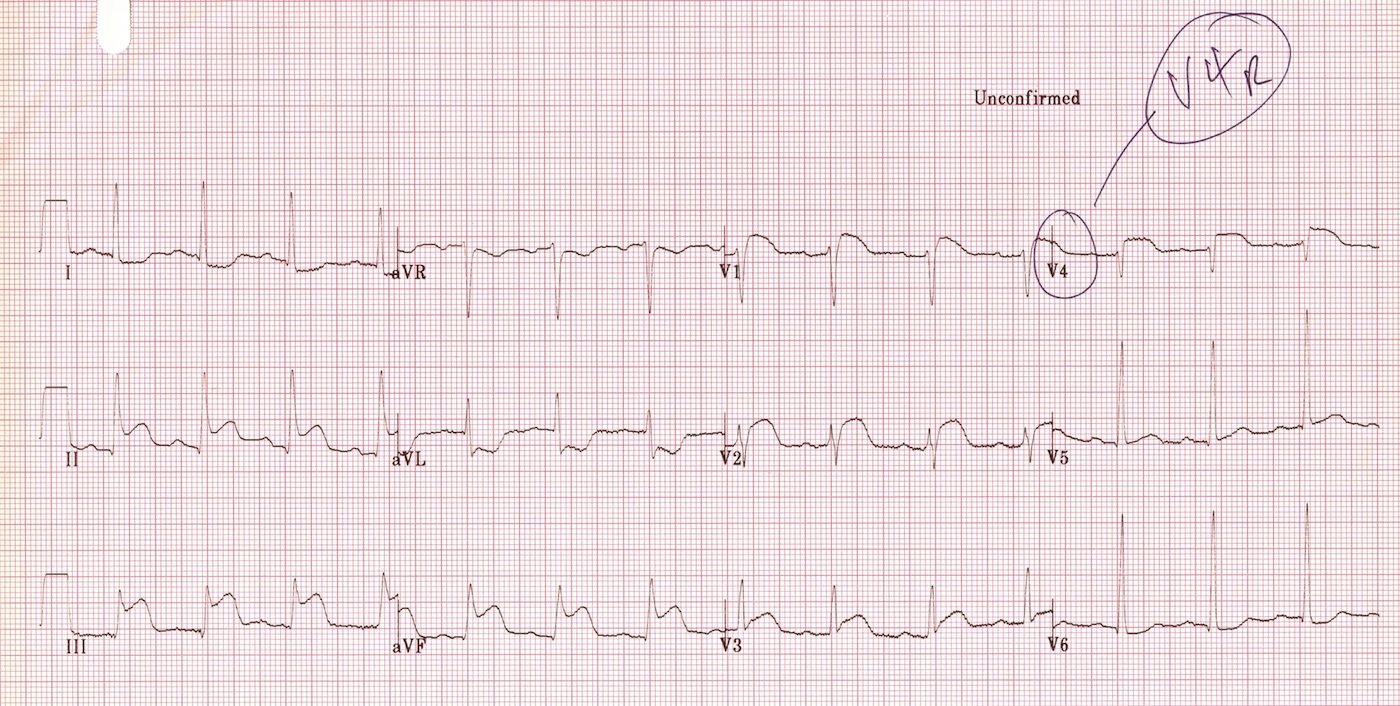
ECG 2 ECG 2a Inferior STEMI with reciprocal change. There are additional signs of right ventricular infarction:

  • STE in III > II
  • STE in V1-2

This rightward vector of the injury current (III > II) suggests an RCA occlusion rather than a LCx occlusion. Repeat ECG with a V4R lead position confirms a right ventricular infarction (STE  in V4R). ECG 2b Read more about right ventricular infarction here.


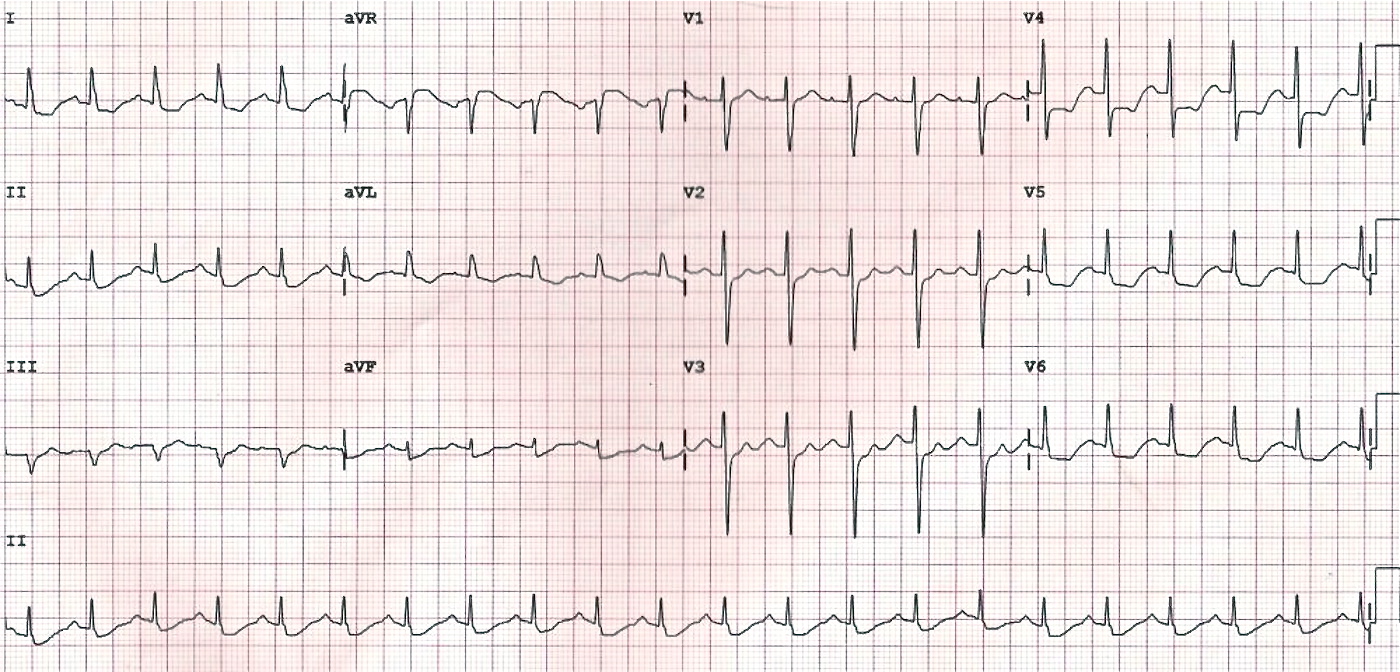
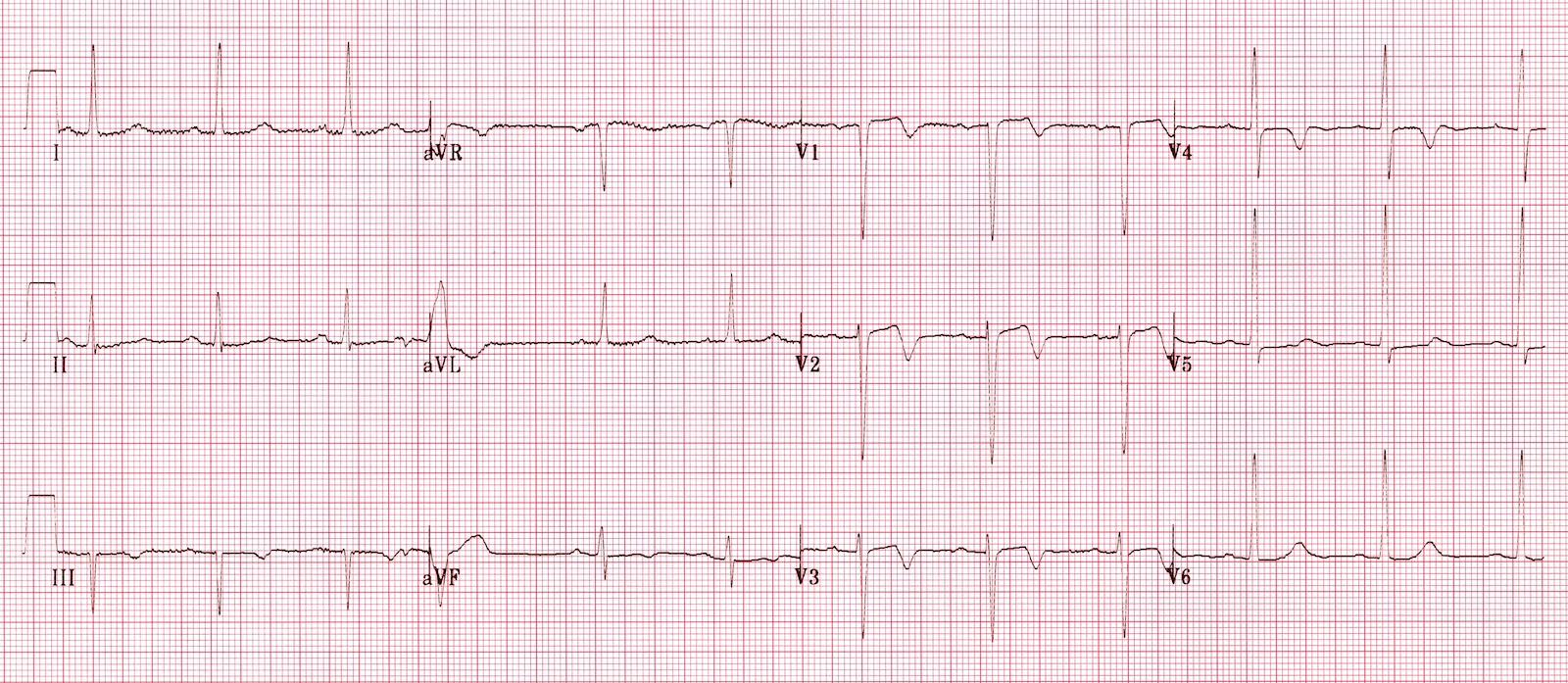
ECG 3 ECG 3 There is evidence of global subendocardial ischaemia, suggestive of LMCA occlusion or severe triple vessel disease:

  • Widespread horizontal ST depression, most prominent in the leftward-facing leads I, II and V4-6
  • STE in aVR > 1mm
  • STE in aVR > V1

Differential diagnoses for widespread ST depression include hypokalaemia and rate-related changes with SVT. Read more about LMCA occlusion here.


ECG 4 ECG 4 This ECG is a classic example of acute pericarditis. Positive findings include:

  • Widespread concave (“saddleback”) ST elevation 
  • Widespread PR segment depression
  • Spodick’s sign — a down-sloping TP segment that gives the baseline a kind of “zig-zag” appearance
  • ST segment / T wave height ratio > 0.25 in V6, which favours a diagnosis of pericarditis over benign early repolarization. 

Read more about pericarditis vs BER here. Amal Mattu gives some great tips on differentiating pericarditis from STEMI here


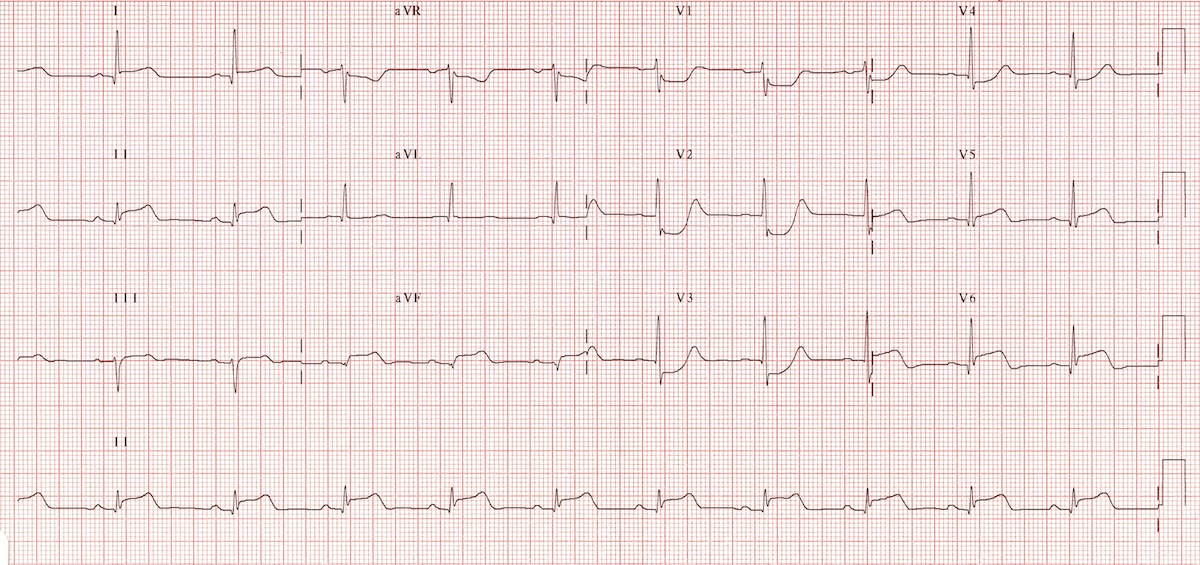
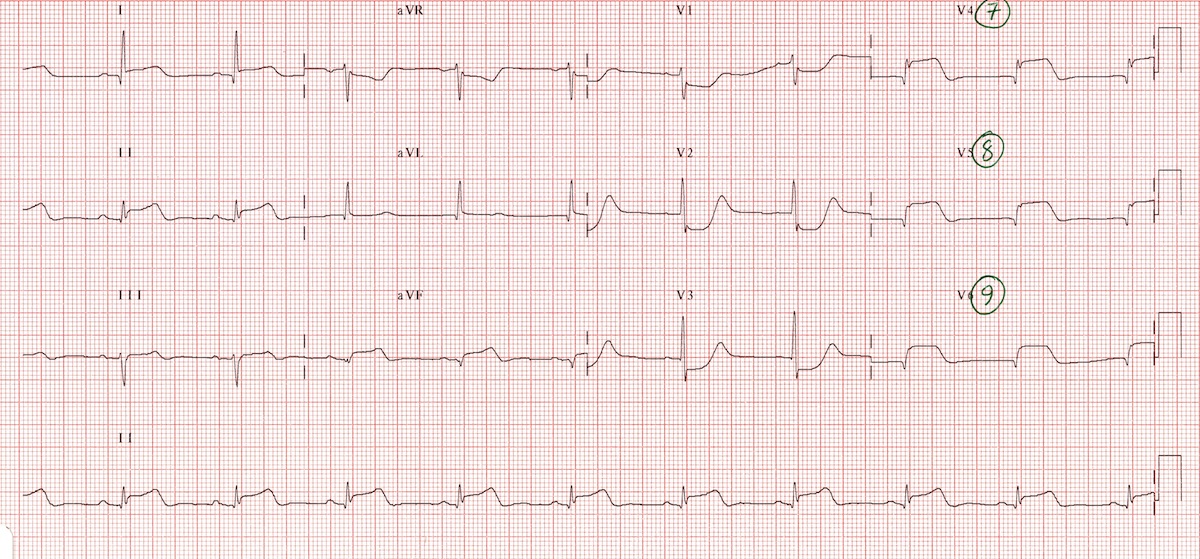
ECG 5 ECG 5 This ECG demonstrates an extensive infero-postero-lateral STEMI:

  • ST elevation in II, III, aVF (inferior) plus leads I, V5-6 (lateral)
  • ST depression in V1-3 with evolving dominant R waves (Q wave equivalent) and terminal T wave positivity = signs of posterior infarction

The leftward-facing injury vector suggests LCx rather than RCA occlusion, as recognised by:

  • STE in II > III
  • STE in I, V5-6

Repeat ECG with posterior leads (V7-9) confirms posterior wall infarction. ECG 5b Read more about posterior infarction here.


ECG 6  ECG 6

  • Biphasic T waves in V1-3 (inverted in V4) typical of Wellens’ syndrome 
  • This ECG pattern is highly specific for a critical occlusion of the LAD.

Read more about Wellens’ syndrome here.


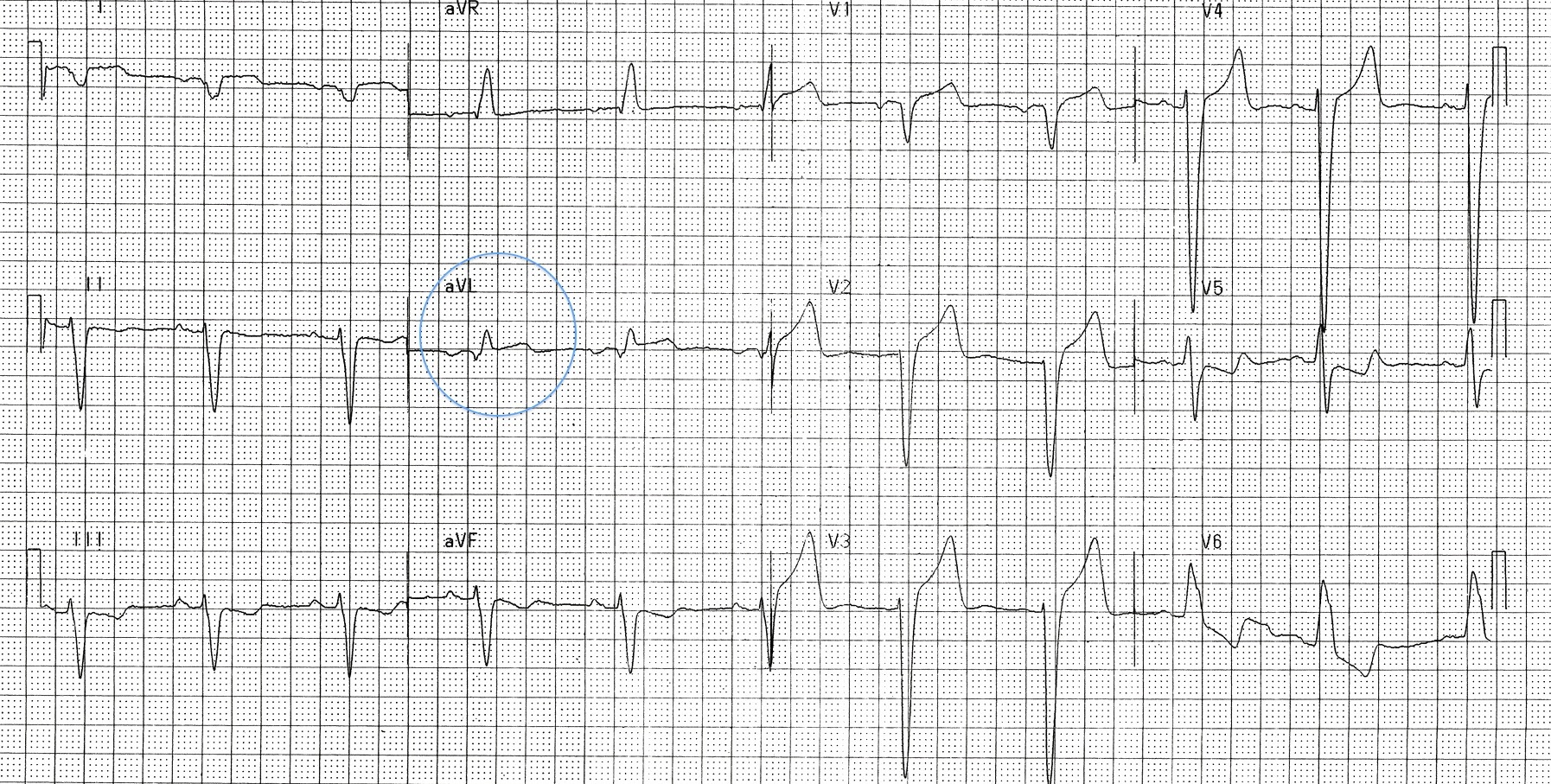
ECG 7 ECG 7 This ECG demonstrates LBBB with positive Sgarbossa criteria, indicating superimposed myocardial infarction:

  • Concordant ST elevation in aVL 
  • Concordant ST depression / T wave inversion in II, III, aVF
  • Additional concordant ST depression in V5

The pattern is suggestive of anterolateral STEMI with inferior reciprocal change. Sgarbossa criteria for diagnosing MI in the presence of LBBB or paced rhythm include:

  • Concordant ST elevation > 1mm in any lead
  • Concordant ST depression > 1mm in V1-3
  • Excessively discordant ST elevation = ST elevation > 5mm (original Sgarbossa rule) or > 25% of S wave height (modified Smith rule)

Read more about the Sgarbossa criteria here  


ECG 8ECG 8 This is an ECG of pulmonary embolism with right heart strain, demonstrating:

  • Sinus tachycardia (present in ~50% of patients with PE)
  • The right ventricular strain pattern = Simultaneous T-wave inversions in the right precordial (V1-3) and inferior leads (III, aVF)
  • Minor, non-specific ST changes in multiple leads

Other ECG changes seen with PE include:

  • Right axis deviation
  • Complete or incomplete RBBB
  • Dominant R wave in V1
  • S1 Q3 T3 = neither sensitive nor specific for PE; found in only ~20% of patients

Read more about ECG changes in PE here


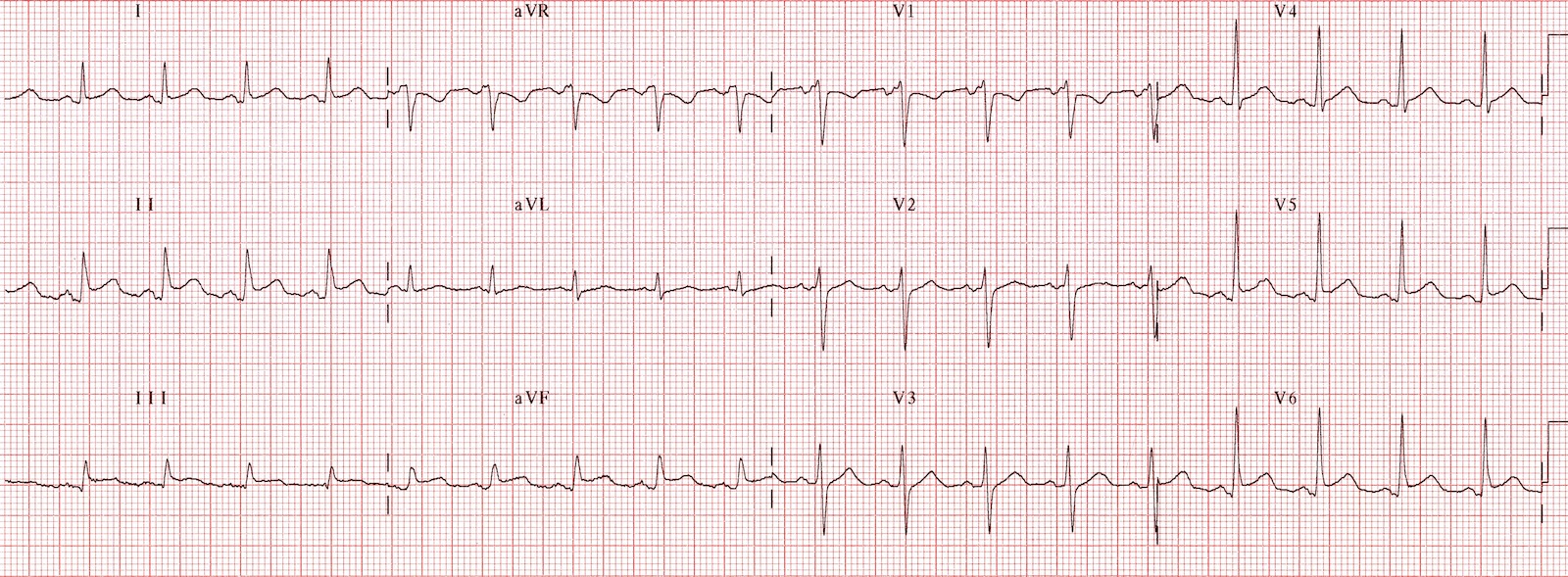
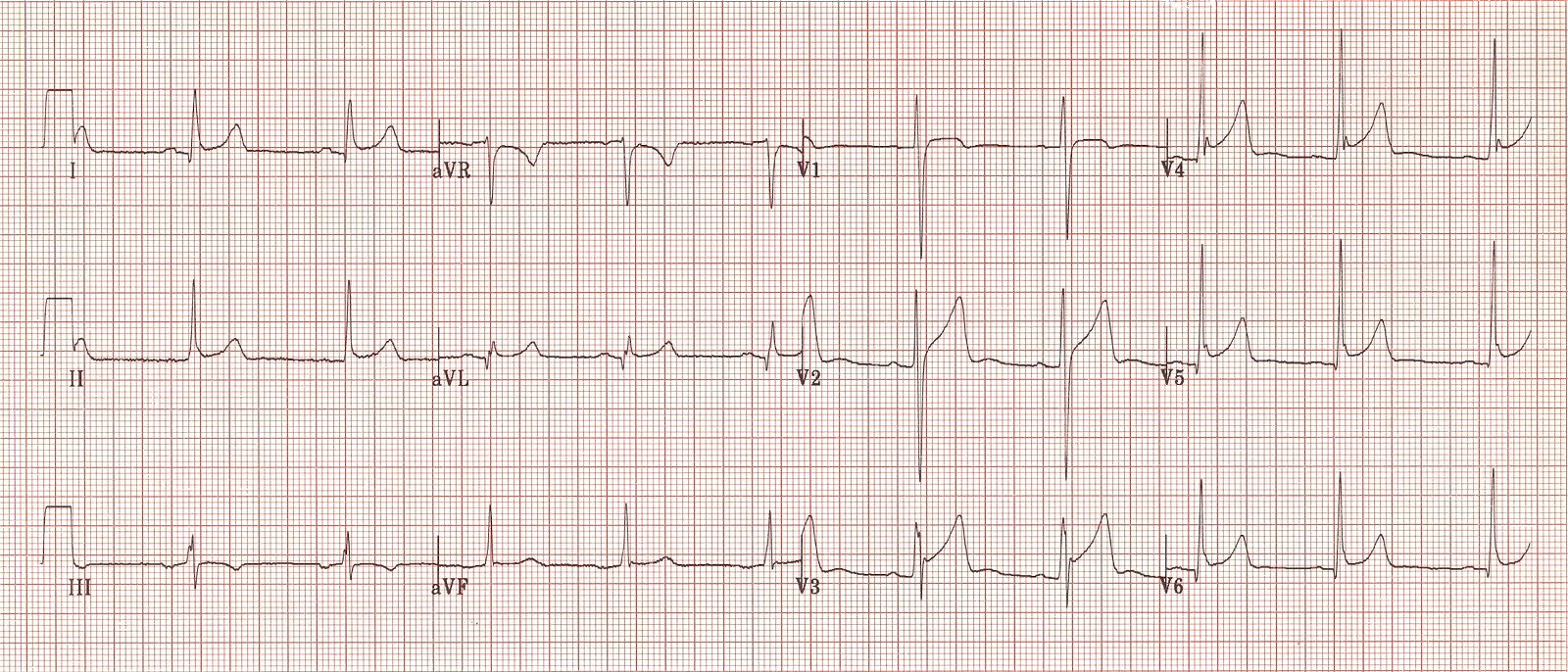
ECG 9 ECG 9 This is an example of benign early repolarization, demonstrating:

  • Concave (“saddleback”) ST elevation in multiple leads, most prominent in the precordial leads.
  • J-point notching (the “fish-hook pattern”) in V4.
  • ST segment / T wave height ratio < 0.25 in V6, which favours BER over pericarditis.
  • No features of acute STEMI — the T-wave inversion in III is a normal variant.

Read more about benign early repolarization here.

Posted in General PH&RM | Tagged , , , , , | Leave a comment

CGD 21st May 2014 – Programme

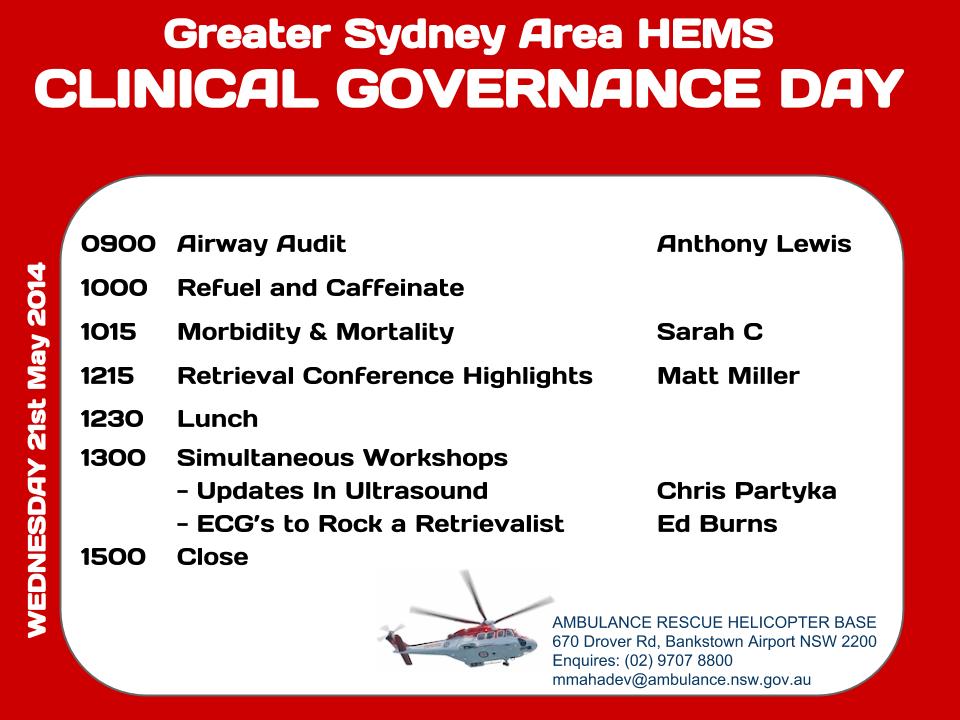
The programme for next week’s CGD is as follows: CGD Flyer 21-05-14 Afternoon education workshops will include:

  • Updates in Ultrasound – A hands-on refresher session on eFAST, RUSH and basic echo with special guest Dr Chris Partyka (Ultrasound Registrar at Liverpool Hospital, EM blogger at The Blunt Dissection).
  • ECGs to Rock a Retrievalist – Advanced ECG Workshop by Dr Ed Burns (author of the Life in the Fast Lane ECG Library).

Pre-Reading Brush up on your ultrasound and ECG knowledge with these useful FOAM resources.

Ultrasound Resources

  • Mount Sinai Emergency Medicine Ultrasound series — Tutorials on FAST and RUSH
  • Academic Life in Emergency Medicine — Excellent overview of the RUSH protocol
  • Cliff’s awesome talk on Trauma USS as presented on the Ultrasound Podcast (you might recognise this one from our HEMS induction week)
  • Scott Weingart’s 2-part lecture on RUSH — Part 1 (busy readers skip to ~11:40 to get to the main points) and Part 2

Some other US websites worth checking out:

 Electrocardiography Resources The theme of the ECG workshop is chest pain. Check out the following pages from the LITFL ECG Library:

Some other ECG websites worth checking out:

Looking forward to seeing you there!

All NSW Health staff welcome. Sign in required. See here for directions.

Posted in Presentations | Tagged , , , , | 1 Comment

CGD 7th May 2014 – There Will Be Blood!!

Another excellent clinical governance day for the Sydney HEMS team where we got down and dirty with trauma-induced coagulopathy, how to deal with maxillofacial haemorrhage, tools used to plug the gaps, a recollection of epic winching, and a Sim that got us all bloody!

Continue reading

Posted in Haemorrhage | Tagged , , , , , | 1 Comment

CGD 23rd April 2014 – A comes before B comes before C

The latest CGD saw us look at all things airway.  With some scary case-based discussions, excellent debate, a great presentation on the NAP4 findings and a simulation that would make the most senior anaesthetist experience code brown moments, the Sydney HEMS team came away from the education day more prepared and equipped to handle airway difficulties.

Continue reading

Posted in Airway, Presentations | Tagged , , | Leave a comment

CGD 7th May 2014 – There Will Be Blood!!

Black-Knight-monty-python

This week’s CGD will focus on the exsanguinating patient, covering topics such as tamponade of massive haemorrhage and correction of coagulopathy.

Scheduled sessions include:

  • Winched From The Top – An audit of our recent winch rescues
  • Tic Tactics – A review of trauma-induced coagulopathy
  • Plugging The Gaps – Extra-ordinary techniques for controlling bleeding, e.g. REBOA
  • Blood From The Floor – Difficult haemostasis cases… What would you do?
  • Haemostasis Workshops – Hands-on practical covering techniques such as tourniquet application, facial packing and epistaxis control

The programme is presented below:

CGD Flyer

As part of our ongoing “flipped classroom” model, we invite all attendees to check out the following pre-reading prior to attendance:

1. Peruse the 2013 European guidelines on management of Acute Traumatic Coagulopathy http://ccforum.com/content/17/2/R76. Its a scarily big document but the important recommendations are in bold.

2. Learn about REBOA (Resuscitative Endovascular Balloon Occlusion of the Aorta) from Scott Weingart over at EMCrit http://emcrit.org/podcasts/reboa/

 3. Foley catheter technique for exsanguinating vascular injury. This is a popular technique with South African trauma surgeons. Learn how to do it here http://resus.me/simple-emergency-haemorrhage-control and here http://regionstraumapro.com/post/1087649383

 4. Sengstaken-Blakemore / Minnesota tube for massive variceal haemorrhage. Watch Scott Weingart’s video on how to do it here: http://emcrit.org/procedures/blakemore-tube-placement with notes by Chris Nickson here: http://lifeinthefastlane.com/education/ccc/senkstaken-blackmore-and-minnesota-tubes/

5. Read the 2013 Warfarin Reversal Guidelines from the Australian Society of Haemostasis and Thrombosis https://www.mja.com.au/journal/2013/198/4/update-consensus-guidelines-warfarin-reversal

6. Remind yourself of our HOPs on traumatic haemorrhage control https://sydneyhems.com/wp-content/uploads/2011/09/c19-traumatic-haemorrhage-control1.pdf and blood management https://sydneyhems.com/wp-content/uploads/2013/12/c-11-blood-management-vrs-2-april-2013.pdf

7. Finally, a graphic display of traumatic amputation from the Monty Python team is available here: https://www.youtube.com/watch?v=2eMkth8FWno

Looking forward to seeing you there!

All NSW Health staff welcome. Sign in required. See here for directions.

Posted in General PH&RM | Tagged , , , , , , | Leave a comment

CGD 9th April 2014 – Neurosimulation

Harnessing the experience of colleagues in the morbidity & mortality meeting, the manual dexterity of Karel Habig, the technological spectacularness of Skype to deliver a world expert to our meeting, the enthusiasm of two of our registrars, and the dynamism of the Sim Teams, the flipped-classroom CGD was particularly neurostimulating today… Continue reading

Posted in Neurological, Presentations, training | Tagged , , , | 1 Comment

Simulation 31/03/2014 – Heloconstrictors and Helodilators

A high fidelity simulation in the AW 139 aircraft.

The lead -in

15-year-old male with a stab wound

Scene

The initial assessment was performed at a scene outside pub.

The patient

A – Patent

B – RR 32, sats 96% on high-flow O2, bilateral equal airway entry

Chest USS revealed a haemo-pneumothorax on the left side. There was evidence of a 2cm stab wound with a small amount of ooze

C – HR 120bpm sinus tachycardia, BP 112/56. IV access present with a palpabable radial pulse and no other stab wounds noted

D – E4 M6 V4, pupils equal and reactive, smells of alcohol. There were no external signs of head injury and the patient was co-operative

E – No extremity injuries noted

Initial plan: package the patient for a 30-minute air transfer to the children’s hospital (a major trauma centre).

 In flight the patient develops PEA cardiac arrest 15 minutes from hospital…

Questions to ask yourself at this point:

Do you land or continue to destination? What guides this decision?

How can space/access to the patient be improved in the AW 139?

Traumatic cardiac arrest and clamshell thoracotomy in flight: really?!

There are crucial CRM points to consider between the doctor/crewman/pilot/paramedic; how would you manage these?

Scenario Progress

Decision was made to land.

Traumatic cardiac arrest protocol was followed in-flight and on ground.

Cold intubation of the patient was difficult due to limited access. The patient was positioned north-south in the helicopter.

3 units of blood given, bilateral thoracostomies performed but patient remained in cardiac arrest.

Cardiac ultrasound revealed cardiac standstill and evidence of cardiac tamponade with clots.

Clamshell thoracotomy performed in the back of helicopter with relief of cardiac tamponade and ROSC.

Post-procedure sedation, paralysis and TXA was given.

Learning points

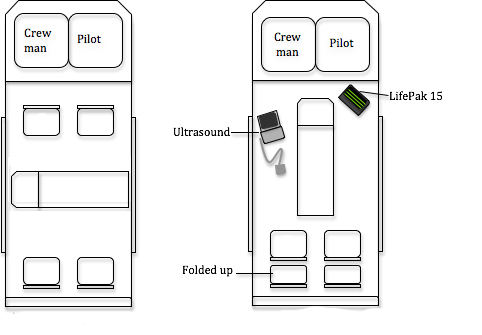
  1. Always strive to improve access around your patient. In the AW 139, you can achieve this by:
    1. Move paramedic’s and doctor’s seats as far back in the cabin as possible facing forward and fold rear seats up (see representation below).
    2. Move patient stretcher a further 6cm south, moving secured equipment if required.
    3. Come off seatbelt and on to wander lead early
    4. Anticipate clinical demise of patients! Get the surgical bag (red loaf) out of the primary pack (blue) and keep nearby
  1. If you want to free up your hands for clinical activity ‘hot mic’ between doctor and paramaedic
  2. CRM can help you make decisions. Discuss difficult problems with all your crew.
  3. Don’t forget eye protection for all surgical procedures
  4. To land or not to land: This is multifactorial depending on expected arrival to destination and aviation factors (weather, availability of landing sites).
  • PRO – Frees up crewman and pilot to aid with fast/efficient treatment of the patient.
  • CON – Time critical lesion requiring definitive surgery

Again: ANTICIPATE THE CLINICAL DEMISE OF YOUR PATIENTS!

Management of traumatic cardiac arrest can be found on the HOPs here, with an excellent review of management found here.

Thanks to Matt (Doctor), Phil (ICP), Pat (Crewman), Carla (STAR, Sim controller), Alex (Scenario orchestrator) Cliff (debriefer) and Bubba & Lucas (Experiential insight-providers).

Standard configuration (left) vs space-optimised configuration (right)

Standard configuration (left) vs space-optimised configuration (right)

AW 139 space difficulties

AW 139 space difficulties


Posted in Cases, General PH&RM, simulation, training | Tagged , , , | Leave a comment

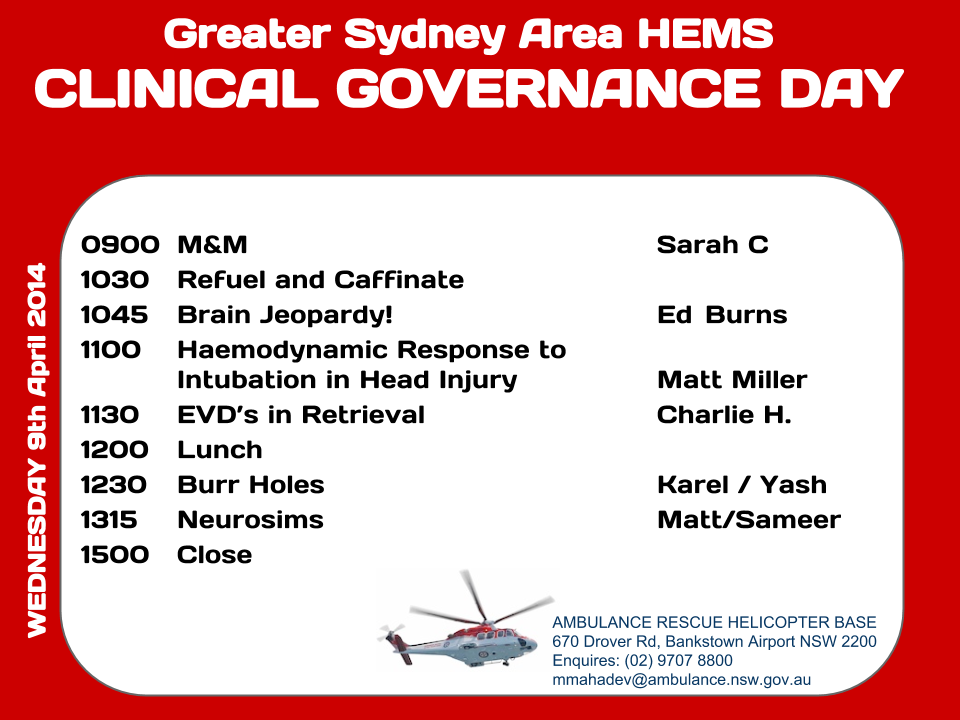
Clinical Governance Day 9th April 2014

Our next CGD will focus on neurotrauma. Facilitators Ed Burns and Phil Webster have flipped the classroom. See below for your pre-CGD preparation.

CGD Flyer (3)

Here are the FOAM reading references for everyone….

1. Read this overview of management of traumatic brain injury by Emergency Physician / Intensivist Chris Nickson from LITFL (10 mins)

2. Download this podcast on “Fine Tuning The Injured Brain” by Bart Besinger and listen to it in your car on the way to work (25 mins). Right click the link as ‘save link as’.

3. “Burr Holes in the Bush” — another great podcast/ videocast. Tim Leeuwenburg (Kangaroo Island doctor) interviews Mark Wilson (Neurosurgeon + London HEMS doctor) about performing burr holes in the rural and remote setting (15 mins)

4. A short (3 min) video demonstrating an OT Burr hole x 2 for SDH.

5. Two short papers on how to perform a burr hole: The Occasional Burr Hole by Keith MacLellan and Emergency burr holes: “How to do it” by Mark Wilson

6. Some light relief – check out this highly educational video by UK comedians Mitchell and Webb

7. Our Neuroprotection Operating Procedure

Anyone who is still hungry for more knowledge may want to read the Neurosurgical Society Guidelines on Management of Acute Neurotrauma in Rural and Remote locations.

The paper presented by Matt Miller is ‘The relationship between head injury severity and hemodynamic response to tracheal intubation‘ by Zane Perkins et al, J Trauma Acute Care Surg. 2013 Apr;74(4):1074-80

All NSW Health staff welcome. Sign in required. See here for directions.


Posted in General PH&RM, training | Tagged | 2 Comments