Drowning Case Review Learning Points (CGD 09/03/16)

Drowning is an all too common cause of morbidity and death, particularly in a region as rich in water activities as New South Wales. Providers of prehospital critical care should seek to master drowning management, as it is one of the conditions where early interventions in the field can save a life.

IMG_5775.JPG

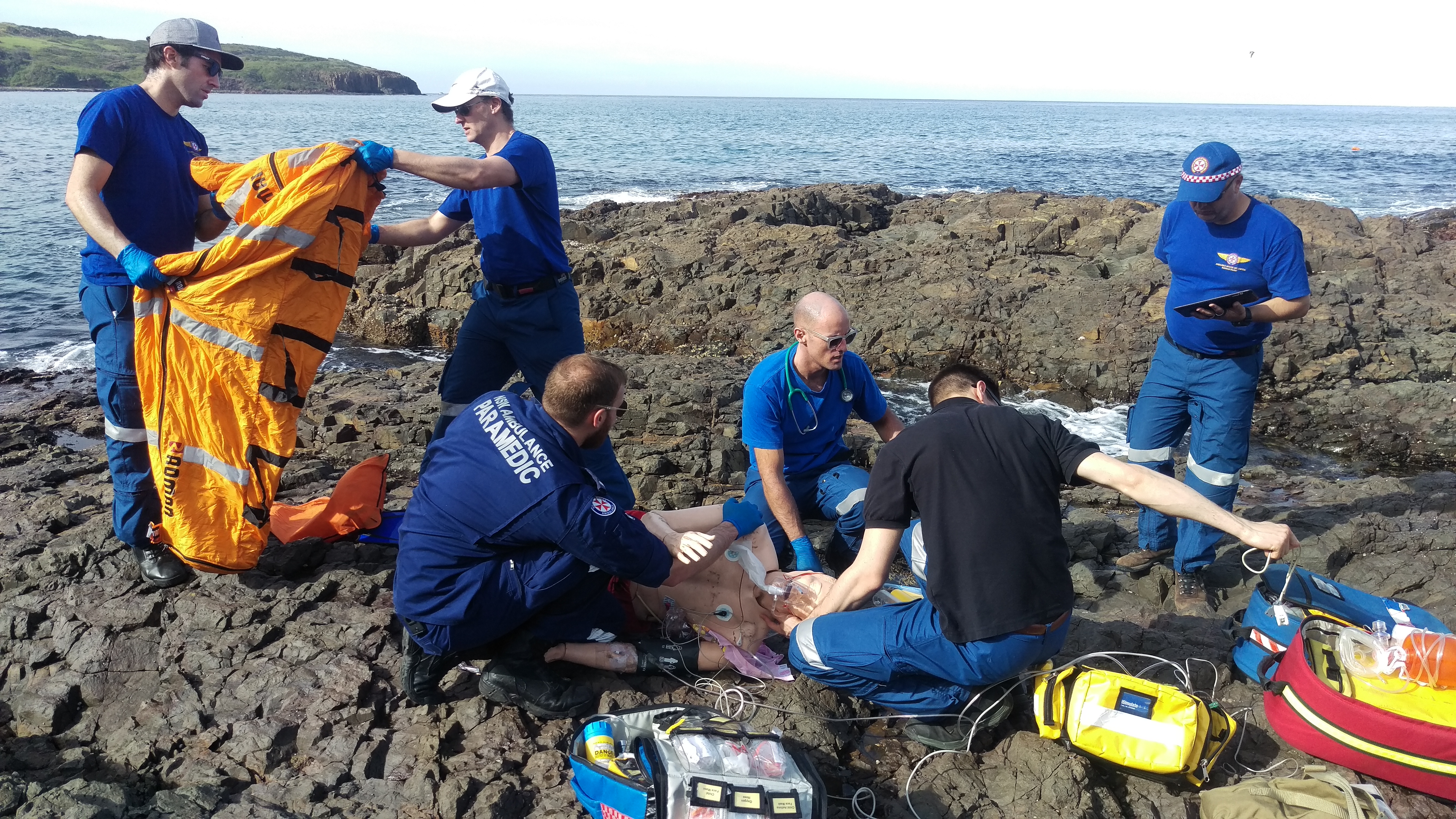
This post is not intended to be a comprehensive overview of drowning, but an effort to share lessons learned, and knowledge refined, subsequent to some experience in the field.

Patients don’t necessarily stay “Dead or OK” – Dogma suggests that on our arrival, drowning victims are rescued on either extreme of the clinical spectrum, and remain that way. In the brief interval of a water winch rescue and landing on a nearby headland, our institutional experience suggests this is true. However, when on scene for a longer period of time, there is no way to predict how the clinical picture will change. The literature looking at survival outcomes is important, but it doesn’t help with the patient in front of you. Maintain a high level of suspicion for developing badness, and (mentally, at least) prepare for deterioration.winch scout.JPG

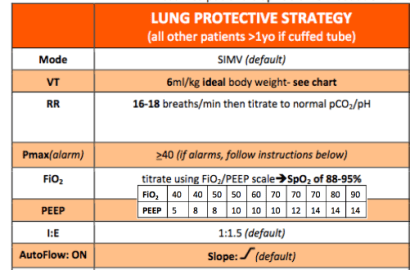
Optimize oxygenation with PEEP and FiO2 – Hypoxia is the crux of drowning pathophysiology; as such, it is essential to focus on improving oxygenation (and ventilation) early. Optimize oxygenation with increasing FiO2 and PEEP. Goal sats: mid-90s. In awake patients, you can support breathing by BVM with PEEP valve, or NIV. When intubated, consider a rational approach for FiO2 and PEEP changes, such as this table from ARDSnet Note how high you can go up on the PEEP, if needed.

ScreenClip [4].png

Beware the pulse ox readings – Ironically, even though oxygenation is essential, the pulse oximeter may not be very reliable in drowning patients. In a study of healthy volunteers, up to 50% of pulse oximetry readings were “spurious” after a 10 minute swim in cold water. Cold and poor perfusion are well-known spoilers of pulse ox traces. Additionally, by nature of their algorithms, pulse oximeters are only rated to be accurate above 70%, including the finger probe in our monitoring pouch and the new Zoll X Series. With a reading <70%, the machine is basically guessing. Picture1.png

Ventilate drownings like ARDS patients – Although not formally studied, expert consensus suggests a lung protective ventilator strategy for intubated drowning patients. Use low tidal volumes (6ml/kg IBW) coupled with higher respiratory rates, low plateau pressures, and permissive hypercapnea (if head injury not a concern). Life In The Fast Lane has an excellent blog post about mastering our ventilator, including some cheat sheets for this strategy: Own The Oxylog 3000

Share your mental model – We should not only have open and constant communication within our doctor-paramedic team, but also with the other crews involved. Each views the same scene colored by different goals, priorities, and perspectives. When a situation changes or is increasingly intense, you should be extra cognizant of the potential for communication breakdown.


Worthwhile Reading Not Linked Above

  1. Garner AA, Barker CL, and Weatherall AD. Retrospective evaluation of prehospital
    triage, presentation, interventions and outcome in paediatric drowning managed
    by a physician staffed helicopter emergency medical service. Scand J Trauma Resusc Emerg Med. 2015; 23:92.
  2. Martinez FE and Hooper AJ. Drowning and immersion injury. Anaesth Intensive Care. 2014; 15(9):420-423.
  3. Szpilman D, Bierens JJ, Handley AJ, and Orlowski JP. Drowning. N Engl J Med. 2012; 366(22):2102-10.
  4. Topjian AA, Berg RA, Bierens JJ, et al. Brain Resuscitation in the Drowning Victim. Neurocrit Care. 2012; 17:441–467.
  5. Truhlar A, Deakin CD, Soard J, et al. European Resuscitation Council Guidelines for Resuscitation 2015: Section 4. Cardiac arrest in special circumstances. Resuscitation. 2015; 95:148–201. (Drowning is 174-176)


Posted in General PH&RM | Tagged , , , , , , , | Leave a comment

Water Winch Sim Review & Learning Points (CGD 09/03/16)

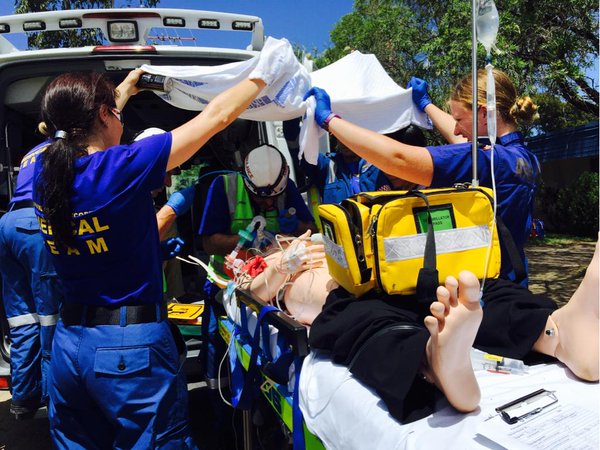
The water winch rescue is unique among our mission taskings, in that it requires a non-standard approach to personal and cabin setup. The paramedics will go out in a wetsuit and additional gear (which takes time), and the doctor will need to have more of a role in preparing the aircraft to make the mission less stressful and more efficient. This is not the time to just put your harness on, strap in, and wait.

Although there may be 10-15 minutes to these scenes from Bankstown, crews at Wollongong can be overhead within a couple of minutes, so team-based preparation is essential.

Water winch crop.png

The five jobs of the physician (after getting yourself ready) are:

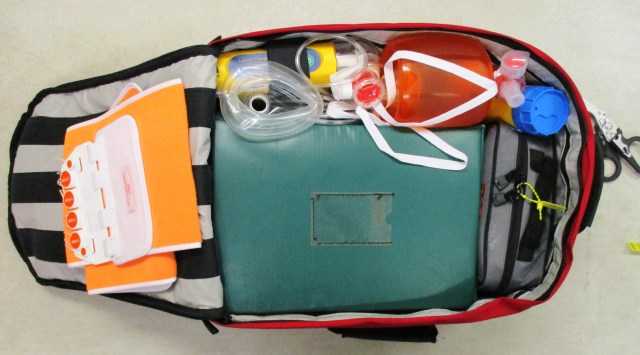
  • Clip the dropdown emergency airway (DEA) pack to the cargo netting and connect the BVM to oxygen (zip the pack back up!)
  • Get all four wanderleads down from the ceiling
  • Take the extra headset out (lives next to the Zoll monitor) and place on head of paramedic’s seat (in Bankstown, the para may bring one from the ready room)
  • Take strop and foam ball from pie warmer and place on bed
  • Sit in the back left seat and get belted in

IMG_1484.PNG

Consider placing an appropriately sized iGel from the DEA in your pocket, and unfurling the suction to place it under the bed.

Once the patient is in the aircraft, the doctor job is basic airway management, whether via BVM alone or iGel. No advanced airway will be done in flight. No defibrillation can be done in the aircraft on a soaking wet patient – see Defibrillation HOP

Limited space and limited communications should be anticipated.

Caveat: this is general guidance to give you an idea of what may be expected of you in the AW139. As with any mission, each paramedic and aircrewman is different, so it is imperative that you have frequent and open communication with your team about how best to accomplish the job.

For the newer docs, ask a friendly-faced paramedic to go over all of this with you on one of your next shifts (especially if you are H1 or at Wollongong).

Posted in General PH&RM | Tagged , , , , , | 1 Comment

Clinical Governance Day 9th March 2016

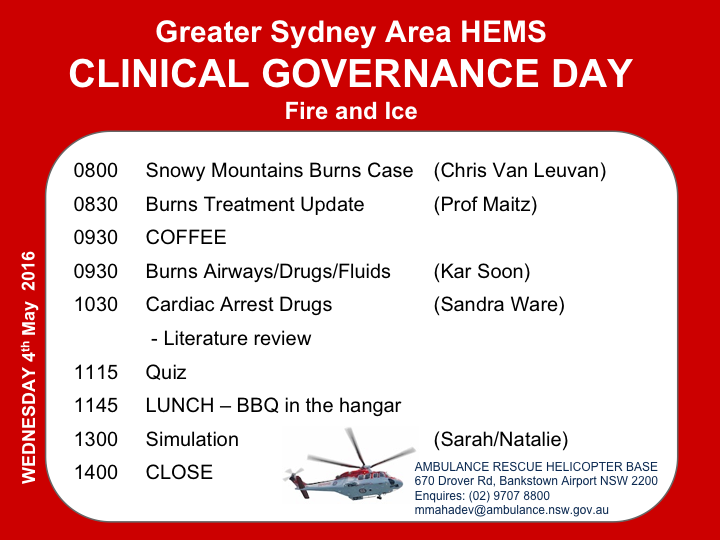
CGD poster 9 MarThe next Clinical Governance Day will be on 9th March. This session is designed to be operationally focused and give you pearls and tools to use on your next shift. Thematically, we will be focusing on water-related topics.

Clare Hayes-Bradley will present details and learning points from the January Airway Registry. Cameron Edgar begins a new fascinating and insightful series of Operational Case Reviews which glean important lessons from our missions using aviation investigation methodologies. Then Soo Parkinson makes a triumphant return to CGD to share her expertise of dive and hyperbaric medicine. Following lunch, there will be two simultaneous sessions: 1) a water winch sim by Dave McQuade where the doctors and paramedics learn how to run these jobs more efficiently as a team; and 2) a case discussion by Preston Fedor of a recent coastal stretcher winch as well as pearls of drowning management.

A BBQ lunch will be held in the hangar (bring a few dollars for your meal). Afterwards, we intend for the group to stay in the hangar for the subsequent educational sessions.

Below are some excellent succinct blog posts related to dive medicine and drowning.

http://pulmccm.org/main/2012/review-articles/drowning-2012-update-review-nejm/

http://lifeinthefastlane.com/ccc/decompression-sickness/

All NSW Health staff are welcome to attend, a sign in is required. See here for directions.

We look forward to seeing everyone there.

Posted in General PH&RM | Tagged , , , , , , , , , | Leave a comment


AC Joint Injuries

  • a non-evidenced based strapping technique which anecdotally controls pain and keeps patients mobile eg to walk out from a scene
  • the aim is to provide a lifting mechanism to support the weight of the arm which is hanging below the distal end of the clavicle (and causing pain) due to rupture of the corococlavicular ligament complex

Corococlavicular ligament complex


Strapping technique

  1. 2.5cm brown tape + 7.5cm white elastoplast
  2. make a large X directly over the AC joint
  3. apply 3 x long lengths of the white tape in a figure of 8, staring over the anterior chest, wrapping behind the shoulder, under the elbow and over the anterior deltoid. over-lay each layer by 30% for added strength
  4. reinforce the ends of the anteior + posterior chest straps with fastening brown tape
  5. wrap around the mid-humerus with white +/- brown tape to secure the tension to the shaft of the arm
  6. remove the restricting band from under the elbow by cutting below the securing layer you applied in step 5

AC Joint Strapping

Shoulder Dislocations

Posted in General PH&RM | Leave a comment

Clinical Governance Day 24th February 2016

CGD 24 Feb flyer


This is the first Clinical Governance Day of the term, and it is an excellent one. Welcome to our new registrars!

A bit of Mortality & Morbidity (January) packed with learning points and always good for the soul!

Ever wondered what’s going on inside the head of the person doing the tasking at MRU? Well now’s your chance to find out. We’ll hear from Neil Ballard, one of the MRU consultants about his perspective of tasking our missions and the challenges that entails.

How would you deal with a dislocated shoulder in the prehospital environment? If you can’t reduce it then how will you package them for transport? What about lower limb injuries? Fracture dislocations? Sam Bendall and Dave McQuade are going to take us through some orthopaedic theory while keeping it as practical and hands on as possible.

A special thank you goes out to Chris Partyka for his steadfast command of the Good Ship CGD over the last 6 months and his contribution to the transition to this term.

We will aim to provide a BBQ lunch down at the hangar, please bring a small amount of cash to help cover that cost. We look forward to seeing as many of you as possible next Wednesday!

All NSW Health staff are welcome to attend, a sign in is required. See here for directions. https://sydneyhems.com/contact/

Tags: CGD orthopaedics education training PHARM HEMS EMS sportsmed


Posted in General PH&RM | Leave a comment

Clinical Governance Day 27th January 2016

CGD 27 Jan

The next Sydney HEMS Clinical Governance Day is scheduled for next Wednesday, January 27th at Bankstown.

This CGD has been jam-packed by Soo Parkinson !! We have our regular segments of Airway Audit and Morbidity & Mortality plus some “extreme presentations”  by Rob Conway & Soo Parkinson who will discuss their unique experiences with polar expedition & hyperbaric medicine

EAC Ad

The CGD will be bought to a close with a discussion regarding the introduction of our Emergency Action Checklists, so feel to bring your suggestions on the day.

All NSW Health staff are welcome, sign-in required. See here for directions.

——

Finally, they say that all good things come to an end. This CGD is the last for our current group of registrars who leave us for greener pastures (at lower altitudes). It marks the end of a brilliant & exciting year for some, whilst signalling the time for the induction & training of our new colleagues.

This also draws to an end my time as CGD organiser. Thank you to everyone who has helped me put these sessions together over the past 6 months & a huge thanks to those of you who attended and participated with great enthusiasm during this time. My trusty colleagues David McQuade and Preston Fedor will take the reins from here & I have no doubt they’ll do a spectacular job.

Looking forward to seeing you there on Wednesday.

Posted in training | Tagged , , , | Leave a comment

Airway microskills references

Here the references for articles quoted in the Airway Microskills Clinical Governance Day

whiteboard-microskills

Use of Storz C-Mac®
Khan RM, Haris A, Sharma P, Kaul N. Oxygenating patients during difficult videolaryngoscopy. Anaesthesia. 2015 Sep 15;70(10):1214–4

Masters J, Rope T. Suction tube-facilitated videolaryngoscopic intubation. Anaesthesia. 2015 Aug;70(8):1003


Awake flexible intubation
Durga VK, Millns JP, Smith JE. Manoeuvres used to clear the airway during fibreoptic intubation. Br J Anaesth. 2001 Aug;87(2):207–11


Position
Clemency BM, Roginski M, Lindstrom HA, Billittier AJ. Paramedic Intubation: Patient Position Might Matter. Prehosp Emerg Care. 2014 Apr 3;18(2):239–43

Lee HC, Yun MJ, Hwang JW, Na HS, Kim DH, Park JY. Higher operating tables provide better laryngeal views for tracheal intubation. Br J Anaesth. 2014 Mar 18;112(4):749–55


iGel
Kim HC, Yoo DH, Kim HJ, Jeon YT, Hwang JW, Park HP. A prospective randomised comparison of two insertion methods for i-gel ™placement in anaesthetised paralysed patients: standard vs rotational technique. Anaesthesia. 2014 Apr 28;69(7):729–34


Unassisted Bougie
Eipe N. Preloading bougies. Anaesthesia. 2014 May;69(5):515–6


The “Anterior” Larynx (isn’t yours?!)
Bougie reflection off incisors

Biro P, Ruetzler K. The reflective intubation manoeuvre increases success rate in moderately difficult direct laryngoscopy. Eur J Anaesthesiol. 2015 Jun;32(6):406–10

Sivapurapu V. Scissor-like manoeuvre of tracheal tube. Br J Anaesth. 2014 Apr;112(4):769

Sharma R. Traction over inflation-tube of endotracheal tube to facilitate emergency intubation in a patient with anteriorly placed larynx. Resuscitation. 2010 Jan;81(1):134–5


Choosing a big enough tube
Farrow S, Farrow C, Soni N. Size matters: choosing the right tracheal tube. Anaesthesia. 2012 Aug;67(8):815–9

Isitt CE, Porter JRS, Vizcaychipi MP. Initial tracheal tube size for patients with burns. Anaesthesia. 2014 Apr;69(4):392


Paediatric Intubation
Gamble JJ, McKay WP, Wang AF, Yip KA, O’Brien JM, Plewes CE. Three-finger tracheal palpation to guide endotracheal tube depth in children. Cote C, editor. Pediatric Anesthesia. 2014 Jun 23;24(10):1050–5


Tying the tube
Williams DJ. Knots to secure airway devices. Anaesthesia. 2013 Nov;68(11):1204–5

Lovett PB, Flaxman A, Stürmann KM, Bijur P. The insecure airway: a comparison of knots and commercial devices for securing endotracheal tubes. BMC Emerg Med. 2006;6:7

Albertyn R, Warburton J. A knotty problem resolved. Anaesthesia. 2007 Jun;62(6):637


Solving post-intubation issues

Cross Y, Byrne N. Handy salbutamol dispensing device. Anaesthesia. 2009 Feb;64(2):230

Featherstone P, Abdelaal A, Duane D. Airway emergency during anaesthesia using a metered-dose inhaler. Anaesthesia. 2011 Jan;66(1):58

McCormick T. Clamp to prevent collapse. Anaesthesia. 2010 Aug;65(8):861–2

Posted in General PH&RM, Tips | Tagged , | Leave a comment

Clinical Governance Day 13th January 2016

CGD 13 Jan

Welcome back to the Sydney HEMS Clinical Governance Days for 2016…

This CGD is very much AIRWAY oriented with the inclusion of the November Airway Audit & a round-robin “Airway Microskills” session. This session will focus on bougie & ETT placement tips & tricks, a meet and greet with the Storz CMAC videolaryngoscope as well as a refresher of our Advanced Airway techniques at Sydney HEMS.

References for the Airway Microskills workshops are here

Looking forward to seeing you there.

All NSW Health staff are welcome, sign-in required. See here for directions.

Posted in training | Tagged , , | Leave a comment

Clinical Governance Day 16th December 2015

CGD 16 Dec

The Sydney HEMS Clinical Governance Day is returning after a month long hiatus and is scheduled for next Wednesday, December 16th at Bankstown.

For this weeks CGD we have two cracking case dissections to discuss as well as the October Morbidity and Mortality. The afternoon session will centre around an ‘airway round robin’ complete with simulation, blind-intubation team races and challenging airway case discussions.

If you have been involved in a recent interesting or difficult airway case; feel free to bring this on the day…

All NSW Health staff are welcome, sign-in required. See here for directions.

Posted in training | Tagged , , , | 1 Comment

Clinical Governance Day 18th November 2015

CGD 18 Nov

The next Sydney HEMS Clinical Governance Day is coming up next Wednesday, November 18th at Bankstown.

This CGD will include our September M&M as well as review some recent challenging winch missions. A subtle theme of bleeding filters through this session with a look at coagulopathy in trauma, bleeding in non-compressible sites and a review of the recent literature on Idarucizumab (a potential agent for the reversal of dabigatran).

NSW Health staff welcome, sign-in required. See here for directions.

Posted in training | Leave a comment