Airway Registry Pointers and Reminders

Once a month, the structured reviews of all of our intubation attempts are presented at a Clinical Governance Day. Common themes and specific finer points are brought forward in an effort to improve our performance as a group. Below are some of the take home points from our last Airway Registry (23/03/16).

  1. It is essential to verify the function of your peripheral access just before induction, particularly if the patient has been moved. A minimum of two points of reliable access is ideal.
    • If a patient has a lot of subcutaneous tissue, consider using an ultrasound guided peripheral line or cutting down to an IO site.
  2. Know the location of:
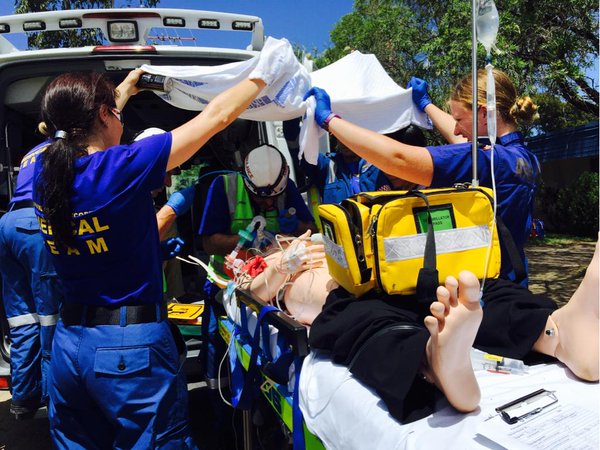
  3. In outdoor bright light conditions, improve your view of the vocal cords by optimizing your position and shading the sun.
    • Position yourself so the sun is to your back and not directly in your face
    • You can shade yourself and the patient in a variety of ways (use your imagination and the creativity of your team)
      • Strategically positioned vehicle
      • A pop up tent or awning – check with Fire or Police Rescue
      • Inside a nearby shed or building (still with 360 degree access) or under a (gum) tree
      • Blanket, sheet, or space blanket held up or draped over you and the patient (consider how this affects your team communication, bougie/tube passing, etc.)

    • Remember it will take time for your eyes to adjust to the relative darkness; at a minimum, be in your shade at the time of pushing induction medications, if not before.
  4. As usual, when documenting your airway attempt, include as much detail as possible: positioning, timings, adjuncts, pre-oxygenation, shading, changes in between attempts, and specifics about anything out of the ordinary.

A big thanks to Dr. Clare Hayes-Bradley for diligently synthesizing and presenting the Airway Registry every month.

Posted in Airway, General PH&RM | Tagged , , , , , , | Leave a comment

Prehospital Emergency Anaesthesia Checklist

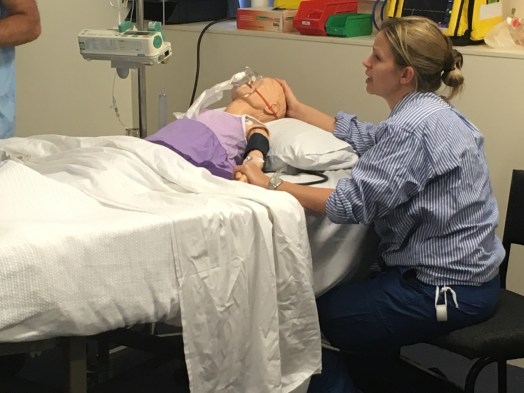
Our RSI checklist is performed in a challenge-response fashion. The clinician who established the equipment set-up reads, while the other clinician checks and responds. Any discussion, such as difficult laryngoscopy plan, briefing the individual who is immobilising the neck, and so on, should be done PRIOR to commencing the checklist. The checklist should not take much more than a minute and is the final step prior to immediately anaesthetising the patient, without any further questions like a redundant ‘is everyone ready?’ or ‘any questions?’.

Note the ‘patient’ was one of our paramedic colleagues acting for the simulation.

The video was kindly shot by Georgina Kiedrowski and her team.

Posted in Airway, General PH&RM | Tagged , , | 1 Comment

Thinking of the children…

For a great review article of RSI in children check out the following article:

  • BJA Educ (2016) 16 (4): 120-123  Place of rapid sequence induction in paediatric anaesthesia. R Newton, H Hack

Predicting difficult airways in children:

evaluation-of-difficult-airway-predictors-in-pediatric-population-as-a-clinical-investigation-2155-6148.1000256

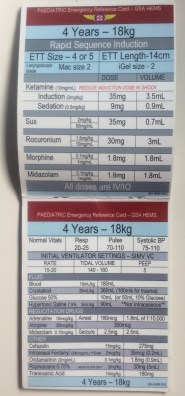
Some key pearls when intubating an infant or small child:

  • The HEMS paediatric bougie is too big for an ETT less than a 5.0
  • If you’re using a straight blade (Miller) then prepare a straight tube (using a stylet) – the natural curve of the ETT is not helpful in this situation.
  • Consider inserting the tip of your laryngoscope blade into the R of the valecula – when used in conjunction with ELM (external laryngeal manipulation) this will often allow a great view of the cords.
  • Tying the ETT (with tape) centrally will reduce ETT movement (from side to side head movement) and the consequent risk of peri-laryngeal tip dislodgement BUT suctioning the oropharynx or re-inspection of tube placement with a laryngoscope is more difficult. The reverse balance of costs/benefits exists if the ETT is taped to the side of the mouth.

Peri-intubation management is of even higher priority in the care of sick children. Being prepared for a difficult airway is good but a haemodynamically unstable child during RSI is more likely:

  • Rigorous CRM/Human Factors practice
  • Optimisation of patient position (T-pod under the torso)
  • Optimisation of your surroundings (people, environment, resources, a tidy kit dump will save you stress in the heat of the moment!)
  • Optimisation of the patient physiology – see the NSW Health Guideline on Paediatric IV Fluid Management

NSW health paed fluid Guidelines Aug 2015

It’s not all about the airway! When treating children we must pay attention to our little patients. This means creating as calm & reassuring an atmosphere as possible with the aide of parents/caregivers as well as paying close attention to the relief of pain. Consider the following take home points and see Natalie’s excellent post for further detail:

  • Pain is more than nociception
  • Be creative, thoughtful and flexible with your drug-based approach
  • Consider all routes of administration
  • Distraction is key!
  • Address the wider factors affecting pain response

http://stemlynsblog.org/paediatric-pain-and-sedation/

Posted in General PH&RM | Leave a comment

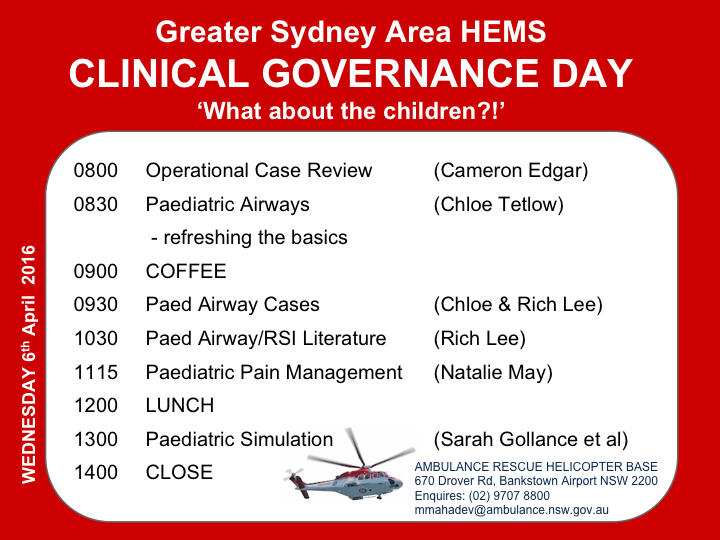
Clinical Governance Day, April 6th 2016

Slide1

This week’s CGD will be an cerebral infusion of paediatric excellence. We have a host of bona fide paediatric experts in our midst and now’s your chance to pick up their pearls of wisdom and maybe to share some of your own.

The focus will be on emergency paediatric anaesthesia and pain management with a simulated case at the end to consolidate our learning.

There WILL be a BBQ in the hangar at lunch time. Please bring between $5 and $10 to cover the costs if you want to join in.

Think of the children

All NSW Health staff are welcome to attend, a sign in is required. See here for directions. https://sydneyhems.com/contact/

Posted in General PH&RM | Leave a comment

Literature Review: Are we intubating burn patients inappropriately?

Review at CGD and summary by Dr. Alan Laverty

Romanowski KS, Palmieri TL, Sen S, Greenhalgh DG.
More Than One Third of Intubations in Patients Transferred to Burn Centers are Unnecessary
Journal of Burn Care & Research. 2015 Aug 17

We reviewed the above paper at our Clinical Governance Day on 23 March 2016. Below is the summary of the paper, the issues identified, and observations made by our paramedics, registrars, and consultants.

This was a retrospective chart review of burns patients requiring intubation and transfer to a single burn center. It found 416 patients over 10 years and divided them into appropriate vs non- appropriate groups based on length of intubation (≤2days vs >2days) and compared 16 variables (%TBSA, aetiology, intubating profession, age, distance to hospital etc). Intubation complications (10 total) included cardiac arrest, hypotension, seizure, aspiration and cricothyroidotomy. They concluded that there was a high incidence of unnecessary intubations and that flame burns and burns from enclosed spaces were good indicators of intubation requirement. They proposed guidelines for intubation in the prehospital setting. These included discussion with the burns unit pre-intubation where feasible, and lower need for intubation in non-flame burns, burns in non-enclosed spaces, less than 20% TBSA, no third degree burn to face and <3hour transfer time to burn centre.

Multiple methodological issues were identified which invalidate any robust conclusions from this study. The length of intubation is not a useful surrogate for appropriateness. Multiple confounders to this measure were suggested including concomitant trauma, low GCS, mode of transfer, lung disease, litigation risk, communication difficulties and humanitarian indications. There was no blinding of reviewers, no review of hospital and prehospital protocols for transfer and extubations. The prolonged nature of the study allowed for considerable changes in practice throughout the review period. Patients who subsequently died were not included. The study largely conflated two aetiologies (burns and thermal/inhalational airway burns). At a statistical level the two groups were not independent and a number of the variables were unlikely to be normally distributed which did not appear to have been corrected for with the student t evaluation. While statistical significance was achieved for a number of variables, the large number of variables investigated, the lack of a power calculation, and the overlapping confidence intervals combined with the poor methodology would preclude any strong real world conclusions or application. Any application of conclusions from this study would also fall foul of the fallacy of confusion of the inverse and would need prospective testing.

Group discussion felt that this was a missed opportunity for a useful study. Airway  management will still remain a clinical decision by the provider with the patient. Opportunities for expectant management are more applicable to road transfers than helo. Use of airway examination via our ambu A scope with topical anaesthetic is a good adjunct to standard clinical assessment. Involvement of ENT in the ED and interhospital transfers can lend weight to a decision not to intubate where receiving teams are requesting intubation. Taking photos when assessing the patient is recommended and discussion with the Senior Retrieval Consultant where decision is in doubt. Awareness of the NSW Burns retrieval guideline was highlighted.

NSW Burns Transfer Guidelines


Posted in General PH&RM | Leave a comment

Clinical Governance Day 23 March 2016

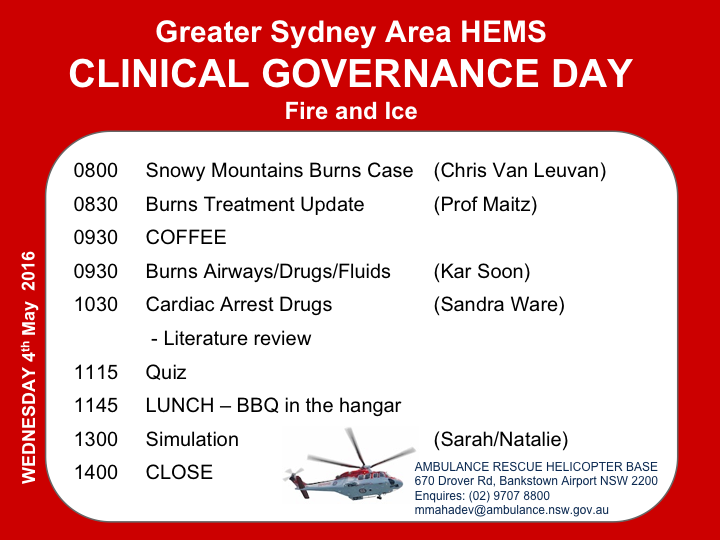
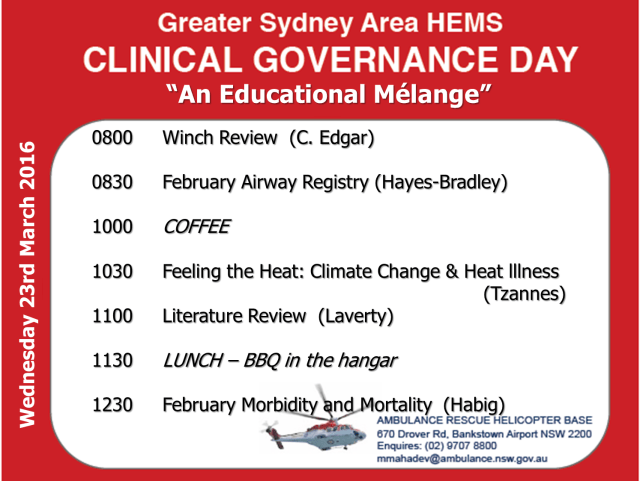
We look forward to your attendance and participation at the next Clinical Governance Day, beginning at 0800 on Wednesday 23rd March 2016. There is an assortment of educational goodness on the agenda.

CGD 23 Mar agenda.png

Cameron Edgar starts us off with one of his famous winch reviews, covering a winch mission or two in detail, pulling out operational lessons from some of our highest risk jobs. Clare Hayes-Bradley returns to the stage to present Airway Registry from February. Whether or not you had an intubation last month, there are plenty of finer points to ponder. As the summer weather persists into autumn, Alex Tzannes is here to discuss heat illnesses in the context of climate change. Afterwards, Alan Laverty leads the group in a discussion of a relevant piece of the scientific literature. Following lunch, Karel Habig dishes up lessons from the February Morbidity and Mortality cases.

Lunch, as is recent custom, will be an excellent sausage sizzle in the hangar. Please bring a few dollars towards the social fund if you plan to partake in the meal.

All NSW Health staff are welcome to attend, a sign in is required. See here for directions.

See you on Wednesday!

Posted in General PH&RM | Tagged , , | Leave a comment

Drowning Case Review Learning Points (CGD 09/03/16)

Drowning is an all too common cause of morbidity and death, particularly in a region as rich in water activities as New South Wales. Providers of prehospital critical care should seek to master drowning management, as it is one of the conditions where early interventions in the field can save a life.

IMG_5775.JPG

This post is not intended to be a comprehensive overview of drowning, but an effort to share lessons learned, and knowledge refined, subsequent to some experience in the field.

Patients don’t necessarily stay “Dead or OK” – Dogma suggests that on our arrival, drowning victims are rescued on either extreme of the clinical spectrum, and remain that way. In the brief interval of a water winch rescue and landing on a nearby headland, our institutional experience suggests this is true. However, when on scene for a longer period of time, there is no way to predict how the clinical picture will change. The literature looking at survival outcomes is important, but it doesn’t help with the patient in front of you. Maintain a high level of suspicion for developing badness, and (mentally, at least) prepare for deterioration.winch scout.JPG

Optimize oxygenation with PEEP and FiO2 – Hypoxia is the crux of drowning pathophysiology; as such, it is essential to focus on improving oxygenation (and ventilation) early. Optimize oxygenation with increasing FiO2 and PEEP. Goal sats: mid-90s. In awake patients, you can support breathing by BVM with PEEP valve, or NIV. When intubated, consider a rational approach for FiO2 and PEEP changes, such as this table from ARDSnet Note how high you can go up on the PEEP, if needed.

ScreenClip [4].png

Beware the pulse ox readings – Ironically, even though oxygenation is essential, the pulse oximeter may not be very reliable in drowning patients. In a study of healthy volunteers, up to 50% of pulse oximetry readings were “spurious” after a 10 minute swim in cold water. Cold and poor perfusion are well-known spoilers of pulse ox traces. Additionally, by nature of their algorithms, pulse oximeters are only rated to be accurate above 70%, including the finger probe in our monitoring pouch and the new Zoll X Series. With a reading <70%, the machine is basically guessing. Picture1.png

Ventilate drownings like ARDS patients – Although not formally studied, expert consensus suggests a lung protective ventilator strategy for intubated drowning patients. Use low tidal volumes (6ml/kg IBW) coupled with higher respiratory rates, low plateau pressures, and permissive hypercapnea (if head injury not a concern). Life In The Fast Lane has an excellent blog post about mastering our ventilator, including some cheat sheets for this strategy: Own The Oxylog 3000

Share your mental model – We should not only have open and constant communication within our doctor-paramedic team, but also with the other crews involved. Each views the same scene colored by different goals, priorities, and perspectives. When a situation changes or is increasingly intense, you should be extra cognizant of the potential for communication breakdown.


Worthwhile Reading Not Linked Above

  1. Garner AA, Barker CL, and Weatherall AD. Retrospective evaluation of prehospital
    triage, presentation, interventions and outcome in paediatric drowning managed
    by a physician staffed helicopter emergency medical service. Scand J Trauma Resusc Emerg Med. 2015; 23:92.
  2. Martinez FE and Hooper AJ. Drowning and immersion injury. Anaesth Intensive Care. 2014; 15(9):420-423.
  3. Szpilman D, Bierens JJ, Handley AJ, and Orlowski JP. Drowning. N Engl J Med. 2012; 366(22):2102-10.
  4. Topjian AA, Berg RA, Bierens JJ, et al. Brain Resuscitation in the Drowning Victim. Neurocrit Care. 2012; 17:441–467.
  5. Truhlar A, Deakin CD, Soard J, et al. European Resuscitation Council Guidelines for Resuscitation 2015: Section 4. Cardiac arrest in special circumstances. Resuscitation. 2015; 95:148–201. (Drowning is 174-176)


Posted in General PH&RM | Tagged , , , , , , , | Leave a comment

Water Winch Sim Review & Learning Points (CGD 09/03/16)

The water winch rescue is unique among our mission taskings, in that it requires a non-standard approach to personal and cabin setup. The paramedics will go out in a wetsuit and additional gear (which takes time), and the doctor will need to have more of a role in preparing the aircraft to make the mission less stressful and more efficient. This is not the time to just put your harness on, strap in, and wait.

Although there may be 10-15 minutes to these scenes from Bankstown, crews at Wollongong can be overhead within a couple of minutes, so team-based preparation is essential.

Water winch crop.png

The five jobs of the physician (after getting yourself ready) are:

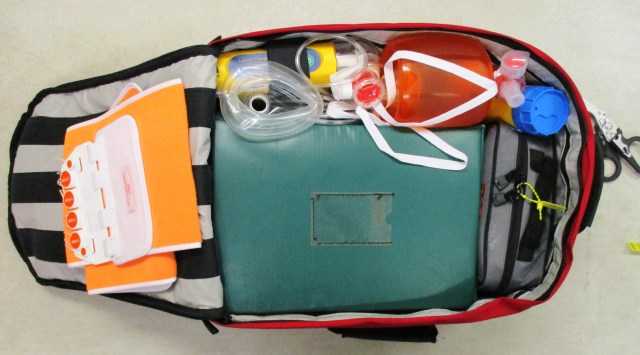
  • Clip the dropdown emergency airway (DEA) pack to the cargo netting and connect the BVM to oxygen (zip the pack back up!)
  • Get all four wanderleads down from the ceiling
  • Take the extra headset out (lives next to the Zoll monitor) and place on head of paramedic’s seat (in Bankstown, the para may bring one from the ready room)
  • Take strop and foam ball from pie warmer and place on bed
  • Sit in the back left seat and get belted in

IMG_1484.PNG

Consider placing an appropriately sized iGel from the DEA in your pocket, and unfurling the suction to place it under the bed.

Once the patient is in the aircraft, the doctor job is basic airway management, whether via BVM alone or iGel. No advanced airway will be done in flight. No defibrillation can be done in the aircraft on a soaking wet patient – see Defibrillation HOP

Limited space and limited communications should be anticipated.

Caveat: this is general guidance to give you an idea of what may be expected of you in the AW139. As with any mission, each paramedic and aircrewman is different, so it is imperative that you have frequent and open communication with your team about how best to accomplish the job.

For the newer docs, ask a friendly-faced paramedic to go over all of this with you on one of your next shifts (especially if you are H1 or at Wollongong).

Posted in General PH&RM | Tagged , , , , , | 1 Comment

Clinical Governance Day 9th March 2016

CGD poster 9 MarThe next Clinical Governance Day will be on 9th March. This session is designed to be operationally focused and give you pearls and tools to use on your next shift. Thematically, we will be focusing on water-related topics.

Clare Hayes-Bradley will present details and learning points from the January Airway Registry. Cameron Edgar begins a new fascinating and insightful series of Operational Case Reviews which glean important lessons from our missions using aviation investigation methodologies. Then Soo Parkinson makes a triumphant return to CGD to share her expertise of dive and hyperbaric medicine. Following lunch, there will be two simultaneous sessions: 1) a water winch sim by Dave McQuade where the doctors and paramedics learn how to run these jobs more efficiently as a team; and 2) a case discussion by Preston Fedor of a recent coastal stretcher winch as well as pearls of drowning management.

A BBQ lunch will be held in the hangar (bring a few dollars for your meal). Afterwards, we intend for the group to stay in the hangar for the subsequent educational sessions.

Below are some excellent succinct blog posts related to dive medicine and drowning.

http://pulmccm.org/main/2012/review-articles/drowning-2012-update-review-nejm/

http://lifeinthefastlane.com/ccc/decompression-sickness/

All NSW Health staff are welcome to attend, a sign in is required. See here for directions.

We look forward to seeing everyone there.

Posted in General PH&RM | Tagged , , , , , , , , , | Leave a comment


AC Joint Injuries

  • a non-evidenced based strapping technique which anecdotally controls pain and keeps patients mobile eg to walk out from a scene
  • the aim is to provide a lifting mechanism to support the weight of the arm which is hanging below the distal end of the clavicle (and causing pain) due to rupture of the corococlavicular ligament complex

Corococlavicular ligament complex


Strapping technique

  1. 2.5cm brown tape + 7.5cm white elastoplast
  2. make a large X directly over the AC joint
  3. apply 3 x long lengths of the white tape in a figure of 8, staring over the anterior chest, wrapping behind the shoulder, under the elbow and over the anterior deltoid. over-lay each layer by 30% for added strength
  4. reinforce the ends of the anteior + posterior chest straps with fastening brown tape
  5. wrap around the mid-humerus with white +/- brown tape to secure the tension to the shaft of the arm
  6. remove the restricting band from under the elbow by cutting below the securing layer you applied in step 5

AC Joint Strapping

Shoulder Dislocations

Posted in General PH&RM | Leave a comment