Intraosseous hypertonic saline is probably safe

HTSA previous study on swine with uncontrolled haemorrhagic shock who were given intraosseous (IO) hypertonic saline demonstrated a high rate of complications such as soft tissue necrosis and venous thrombosis(1).

This led to a recommendation of caution in patients requiring hypertonic saline via the intraosseous route(2). However the results were not replicated in other studies.

A recent animal study, again in swine, compared IO infusion of 250 mL of 0.9%, 3% or 7.5% of hypertonic saline(3). Detailed follow up 5 days post infusion showed normal ambulation and tissue morphology as assessed by a pathologist who was blinded to the infusion fluid used. The authors cite several likely methodological reasons why the former study showed tissue necrosis, which they had attempted to address in this one. For example, in this study fluoroscopy was used to confirm proper placement of the IO needle before and immediately after infusion, which ensured proper placement of the needle and no extravasation of fluid.

It is easy to conceive that extravasation into muscle in a shocked patient could increase the risk of tissue ischaemia, compartment syndrome and muscle necrosis.

A growing experience of military and civilian cases as well as the small amount of human data in the literature(4) suggest that intraosseous hypertonic saline is safe and effective, but one should always pay close attention to the limb and be on the lookout for signs of extraosseous leak, such as limb swelling.

1. Alam HB, Punzalan CM, Koustova E, Bowyer MW, Rhee P. Hypertonic saline: intraosseous infusion causes myonecrosis in a dehydrated swine model of uncontrolled hemorrhagic shock. The Journal of Trauma: Injury, Infection, and Critical Care. 2002 Jan;52(1):18–25.

2. GSA-HEMS Helicopter Operating Procedure C-03: Hypertonic Saline. 2012

3. Bebarta VS, Vargas TE, Castaneda M, Boudreau S. Evaluation of Extremity Tissue and Bone Injury after Intraosseous Hypertonic Saline Infusion in Proximal Tibia and Proximal Humerus in Adult Swine. Prehosp Emerg Care. 2014 Oct 2;18(4):505–10.

4. Luu JL, Wendtland CL, Gross MF, Mirza F, Zouros A, Zimmerman GJ, et al. Three-percent saline administration during pediatric critical care transport. Pediatr Emerg Care. 2011 Dec;27(12):1113–7.
Posted in General PH&RM | Tagged , , | 2 Comments

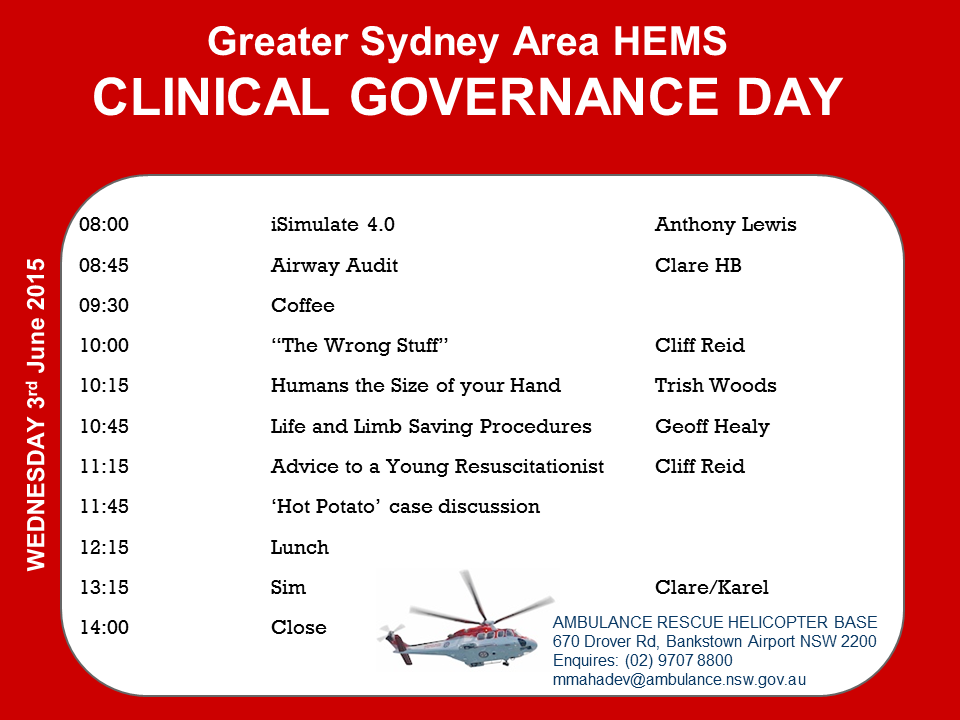
Clinical Governance Day 3rd June 2015

Lunch will be in the hangar, where there will be a sausage sizzle

See here for directions

Posted in training | Tagged | Leave a comment

Winch rescue posted on YouTube

A grateful patient posted his experience of being rescued on YouTube:

Posted in Cases | Tagged , | Leave a comment

Clinical Governance Day 6th May 2015

We’ll be reviewing the recently published HIRT trial – prior to attending CGD it would be helpful if everyone has a read through the paper – it’s one of the larger pre-hospital trials conducted and will no doubt generate plenty of discussion.

Lunch will be in the hangar, where there will be a sausage sizzle

See here for directions

Posted in training | Tagged | Leave a comment

CANCELLED: CLINICAL GOVERNANCE DAY Wed 22 APRIL 2015

In view of the severe weather conditions in New South Wales the Sydney CGD has been cancelled. We are sorry for any inconvenience this has caused, but staff safety is our top priority. Other non-essential NSW Ambulance meetings have been cancelled in order to keep staff off the roads.

Many NSW Ambulance staff have had their homes damaged or are without electrical power or other amenities and our thoughts are with them and the rest of the public at this time.

Posted in General PH&RM | Leave a comment

Clinical Governance Day 22nd April 2015


At our next Clinical Governance Day we’re fortunate to be joined by Dr Kate Sellors, Emergency Specialist at Prince of Wales Hospital, Sydney. Kate has a particular interest in toxicology and has previously worked with Sydney HEMS so will be in an ideal position to teach toxicology which is relevant to the pre-hospital and retrieval environment.

Over the course of the day, we’ll be looking at organophosphate poisoning, managing ACE-inhibitor/Calcium channel blocker/beta-blocker overdose and dealing with envenomation.
Prior to the CGD, it would be worth reading a couple of the attached articles so we’re all up to speed with the management of envenomation and overdoses.

Envenomation
Have a read through Life in the Fast Lane’s entry on Brown Snake Envenomation. It would also be worth revising how to apply a pressure immobilisation bandage. Take a look at the ARC guidelines, or watch this short video demonstrating the technique.

Organophosphate poisoning
Take a look at Andrew Dawson’s presentation from SMACC, as well as his excellent WikiTox page on managing organophosphate poisoning

Calcium channel blocker,ACE-inhibitor and B-blocker overdose
Test your knowledge of CCB overdose and High Dose Euglycaemic Therapy (HIET) with this tricky case of verapamil overdose

See here for directions

Posted in training | Tagged , , , , | Leave a comment

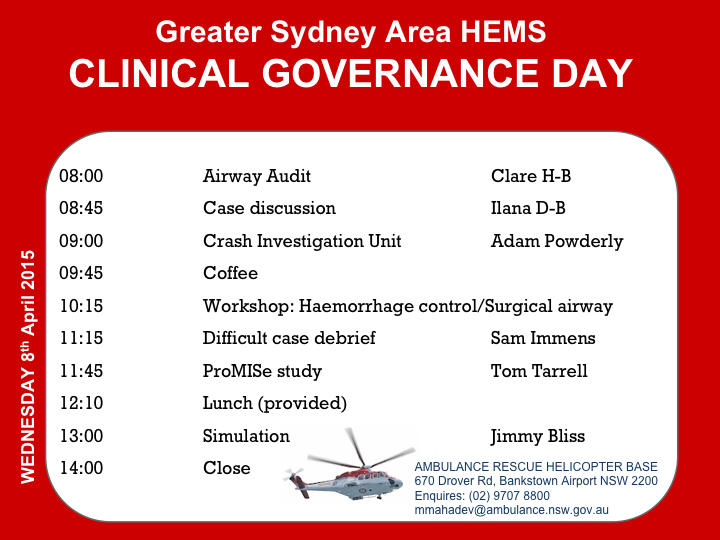
Clinical Governance Day 8th April 2015

See here for directions

Posted in training | Tagged | Leave a comment

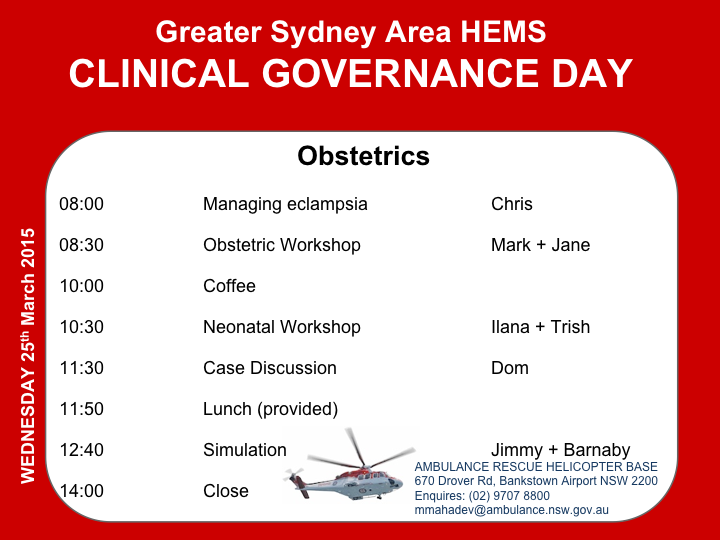
Clinical Governance Day 25th March 2015

There are two exciting workshops planned for the day, covering management of obstetric emergencies and revising our basic neonatal resuscitation.

Prior to the CGD it would be well worth having a quick read of the following documents:

Pre-eclampsia

Obstetric Emergencies

Neonatal Resuscitation

See here for directions

Posted in training | Tagged , , , | Leave a comment

Clinical Governance Day 11th March 2015

It would be really helpful if everyone can prepare for the session by having a read through Life in the Fast Lane’s description of pacing, and watch this short video on pacing with the Lifepak15

See here for directions

Posted in training | Tagged | Leave a comment

STaR-studded Simulation

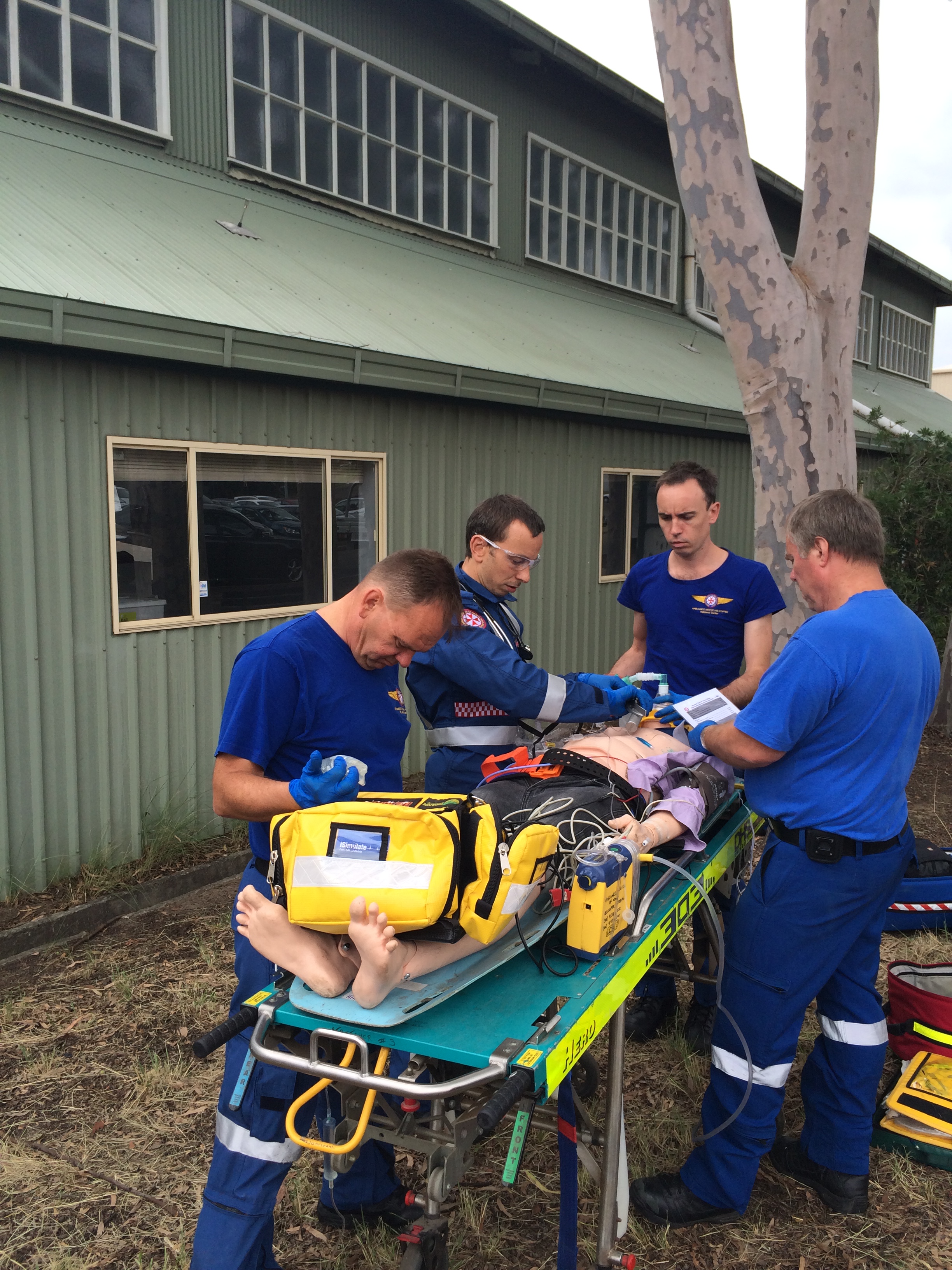
Simulation, Training and Research (STaR) shifts have recommenced at Bankstown this week with registrars putting each other through their paces with daily simulation.

Scenario – Road team attending a 70 year old male who has fallen 4-5m from his roof landing on his right side. He has sustained an obvious head injury with reduced consciousness and brisk scalp bleeding.

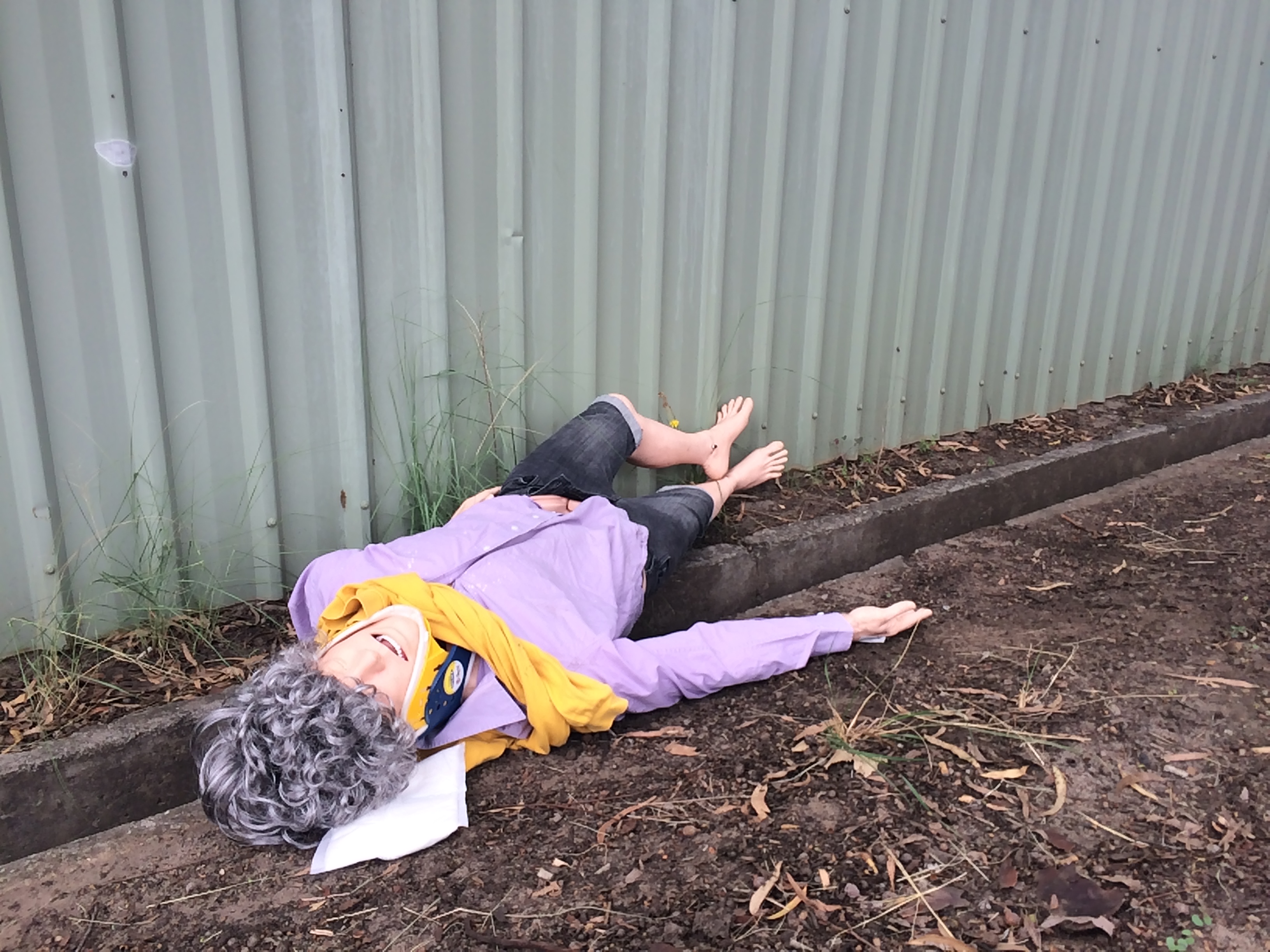
Scene – Male patient in right lateral position at base of wall. First-responder team arrived 5 mins earlier and applied a collar, placed an IV and have given IV ondansetron for “vomiting on several occasions”. They are struggling to control bleeding from a scalp laceration. Wife has just told paramedics he “only takes warfarin for AF”.

STAR SIM 01 02-03-15

Patient – Obtunded with partial airway obstruction and a briskly bleeding right scalp laceration. Extensive right chest wall contusions with subcutaneous emphysema and reduced air entry. RR 28, SaO2 93%, P 105 (AF), BP 148/90, GCS 6. Pupils equal 4mm.

Learning points from debrief:

  • Obtain observations as early as possible. This only helps to prioritise care and interventions.
  • Optimise the environment to optimise your resuscitation. Move the patient to a safe location to make your care easier.
  • Adopt neuroprotective measures post-RSI for all patients with traumatic brain injury. Don’t forget to reassess the pupils.
  • Control brisk scalp bleeders if possible. Employ others to apply direct pressure & don’t forget that we carry staples !!
  • If possible notify the receiving ED for potential need for early warfarin reversal (PCCs & FFP).

STAR SIM 02 02-03-15

Thanks to Dan (Doc), Laurie (Para), Alex (SRC), Jimmy (trusty assistant #1), Keith (trusty assistant #2) & Chris (STaR).

Posted in simulation, training | 1 Comment