Clinical Governance Day 22nd May 2013

CGD22-05-2013-page-0

Posted in General PH&RM | Leave a comment

Simulation Debrief 2/5/13 – Snugly stowed and about to blow?

philparrystretcher2

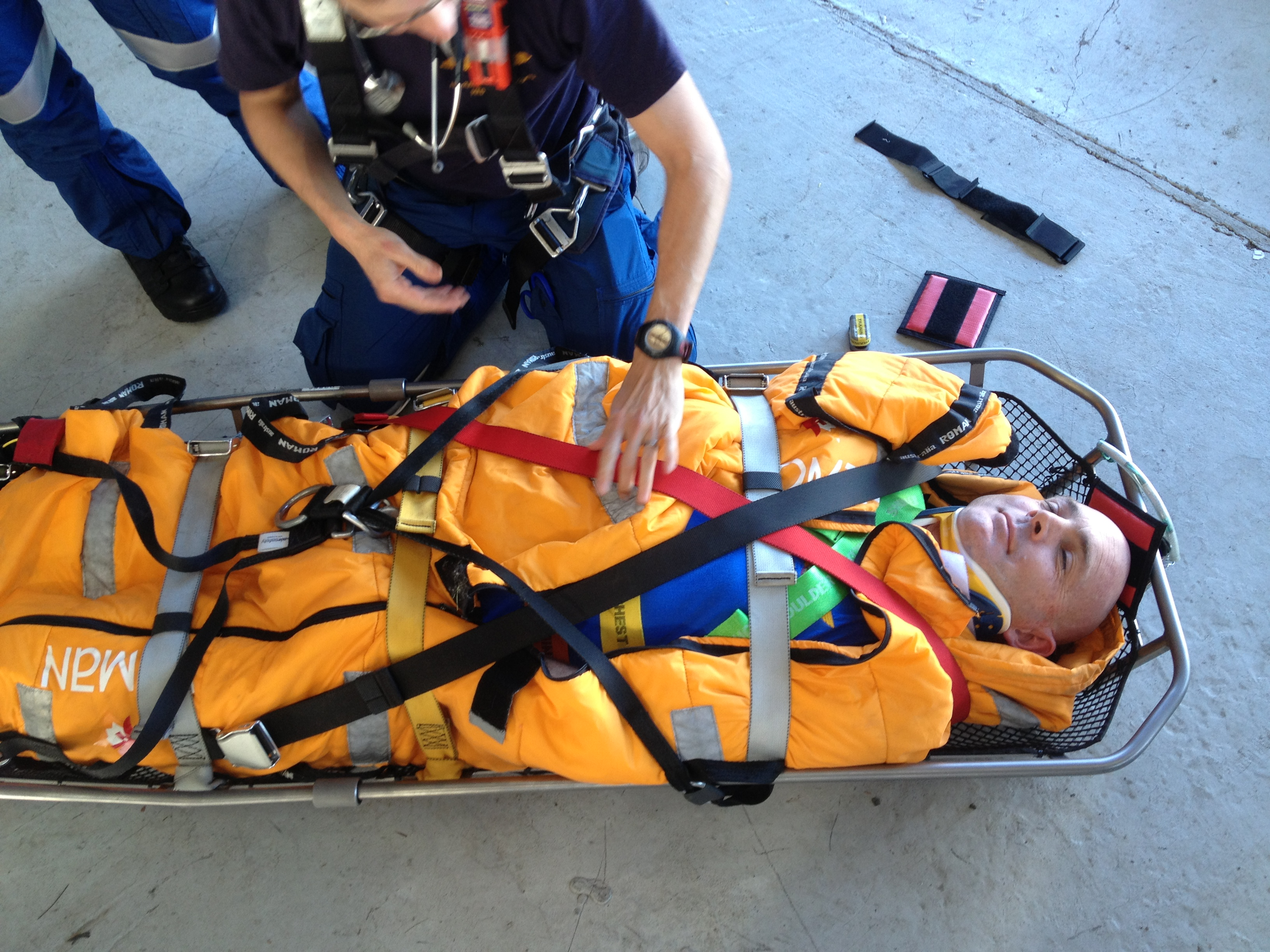
Scenario – 58yo male (Phil) with probable spinal injury following fall from height in the Blue Mountains.

Scene – Local paramedics have accessed remote bush scene by foot. AW139 responded with doc and para from Bankstown. Para & Doc winched into scene.

Patient – Denies any LOC but complains of lower leg parasthesiae and weakness. Local crew have already provided C-collar, bilateral IV access and 2.5mg morphine by time helo team arrive. Medical assessment consistent with isolated spinal injury, GCS 15, haemodynamically stable. Patient packaged accordingly with KED and “Roman” (a handled sleeping bag used for thermoprotection, comfort, and handling) into stretcher. Accompanied stretcher winch performed. En route to RNSH patient begins to vomit and becomes increasingly agitated. Loses both IV cannulae. Obstructs airway following emergency IM sedation.

philparrystrretcher
Challenges –

  • Patient’s size: stretcher is not long enough for a patient of Phil’s height. Very uncomfortable for the awake patient. Heavy to roll/lift with spinal precautions given limited personnel on scene.
  • Managing vomiting in a spinal patient without a secure airway while in the air.
  • Controlling a combative/agtitated patient in the air when IV access is lost.
  • Managing airway in flight.

Learning points from debrief for clinical practice :

  • Spinal immobilisation and stretchering can be very uncomfortable (just ask Phil). Try to optimise positioning, padding, analgesia.
  • Consider anti-emetic before winching/flight. This raises the question of what agent is most suitable? Is Promethazine the only agent with an evidence base for motion-sickness?
  • Once a spinal patient starts vomiting we need to be able to roll the stretcher (not possible if 4 point side restraints are connected) and reach the suction. If the doc and para are both seated in the rear jump-seats access to suction is awkward.
  • Controlling an agitated patient without IV access is difficult in flight. We do not carry pre-drawn drugs in a concentration appropriate for IM. There are pointy needles in the para’s thigh pouch or primary pack we could use to deliver IM if don’t have any on us. Alternatively could consider interosseous, intranasal, buccal routes. Pros and cons of each with respect to specific patient, onset of action etc. In this scenario 15mg Midaz was given IM (from the 15mg/3mL vial in red pouch).
  • Options for maintaining airway patency in flight include simple manoeuvres and adjuncts (jaw thrust/Guedel etc). LMA might be considered also. Intubation will require landing at a suitable site.

Learning points from debrief for Simulation practice:

  • Try not to drop the winch hook on the patient.

Thanks to Lucas Fox (doc), Greg Kirk (para), Pat Crowe(aircrew), Phil Parry(actor), Ruby  (SRC), Rory (STAR)

Posted in simulation, training | Tagged , | 2 Comments

Sydney HEMS goes to Hong Kong

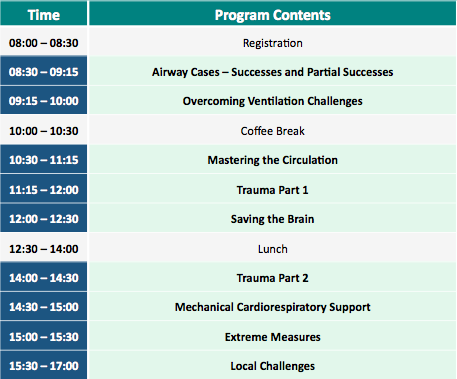
Five prehospital & retrieval medicine physicians from Greater Sydney Area HEMS are excited about participating in a one day seminar at the Chinese University of Hong Kong’s A&E Academic Unit.

Led by Professors Tim Rainer and Colin Graham, the Accident & Emergency Medicine Academic Unit has furthered emergency medicine & trauma science. Not restricted to ED-based interests, they also run a successful Masters program in Prehospital & Emergency Care.

The One Day Prehospital & Retrieval Medicine Seminar will take place on Friday 31st May.

PHARM-timetable

Presentations will be by Cliff Reid, Brian Burns, Anthony Lewis, Fergal McCourt, Oran Rigby, and Professors Rainer and Graham.

If you’re in Hong Kong and would like to come, reservations can be made by completing the reservation form on the flyer, which you can download by clicking below:

PHARM-HK

All proceeds go to local education/research, not to Greater Sydney Area HEMS employees.
Posted in training | Tagged , | Leave a comment

Simulation Debrief 25/4/13 – Water water everywhere, nor any time to think…

IMG_4718

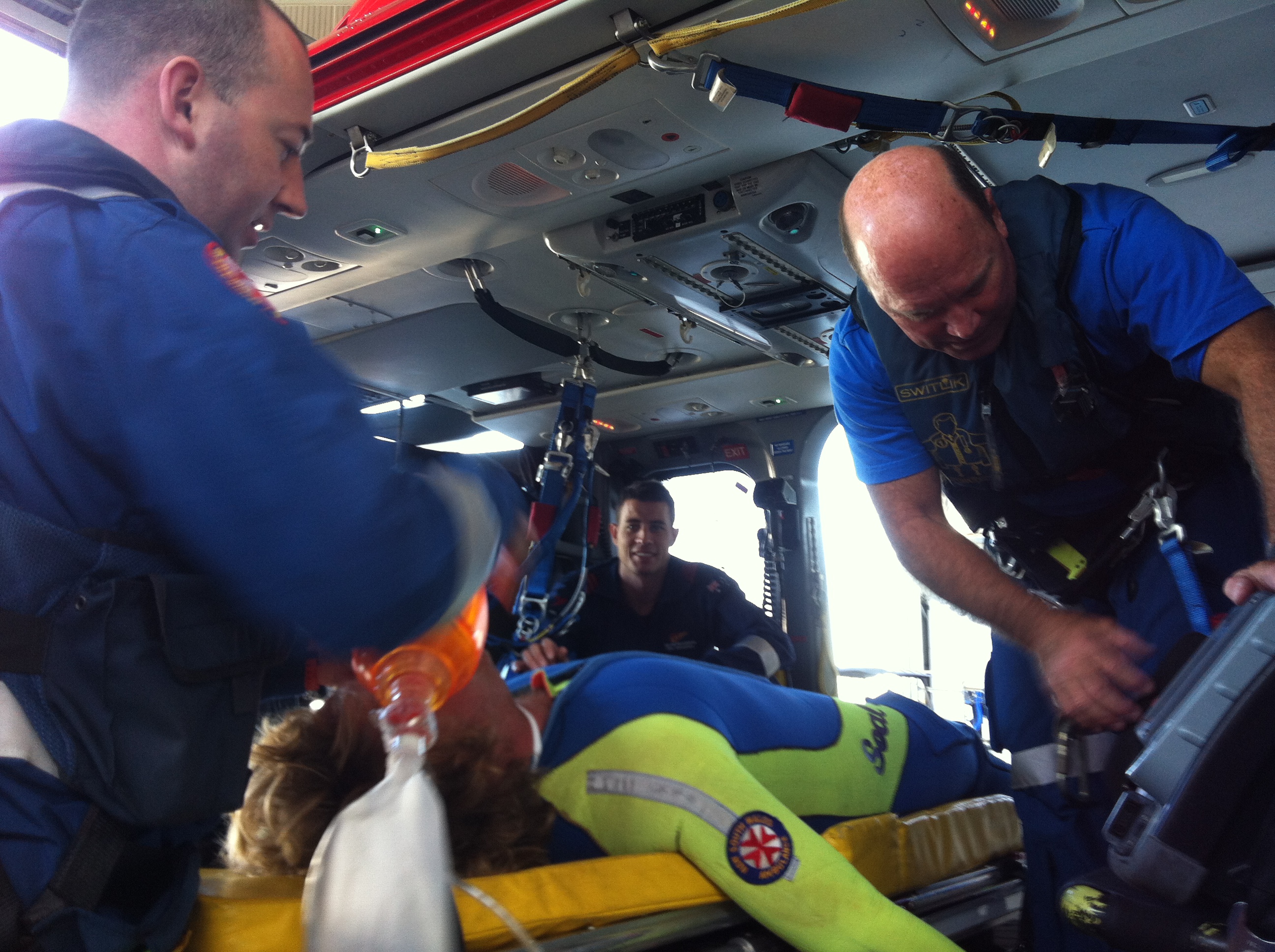
Scenario – Male snorkeler floating unresponsive in water, following likely intracerebral event.

Scene – Offshore recovery. Strop winch by paramedic into aircraft with initial assessment on board then further assessment and treatment at landing site on nearby headland.

Patient – Cold and wet in wetsuit. Poor airway control. Poor ventilation. Weak pulse. Progresses to seizures and recurrent vomiting.

Challenges – Airway control, vascular access, seizure management, requirement for RSI.

Learning points from debrief for clinical practice :

  • Preparation of the cabin for any water-based primary mission including doctor on wander lead, O2 and LMA out ready to go, access to suction and potential for two points of suction to be required
  • Difficulties in assessment and monitoring of the cold, wet patient
  • IO access through a cut wetsuit point
  • Seizure control options including intraosseous, intramuscular and intranasal benzo usage

Learning points from debrief for Simulation practice :

  • Combining medical scenario with full strop winch training a worthwhile activity

Thanks to  John  (doc),Hugh(para), Shane(pilot), Richo(aircrew), Einar(actor),      Fergal (SRC),   Luke (STAR)

Posted in General PH&RM | Leave a comment

CGD 24th April 2013 Feedback

Thanks to Nirosha and John for another great Clinical governance day!

Highlights of M&M (thanks to Dr Sarah Coombs and Dr Chioma Ginigeme)

  • Multiple cases were discussed that saw us tasked to distant locations in the far west of the state following catastrophic intracranial events. The decisions surrounding who to transport, when to transport, whether for investigation, treatment or even end of life care were all explored with an understanding of the minimal resources available to patients and staff living remotely.
  • Cases were discussed which highlighted the frustrating logistical ‘sinkholes’ that potentially arise in particular locations in NSW, where distance to airfield/fuel/interstate borders conspire to lengthen our retrieval times regardless of whether we task helicopter, fixed-wing or road assets.
  • We discussed the challenges of multiple moving teams trying to converge in a single place with a single patient. A typical case was of a patient moving in a road ambulance, trying to meet our helo crew who were actually in another road ambulance at the time, and co-ordinate with the helo itself whose flight-crew were constrained by weather in where they could land. The concept of always trying to have said assets moving towards the final point of care was agreed to be a good guiding principle in these situations.

SIMWARS Highlights

Ollie and Bob did fantastic work intervening in a deteriorating patient many hours from a neurosurgical centre. The carpenter on the right of the picture is Dr Harrison armed with a Hudson Brace and a grim sense of determination in the face of an otherwise unsalvageable patient.

ollidrill

(Wilson et al give a fantastic ‘How to…’ summary for emergency burr holes in Scandinavian Journal of Trauma, Resuscitation and Emergency Medicine 2012, 20:24 doi:10.1186/1757-7241-20-24 – http://www.sjtrem.com/content/20/1/24)

Felicity and Richard were confronted with a chaotic sea of medical opinions surrounding a deteriorating, unstable patient . With a potpourri of ischaemia, hyperkalemia and pharmacology leading to a decompensated bradycardia our team had to balance their interventions against the ongoing PR blood loss and the persistent (but unintentional of course) attempts by our actors to derail their efforts.

flicbrady

Highlights from ‘other health systems’ presentations

SCAT Paramedic Bob Lisle gave us a great insight into the challenges of working as a medic in the highlands of Papua New Guinea with amazing footage of some aircraft being pushed to their limits and more snakes than you can shake a stick at (NB – never deal with a possibly venomous snake by shaking a stick at it).

Irish registrar Dr John Glasheen gave a great talk charting the rise and rise of the “Enhanced Aeromedical Service” of Ireland and the challenges of rationalising the tasking of operations when there are 7 regional ambulance control centres and an as yet variable level of awareness amongst all the pre-hospital players involved as to what the helicopter can and should be doing. The overall impression was of a service going from strength to strength even amidst the substantial financial pressures of recent years.

irish

Posted in simulation, training | Tagged , , | Leave a comment

Urban Search and Rescue

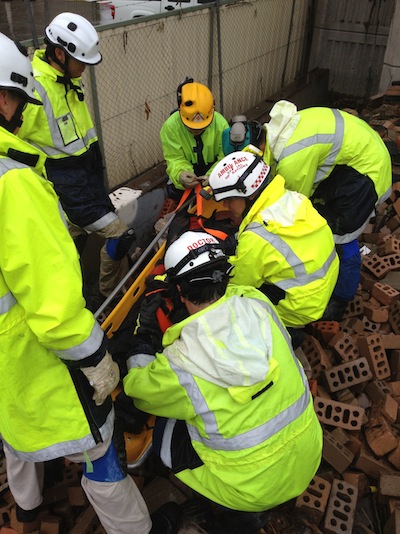
GSA-HEMS consultants and paramedics are deployed as part of the New South Wales Urban Search & Rescue Task Force. Although registrars are not deployed as part of this team, working in prehospital care requires preparation for work in disaster zones, and a basic understanding of Urban Search & Rescue (USAR) is helpful.

USARcat1

During a six month post we endeavour to provide USAR training to Category 1 level. This training is provided by the NSW Fire & Rescue Service.

Prior to attendance at the practical training, all delegates must complete the exercises on a training CD obtainable from the GSA-HEMS base secretary.

The next USAR Cat 1 training for GSA-HEMS registrars will be provided on 21 May 2013

The USAR Category 1 certificate is internationally recognised and transferable when working for other services. Please contact Dr Carissa Oh to register.

Posted in training | Tagged , , , , | 1 Comment

Clinical Governance Day Wednesday 10th April

cgd 24th-page-0

Posted in General PH&RM | Leave a comment

Get the DipRTM RCSEd…..

Booking now

Diploma in Retrieval and Transfer Medicine

22-23 October 2013

Open to doctors, nurses and paramedics fully registered in the UK with relevant retrieval experience

“With an increasing number of doctors, nurses and paramedics from a range of backgrounds undertaking high-risk critical care retrievals, there is a need to develop a benchmark assessment of skills, knowledge, attitudes and experience.”

– Dr Stephen Hearns, Consultant in Emergency and Retrieval Medicine

The closing date for registration is 19 July 2013.

Click here to book now.

For further information:

Tel +44 (0) 131 527 1600 

Email RTM.exams@rcsed.ac.uk

Posted in training | Tagged , | 1 Comment

Simulation debrief 19/4/13 – The suspense is killing me

gotitall2derrier2

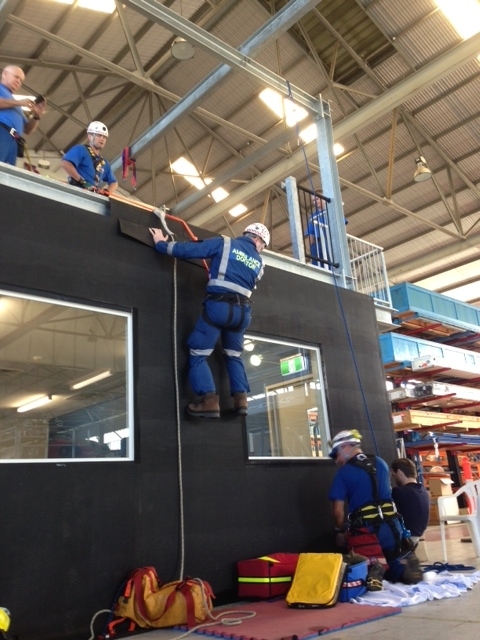
Scenario – 25 year old male fallen down cliff face sustaining bilateral lower limb injuries and now caught in climbing apparatus. Remote location. Doctor and paramedic crew only able to insert from edge above. Suspended on cliff face for c.18hours.

Scene – Ledge beneath cliff. 5m height rope rappel both above and below patient. Helicopter stretcher winch possible from point below and distant to patient.

Patient – Hanging in semi-seated position in harness. Bilateral compound femur fractures. Responsive to verbal cues. Good respiratory and circulatory findings initially. Both lower limbs numb. Rapid deterioration due to hyperkalemia and haemorrhage.

Challenges – Difficult and high risk access and egress. Remote location with limited resources. Management of hyperkalemia secondary to rhabdomyolysis and soft tissue trauma. Treatment of traumatic cardiac arrest in austere environment.

Learning points from debrief for clinical practice :

  • Early planning of what resource to take in with you may have exponential benefits later when your patient deteriorates – eg monitoring, defib capability, blood etc.
  • Early preloading with IV fluid prior to movement or tourniquet release.
  • Management of traumatic (and potentially therefore hypovolemic) cardiac arrest differs from our management of the hyperkalemia induced arrest. ie use of calcium, adrenaline and CPR in the hyperkalemic arrest, addition of pelvic splint, consideration of bilateral thoracostomies in trauma.

Learning points from debrief for Simulation practice :

  • Combination of rope and difficult access training with a medical training scenario improves the fidelity of each of them.
  • Markings (whether simulated blood or even a simple label) aid recognition of injuries without too much industry required

‘Reflow syndrome’, ‘Rescue death’, ‘Harness hang’, ‘Suspension intolerance’ :

The use of the term syndrome or multiple inverted commas may herald an area of medicine poor in evidence and rich in opinion. The climbing community and the emergency personnel who attend them when in extremis have long debated the effects and management of those left hanging for prolonged periods. The above terms are some of the labels given to theoretical processes that have been proposed over the years for how the body responds to hours spent immobile in harness.

Expert opinion for some decades had coalesced around the perceived threat of orthostatic fluid stasis in the lower limbs.  Fainting happens. If prolonged this will result in ischaemic injury and potentially death. However, the presumption of rhabdomyolysis secondary to prolonged time in harness and fluid/electrolyte shifts proposed to occur when patients are returned to a supine position has remained unproven by any scientific study to date.

In the absence of any concrete evidence to support this theory, expert opinion (and the resulting consensus guidelines) have now swung back in the opposite direction. Recommendations are now made that those found hanging be treated according to universal algorithms applying to resuscitation and trauma.

Cardiovascular collapse is certainly recognised in passive suspension but in the absence of major crush or long term arterial ischaemia, hyperkalemia and re-perfusion injury appear to have moved out of the sights of those trying to identify what kills people left on the hang.

References

Dr. Roger Mortimer’s presentation at the 2012 NCRC National Seminar: http://www.youtube.com/watch?v=nEn4WQ5ShTo

UK HSE review by Prof Porter: http://www.hse.gov.uk/research/rrpdf/rr708.pdf

Australian Resus Council:  http://www.resus.org.au/policy/guidelines/section_9/guideline-9-1-5july2009.pdf

http://www.wemjournal.org/article/S1080-6032(10)00402-3/abstract

Thanks to  Luke(doc), Hugh/Cam(para), Christian(actors), Einar(STAR)
Posted in simulation, training | Tagged , | 2 Comments

Simulation debrief Thursday 18/4/13 – Like a kick to the head!

18_4_13 sima

Scenario – 35 year old male kicked in head by horse. Found unconscious in stable (unstable-sic)

Scene – Fading evening light. Landing site 100m away at the top of a field. Stable interior not illuminated, only hand-held lighting available. Single road paramedic crew on scene.

Patient – Airway occasionally polluted by vomitus. Rapid breathing with right sided chest injury evident. Cool peripheries. GCS E3,V4,M5=12/15. PEARL. Facial, forehead and right chest bruising and abrasions. Becomes increasingly unstable and following intubation develops a righ-sided tension pneumothorax.

Challenges – Lighting, access and positioning all better at the aircraft than in a pitch dark stable. Complicating this were the unstable patient, the difficult terrain to traverse en route to the aircraft and the conflict between rapid extrication and more comprehensive assessment. The clinical challenges of identifying the obtunded patient requiring a secure airway, ventilation and a thoracostomy seemed less challenging to our super-slick team than the physical environment they encountered.

Learning points from debrief for clinical practice :

  • “Sharing your mental model” – as often as possible with your team and particularly when changing circumstances change your model
  • Carriage of an independent personal light source on your person can be critical when you find yourself in a dingy farm outbuilding…alone in the dark
  • Awareness of terrain issues as you access the patient will always simplify egress planning
  • The AW139 provides a well lit, positioned, equipped and partially sheltered environment for performing an RSI
  • The AW139 may pose the hazard of a hot ‘night sun’ attachment on the door side routinely used for the head end in an East-West patient configuration
  • The vehicle suction and lights are dependent on the vehicle battery so always have a plan B for battery failure on these items
  • The EC145 offers shelter and lighting with substantially less space and more awkward positioning for performing an RSI
  • Communicating the likelihood of an intubated patient can mean the aircrew may attach ventilator to ceiling and have the monitoring bridge out of the rear cargo bay ready

Learning points from debrief for Simulation practice :

  • A ‘voice in the ear’ approach to describing the imagined scene geography as walking through it can give the paramedic much more to go on for operational planning of access and egress
  • Utilisation of our operational aircraft for medical simulation means the entire team can be involved and adds worthwhile fidelity to any job being simulated. It also means we can benefit from both pilot and aircrew contributions to the debriefing process

Thanks to Helen (doc), Phil (para), Brendan (pilot), Mick (aircrew), Hugh/Christian/Bob (actors), Sarah (SRC), Nirosha (iSimulate), Luke (STAR)

Posted in simulation, training | Leave a comment