Prehospital Basic Airway and Oxygenation

Cliff Reid, Karel Habig, and Geoff Healy discuss the approach to patients with hypoxia and obstructed airways, prior to rapid sequence induction. This is all about effective basic airway management.

Posted in Airway, Podcasts | Tagged , | 2 Comments

Penetrating Trauma

Cliff Reid, Karel Habig, and Geoff Healy discuss the approach to patients with penetrating injury.

Posted in General PH&RM, Podcasts | Tagged , | Leave a comment

The Prehospital Primary Survey

In this podcast, Cliff Reid, Karel Habig, and Geoff Healy discuss how to do a prehospital primary survey

Reference:
Ware S, Reid C, Burns BJ, Habig K. Helicopter emergency medical service registrars do not comprehensively document primary surveys. European Journal of Emergency Medicine. 2012 Jul;:1.


Posted in General PH&RM, Podcasts | Tagged | Leave a comment

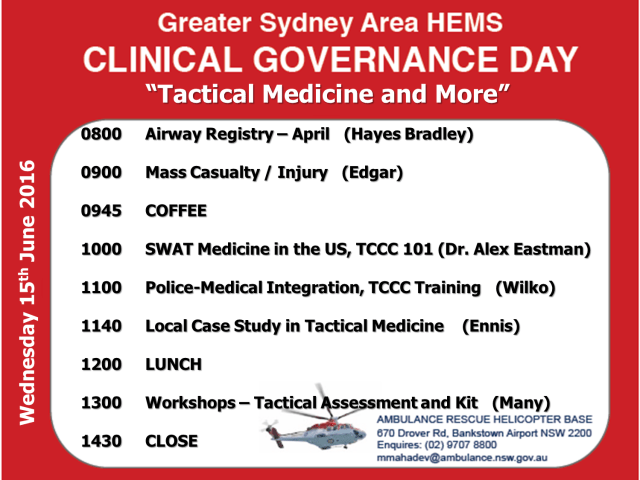
Lessons from the Airway Registry – CGD 15 June 2016

At our Clinical Governance Day on 15 June 2016, Dr. Clare Hayes-Bradley presented cases and lessons learned from our April Airway Registry. Thank you to her for the presentation and the pearls below which shed light on our airway practice.

IMG_1460

Common things are common. All prehospital care teams need to plan (& ideally team train with simulation) for the following:

  1. Tissued IV/IO sometimes only apparent when RSI drugs don’t work. This reinforces the need for two working IV/IO access prior to RSI
  2. Laryngoscope light failure during laryngoscopy. Everyone needs to be aware of where to put their hands on a second blade and handle in case this occurs: Dropdown Airway (DEA) Kit, pediatric airway kit in the Red Primary Pack (short handle)
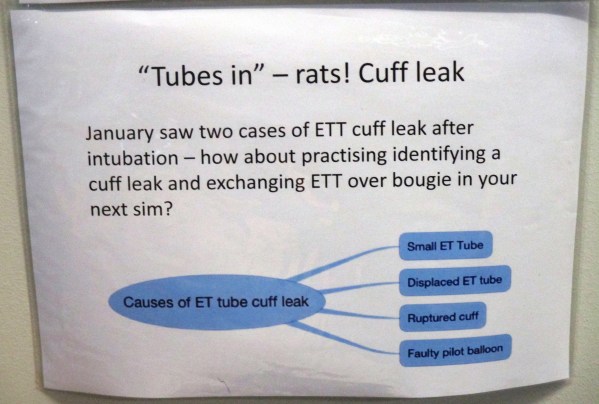
  3. Cuff leak? You pass the ETT between the cords and start to ventilate. A reassuring ETCO2 trace begins and the chest rises but there’s the noise of a cuff leak. Cuff rupture on intubation is a common problem necessitating ETT exchange over bougie, but there are other causes:
  • Tracheal ETT with cuff deflated (cuff rupture or pilot balloon failure)
  • Pharyngeal cuff (ETT too shallow)

Repeat laryngoscopy may reveal a pharyngeally sitting cuff. Take note of ETT depth at insertion and continue to reassess.

IMG_0039.JPG

From the wall of the Esky


Does Hand ventilating save time? And Implications for cardiac output.

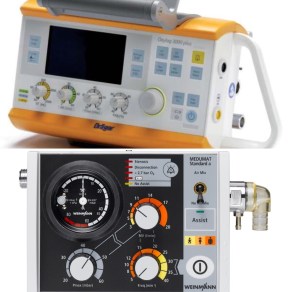
Severely injured and shocked patients are frequently moved by our service by road or air. It can be tempting to think that hand ventilating with the BVM is going to ‘save time’ to get the patient to definitive haemorrhage control, but there are many down sides. Unintentional overventilation is common in severe injury and can result in raising intrathoracic pressure from positive pressure breaths, further lowering venous return and worsening shocked state. The time taken to instigate mechanical ventilation may help care by lowering mean IMG_2503.JPGintrathoracic pressure; allowing the ETCO2 to reflect the cardiac output response to resuscitation, and free hands for putting on harnesses/loading patient/providing other care, etc. Particularly with the added times of preparing the helicopter and spinning up for takeoff, then cooling down after landing, helicopter transport often takes much longer than you think. In general, mechanical ventilation wins over hand ventilation for prehospital trauma care.


Posted in Airway, General PH&RM | Tagged , , , , , , | Leave a comment

CGD 29th June 2016

Slide1

Next week’s CGD begins with a pearl-packed Mortality & Morbidity session and is followed by the always revealing Airway Registry.

In the 2nd half of the day, Chris Partyka is returning with part two of the oustanding Sonography Training Oriented to Retrieval Medicine (STORM2) course. This is a fantastic opportunity to hone your ultrasound skills with real-time feedback from the pros and to log some proctored scans to add to your CPD portfolio or just increase your confidence.

STORM2 will include a refresher session on Basic Echocardiography in Life Support (BELS) and a 3-station workshop with volunteer patients. If you haven’t previously attended the STORM course, do not fret, you are still encouraged to attend.

To get the most out of the session, we suggest that you take a quick look at the following pre-reading with a focus on the echo section of the STORM course manual + the basic echo views.

Sonography Training Oriented to Retrieval Medicine Manual(sm)

TTE REFERENCE CARDS

For the enthusiasts, check out the links below as well.

STORM Course training page

Virtual Transthoracic Echocardiography (Toronto General Hospital)

Echocardiography in ICU (Stanford University)

We will conclude the day with a BBQ in the hangar. As usual all NSW Health staff are welcome to attend, a sign in is required. See here for directions:

https://sydneyhems.com/contact/


Posted in General PH&RM | Leave a comment

Clinical Governance Day – 15 June 2016

CGD 15 June draft agenda.png

     We have an outstanding CGD planned for Wednesday, the 15th of June. The morning starts with a clinical pearl-filled recounting of April’s Airway Registry as well as a thought-provoking Mass Casualty / Mass Injury session. After some coffee, we will host this year’s first exposure to the concepts and logistics of tactical medicine with a multi-modal extravaganza – a Skype presentation from a US trauma surgeon / SWAT physician, two talks by our own paramedics about real experience with tactical incidents and training, capped off by hands on workshops courtesy of expert local ambos and Defence medics.

This CGD is not intended to prepare our medical teams to don body armor and kick down doors. Wednesday is designed to give us a better appreciation of the complexities of law enforcement operations, how we might be called upon to care for patients extracted from a tactical incident, and what valuable skills/mindset can translate to our primary missions.

See the links below for more information and some background reading of this unique body of knowledge.

All NSW Health staff are welcome to attend, a sign in is required. See here for directions:  https://sydneyhems.com/contact/


Pre-CGD Preparation:

Committee for Tactical Emergency Casualty Care (Resources/Guidelines)

EMS Operational Considerations for Active Shooter / MCI Response

European Society of Emergency Medicine‘s excellent Mass Incident link list

Posted in General PH&RM | Leave a comment

HEMS Team Induction Training

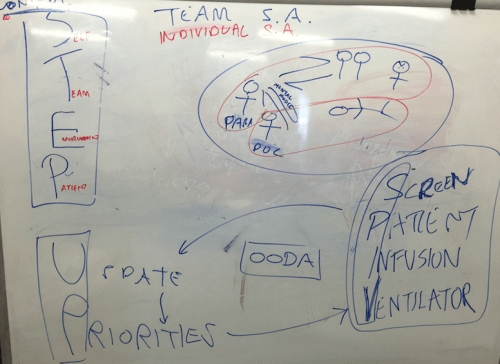
STEPUPSPIV
As we go into Winter here in Sydney we are gearing up for the August HEMS Team Induction Training. The following piece provides an overview of the philosophy and content of the training, which was originally written for a NSW Ambulance publication:

The Greater Sydney Area Helicopter Emergency Medical Service has helicopter bases at Sydney, Wollongong and Orange and provides a paramedic-doctor team to accident scenes, remote area rescue, and for the interhospital transport of critically ill and injured patients. Our doctors also work closely with NSW Ambulance flight nurses during long range fixed wing retrieval missions.

Every six months, new doctors are trained alongside new and existing critical care paramedics in a course that has become a world leader in its class, attracting participants from all over the planet.

The purpose of the first week of training, called the HEMS Team Induction Course, is to get critical care doctors and intensive care paramedics ready for the prehospital & retrieval medicine environment. This week consists of 60 hours of workshops, simulations, skill stations, and assessments, culminating in a 90 minute multi-station exam. 12 hour days are punctuated by additional practice, study, exercise (running around the airport), and unhealthy quantities of coffee.

In February there were 37 participants on the course, consisting of not just our own NSW Ambulance doctors and paramedics, but also doctors sent from Lismore, Canberra, the Royal Flying Doctors at Dubbo, CareFlight NSW Ltd, the Australian Defence Force, and overseas prehospital specialists. We trained individuals from Australia, Britain, Ireland, the USA, Norway, Poland, and Hungary.

The course is unique in several aspects. Firstly, the focus is on team performance, not individual success. Physican-paramedic teams are trained together and tested together, strengthening the teamwork and cooperation within the team and keeping the focus always on the patient. This generates a healthy competitiveness between teams, all striving for the best exam score!

Another key component is cross training. Physicians are taught logistic and scene management skills which traditionally are the responsibility of the paramedic. Paramedics are taught all the life, limb, and sight-saving surgical techniques in an animal lab that are the doctors’ responsibility to perform. Although paramedics do not directly perform these procedures on patients, this greater understanding of each others’ roles results in more effective team coordination and mutual support, with the aim of smoother, faster missions.

Simulation is the key to performance improvement. We strive to put clinicians ‘in the zone’ so that it feels as real as possible. One way to do this is to use human actors rather than the unrealistic manikins that can’t scream or become agitated and combative.

Everyone reading this knows that prehospital care can be really tough for a number of reasons. To prepare our teams for the more acute pressures of the job, we include stress exposure training as an increasing component of the simulations throughout the week, culminating in a fairly extreme ‘stress inoculation’ station as part of the end of week exam. A strong element throughout the course is human factors training, which includes imparting the tools required to minimise the effects of stress on performance. Many of these lessons have been learned in sporting and military domains, and translate well into prehospital practice.

The opportunity to run this training every six months provides us with a ‘training laboratory’, in which we continue to improve the quality and effectiveness of the training based on participant feedback and team performance. A massive and complex logistic exercise, we welcome qualified NSW Ambulance staff to act as helpers to act in simulations and to provide other hands-on support. Anyone interested in helping with the HEMS Team Induction Course in August 2016 or February 2017 should contact Paul Kernick via the NSW Ambulance intranet.

Posted in General PH&RM, simulation, training | Tagged , , | Leave a comment

Redundancy, Modularity and Degeneracy

by Dr Alan Laverty FRCEM

I stumbled across the above mentioned terms in a newspaper article. It was written by the economist John Kay (he of the UK Kay report post GFC) in regard to the international banking system and his suggestion as I recall was that these were sensible principles upon which to base a new system. Where had he discovered these terms? Engineering interestingly. Where did engineering come up with them from? Evolutionary biology, even more interestingly. Oh for that sort of humility to transplant ideas within the medical fraternity! Now I’ve searched for the article again to try and prove I haven’t created a false memory but alas it’s deep behind a paywall (How we need you now Aaron Swartz).

So what do they mean and while I risk being the proverbial man with a hammer what is their relevance within medicine? Well they’re fairly straightforward individually. Redundancy is probably the most familiar and involves providing back up of functions or components.

In our practice at the Sydney Base we have two helicopters and two road ambulances. This leads to a bit of sitting around from time to time but means that when chance produces a volume of work we can almost invariably respond. We have two engines on the helicopter thankfully. We carry enough fuel to make it to an alternate airfield in the event of bad weather. We have two team members. We have oodles of oxygen within the helo and road ambulance but less moving on foot to a scene. We have multiple redundancies within our primary packs- etCO2 monitoring, pulse oximetry, IV access, PEEP valves (tripping over them), bougies etc. Many of these are the result of feedback from individual cases and clinical governance meetings. This also highlights the benefits of a self regulating system. A state of perpetual beta within a Zeno’s paradox towards unobtainable perfection.

Modularity is a broad concept with differing interpretations in different domains. The general theme is building a system from smaller sub units which function autonomously and can be be recombined as needed. Our organisation is divided up into teams responsible for each facet of of the process – education, simulation, airway registry, M+M, drugs, equipment, operating procedures, blood products, social media etc. Each has its own objectives and a fair degree of autonomy to do the job. In the ED ideally there are a number of smaller teams covering Resus, minors, majors, ambulance reception, ambulatory care, paeds. Working in smaller teams with focused goals is arguably more empowering and helps avoid the negative behavioural aspects of hierarchial bureaucracies. It also reduces management requirements. Consider that the entire Berkshire Hathaway conglomerate is run by 24 people in Omaha.

Degeneracy is where different units can perform distinct functions under regular conditions and similar functions under alternate conditions. This describes the core of our paramedic/ doctor model of prehospital care. Both can assess/ gain IV or IO access/ intubate/ use comms, ventilators, infusers/ give drugs/ give blood/ liaise with local crews and receiving hospitals. Under ideal conditions roles are distinct but then ideal conditions rarely seem to present. In the helicopter, the aircrewman swears he can get the helicopter very close to the ground (but not definitely land it!) in the event of a pilot issue. Some will happily set up the oxylog in preparation for patient transfer. We use a SAM splint for everything but its intended use. We can use a T-pod for airway positioning and holding a hysterotomy wound closed. In an ED, can every doctor and nurse take blood/ apply plaster of paris/ perform an ECG? Can a specialty doctor assist in the ED or see a patient directly? Does everyone know where the spare etCO2 tubing is? Frequently it’s the one nurse who does the ordering who Murphy has decreed to be on leave the day the levee breaks. Sure if the consultant in charge is regularly working as a phlebotomist then there are more fundamental staffing issues but degeneracy within a system provides another form of redundancy to cope with surges in demand.

What are we searching for in our systems? Robustness. I could suggest antifragility but let’s not go there. In classical economics we have the tale of absolute and comparative advantage with the conclusion that the person/organisation/country most efficient at a mode of production should carry it out exclusively. This makes perfect sense in a mathematical sense under ideal conditions or in an operating theatre. Add a little stochastic bedevilment and this model falls apart.

Most of these ideas will be incorporated in some form in healthcare systems but by stress testing each system against each variable from the wider organisation, to specialty, department, training program, operating procedure, care pathway etc. we may build better systems and processes. There will also be trade offs in costs vs benefits to consider but at least we can know where the weak points lie.

Given that these concepts are evident in evolution and have been subjected to the great leveller of time we can be fairly sure there’s something in them and I commend them to you.

As a final corollary, if you’re sitting on an interview panel and the victim has a background in engineering, economics, software design, astrophysics or other real world efforts, sign them up. We need new ideas.

Posted in General PH&RM | Tagged , | Leave a comment

Wollongong Extravaganza

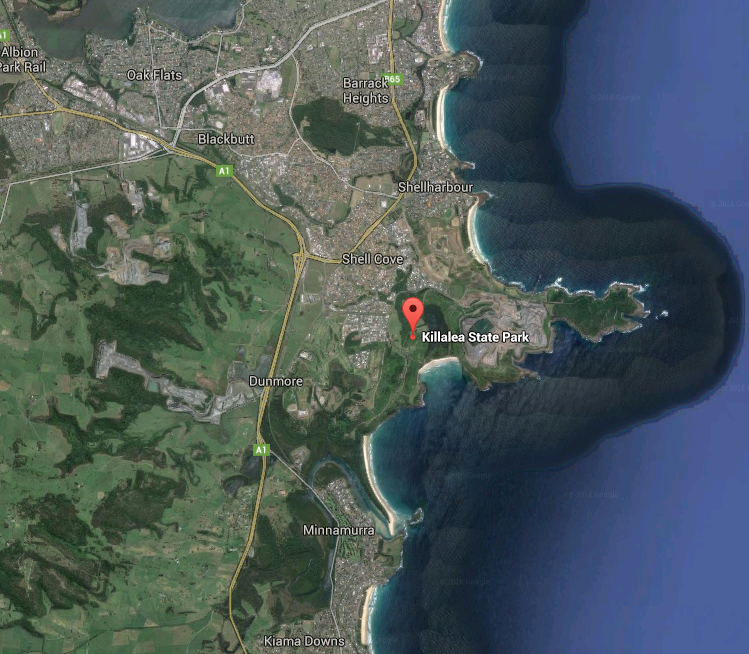
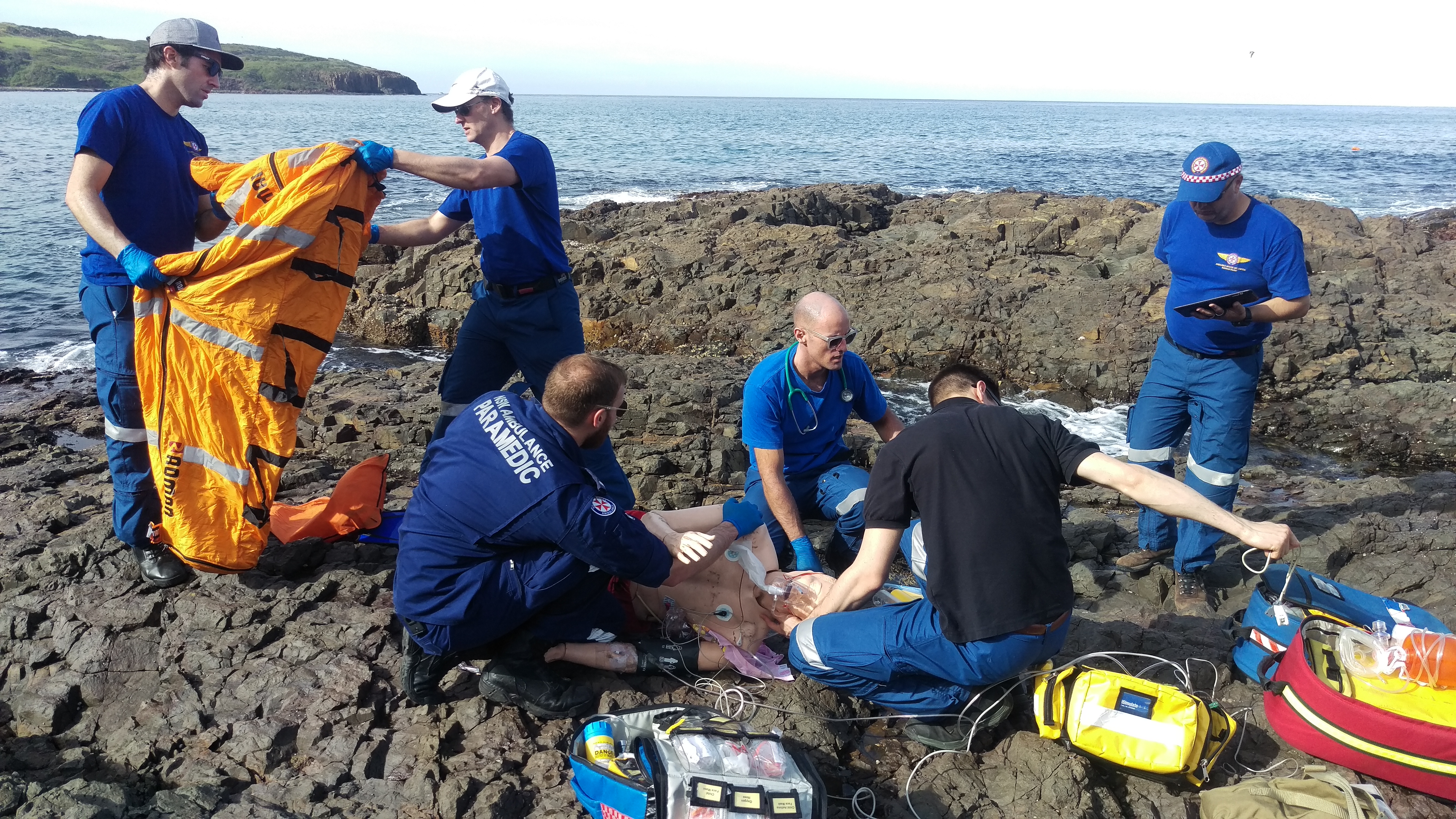
This week, the Sydney-based team were invited down to Wollongong for an outdoor simulation extravaganza. Hosted by Wayne Cannon and the Wollongong team, the Sydney crew were treated to a feast of outdoor learning.

The take home? Environment, Personnel, Equipment

Killalea State Park

Environment

Be prepared for a challenging + changing environment – the sea state and tide predictions take on a new meaning when your patient is at the water’s edge!

Equipment 2

Use the environment to your advantage – don’t let the environment rule you! You maybe able to rapidly move a patient to a more suitable position to complete a primary survery and get to work. Think about sun strike for intubation, 360 degree access, head elevation if possible.

EnvironmentEnvironment 2


Be ware potential for injury to rescuers

–  never turn your back to the sea! If not directly involved in a rescue, keep a look out

–  blue metal rock is especially treacherous underfoot when wet

– down wash from the helo when next to a ledge will knock you over

– eye and ear protection

– what can you do if you are being winched onto an unsafe area – various methods of communications


Personnel

Do you know what other services you have going who may be able to help?

What skills or equipment can they bring?

Mobilise them early!

Personnel

Use all available resources.

Consider the safety of bystanders (sea state, slippery underfoot, downwash from helo)


Equipment

Know your kit! Do you remember the contents of all your packs including the tomb stone?

Know your equipment

Patient packaging

– attention to detail

– easy access to drug/IVF port

– ongoing sedation/paralysis prior to winch

PackagingPackaging 2

– avoid covering a severely injured extremity until the last moment so as to allow constant, repeated visual inspection (bleeding despite application of tourniquet)

– security of monitoring equipment (lanyard for BVM, capnometer, sats probe, ZOLL tied down if in use, O2 cylinder)

– review of SPECTER checks in a foreign environment


Posted in General PH&RM | Leave a comment

Burns Management Pearls from the Experts

At our recent Clinical Governance Day (4/5/16) we were honored to have in attendance three experts who have dedicated their careers to the care of the burned patient. A cornucopia of pearls for prehospital and retrieval management were presented. The distillation of the session is included below. Many thanks to Prof. Peter Maitz, Dr. Mark Kol, and Dr. Kar-Soon Lim from Concord Hospital for their enlightening presentations.
 

PMC3038395_IJPS-43-43-g001.png

openi.nlm.nih.gov


EVALUATION

Do not be distracted by the dramatic nature of the burns. Focus on the standard ABCDE approach to trauma (with burns starting at the E stage).

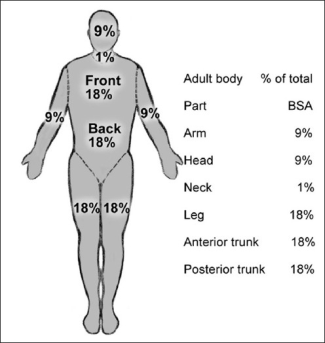
Use the Rule of 9’s or a reference card for estimating burns. This is an estimate, and does not need to be perfect. A ballpark percentage is all that is expected.


AIRWAY

Traditional risk factors for predicting a need for intubation in burns patients have awful sensitivity and specificity. Patients that were entrapped when burned do have higher risk of airway compromise and deep lung injury.

Expert clinical judgment should guide the need and timing of intubation; however, weigh up the risk of minor morbidity in intubating those that might not need it, compared to the risk of catastrophic airway failure in the few we wait too long to intubate.

Sux is safe to use in the acute setting despite dogmatic concerns of hyperkalemia. I agree with my colleague below about this relevant article from 1967.
 

ScreenClip.png

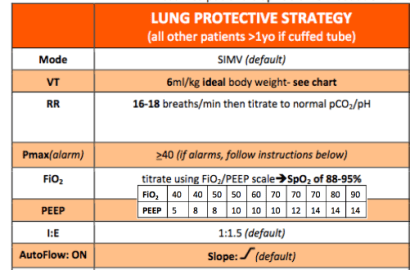
Oxylog 3000+ Cheat Sheet


VENTILATION

As severe burns patients are at high risk for developing ARDS and SIRS, a lung protective strategy is recommended (low tidal volumes – 6ml/kg  IBW – with low pressures).

Inappropriate or adverse ventilation (high pressures or volumes) leads to increased risk of ARDS, multi organ dysfunction (MODS), and death.


FLUIDS

Although there is minimal external loss of fluid, these patients will leak massive volumes into the interstitial spaces and develop hypovolemic shock.

Use the Parkland formula to guide fluid resuscitation.
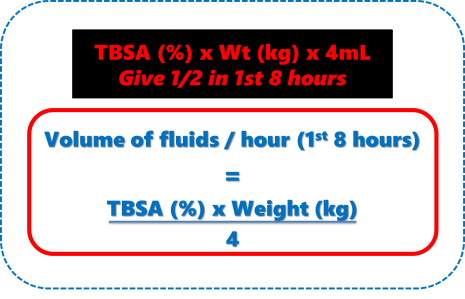
parkland.pngIdeally ongoing fluids should be guided by urine output via an indwelling catheter.

Beware fluid creep (volume above Parkland or adequate urine output). This has no immediate deleterious effect, but can cause severe late complications – compartment syndrome, kidney injury, etc.


COOLING
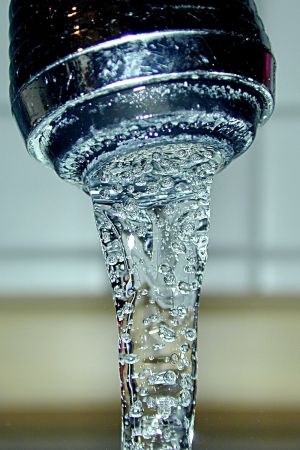
Cooling of burns should be performed if the patient is seen within three hours of injury. This decreases the size and depth of the burn.

Running tap water for at least 20 minutes is the best method of cooling.

Only use gel products if no running water is available or if the patient’s condition isn’t compatible with the cooling process.

Cooling may have already been completed by bystanders with advice from 000, or by the first arriving crews.


DRESSINGS

Use clean dry sheets or plastic wrap for dressing. If wet dressings are in place at time of evaluation, they should be removed.

Do not delay transport for clever / thorough dressing of the burns.


FASCINOMATA

Severe burns patients have massive release of cytokines and other inflammatory mediators. Burns >25% TBSA yield a body-wide inflammatory response (SIRS).

In circumferential burns, compartment syndrome is uncommonly seen before the 8 hour mark. Be prepared for escharotomy in these patients.

escharotomy.jpg

Electrical burns heat tissues with the highest resistance (V=IR). Bones heat up fast and actually cook the surrounding muscles. The subsequent swelling and edema can cause a deep concealed compartment syndrome.

Thoracic ultrasound can be used to look for atelectatic segments and excess lung water.


RESOURCES

Sydney HEMS Major Burns Helicopter Operating Procedure

New South Wales Health Burn Transfer Guidelines

Emergency Management of Severe Burns (EMSB) course – highly recommended!


Posted in General PH&RM | Tagged , , , , , , , , , , , , | Leave a comment