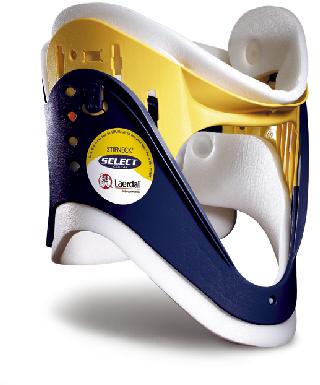
My last rant for a while. The patient from scenario 2 is now in the resuscitation room of a trauma center. He was intubated successfully by the retrieval physician after in line stabilization was removed, changing a grade 4 view to a grade 3a view and allowing blind passage of a bougie. The collar was then reapplied and the patient transferred to the trauma center uneventfully. A CT “pan scan” reveals some small cerebral contusions that don’t require operative intervention, some broken ribs and bilateral pulmonary contusions, with a left penumothorax which is drained, a grade 2 liver laceration that can be observed and no other injuries. The femur fracture is will require fixation at some stage. The CT of the cervical spine is reported as showing no bony injury, with all soft tissue spaces within normal limits. You ring your friendly neurosurgical registrar (or perhaps orthopaedic registrar, depending on who does spines where you are) with this news, expecting to be given the go-ahead to take the collar off and relax spinal precautions. Alas the neurosurgeon tells you that a CT scan isn’t sufficient to rule out a significant injury, and that you should “just keep the collar on” and he’ll review the patient on Monday morning, maybe after an MRI. It’s currently Friday and the neurosurgeon has obviously never accompanied an intubated patient to the MRI scanner.
So here we have the final spinal conundrum. Now that the collar’s on, it’s very difficult to take off. So let’s look at the evidence supporting clearing the C-Spine based on CT alone. Conveniently this was reviewed in this month’s Annals of Emergency Medicine (and apparently it’s open access – well it was when I downloaded it.) Kirschner and Seupaul from Indianapolis do what they called a “Systematic Review Snapshot” which I quite liked. They essentially critique an article that’s been spoken about a bit lately – a systematic review and meta-analysis of the research comparing CT clearance with clinical clearance (it also seems to be freely available). They note that the research is mostly observational (and therefor prone to bias). The meta analysis that they discussed included 14,327 patients. Of these 14,327 patients with a negative CT scan, 7 had a clinically significant injury, 3 of which were unstable. Thats 0.02%. Let me say that again. 3 out more than 14,000 patients had an unstable injury. This gives CT a sensitivity and specificity of 99.9%. I don’t know of any other test that has a sensitivity and a specificity that high. The authors of the original meta-analysis pit it even more succinctly – Clearance based on CT alone will result in one missed injury every 14 years in a moderately busy trauma centre, compared with hundreds of complications from prolonged immobilisation. Yet the reviewers in the Annals come to a vague and safe conclusion that CT “may reliably exclude unstable injuries” in obtunded patients. May? Well in their defence, the reviewers didn’t think very highly of the papers that went into the meta-analysis, commenting on flawed study designed and a high degree of heterogeneity. They do, however, point out that the soft tissue injuries found on MRI are often of uncertain clinical significance, and there can be lots of false positives on MRI.
So where does this leave us? Is 99.9% sensitive and specific good enough? Or is paraplegia such a devastating complication that we need a test that’s 100% specific (I would argue that clinical examination certainly isn’t). What about the complications of leaving the collar on? Bedsores, airway compromise, possibly increased VAP rates through being supine. The list goes on. I’ll be willing to bet that the rate of serious complications from keeping an ICU patient in a collar is > 0.02%. So does that put the risk benefit ratio in favour of taking the collar off?
As devastating as the possibility of paraplegia may be, people seem to lose sight of the fact that spinal immobilization in an intubated patient carries a not-insignificant harm. Bedsores cause sepsis which kills. What if the patient is ready to be extubated before the spine in cleared? Do you keep them intubated until then, increased the risks associated with prolonged intubation? Or do you extubate them in a supine or reverse Trendellenburg position, with all the risks that brings? Is our lack of trust in a very large, but possibly not very good, meta-analysis just a convenient way for us to say that we don’t want to risk a less than 0.02% chance of missing a ligamentous injury that may or may not cause future harm to the patient while blissfully ignoring the very real risks of lying flat on you back in a collar in the ICU. I encourage you all to make up your own minds by reading at least the short review in the Annals, if not the full paper from the Journal of Neurosurgery.
1. Scand J Trauma Resusc Emerg Med. 2012 Sep 18;20(1):68. [Epub ahead of print]

Critical care considerations in the management of the trauma patient following
initial resuscitation.

Shere-Wolfe RF, Galvagno SM Jr, Grissom TE.

ABSTRACT:
BACKGROUND: Care of the polytrauma patient does not end in the
operating room or resuscitation bay. The patient presenting to the intensive care
unit following initial resuscitation and damage control surgery may be far from stable with ongoing hemorrhage, resuscitation needs, and injuries still requiring definitive repair. The intensive care physician must understand the respiratory,  cardiovascular, metabolic, and immunologic consequences of trauma resuscitation and massive transfusion in order to evaluate and adjust the ongoing resuscitative needs of the patient and address potential complications. In this review, we address ongoing resuscitation in the intensive care unit along with potential complications in the trauma patient after initial resuscitation. Complications such as abdominal compartment syndrome, transfusion related patterns of acute lung injury and metabolic consequences subsequent to post-trauma resuscitation are presented.
METHODS: A non-systematic literature search was conducted using
PubMed and the Cochrane Database of Systematic Reviews up to May 2012. RESULTS AND CONCLUSION: Polytrauma patients with severe shock from hemorrhage and massive
tissue injury present major challenges for management and resuscitation in the intensive care setting. Many of the current recommendations for "damage control
resuscitation" including the use of fixed ratios in the treatment of trauma
induced coagulopathy remain controversial. A lack of large, randomized,
controlled trials leaves most recommendations at the level of consensus, expert opinion. Ongoing trials and improvements in monitoring and resuscitation technologies will further influence how we manage these complex and challenging
patients.

PMID: 22989116  [PubMed - as supplied by publisher]

1. Anesth Analg. 2012 Dec;115(6):1326-33. doi: 10.1213/ANE.0b013e3182639f20. Epub 2012 Jul 4.
Review article: update in trauma anesthesiology: perioperative resuscitation management. Tobin JM, Varon AJ. University of Maryland/R Adams Cowley Shock Trauma Center, 22 South Greene St., T1R77, Baltimore, MD 21201. josh_tobin@hotmail.co.
The management of trauma patients has matured significantly since a systematic approach to trauma care was introduced nearly a half century ago. The resuscitation continuum emphasizes the effect that initial therapy has on the outcome of the trauma patient. The initiation of this continuum begins with prompt field medical care and efficient transportation to designated trauma centers, where lifesaving procedures are immediately undertaken. Resuscitation with packed red blood cells and plasma, in parallel with surgical or interventional radiologic source control of bleeding, are the cornerstones of trauma management. Adjunctive pharmacologic therapy can assist with resuscitation. Tranexamic acid is used in Europe with good results, but the drug is slowly being added to the pharmacy formulary of trauma centers in United States. Recombinant factor VIIa can correct abnormal coagulation values, but its outcome benefit is less clear. Vasopressin shows promise in animal studies and case reports, but has not been subjected to a large clinical trial. The concept of "early goal-directed therapy" used in sepsis may be applicable in trauma as well. An early, appropriately aggressive resuscitation with blood products, as well as adjunctive pharmacologic therapy, may attenuate the systemic inflammatory response of trauma. Future investigations will need to determine whether this approach offers a similar survival benefit.
PMID: 22763906 [PubMed - in process]
Here’s the second part of my attempt to deconstruct the dogma and search for the evidence supporting out current management of suspected spinal cord injuries n prehospital care.
Scenario 2:
An aeromedical retrieval team attends a high speed road traffic crash in a rural area 250km from the nearest hospital. The only seriously injured patient has just been extricated from the car by local ambulance and rescue crews as they arrive. He is a man in his 20s with a GCS of 8 (M5), RR 20, SpO2 88% on NRBM, P 110, BP 100/60. He has obvious external chest injuries, an unstable pelvis and an obviously fractured right femur. The retrieval doctor decides to perform RSI before the >1 hour flight to hospital. There are no predictors of a difficult airway. RSI is performed with ketamine and suxamethonium. The front of the collar is undone and manual inline immobilization performed. On the first look the paramedic gets a grade 4 view. The second look by the doctor produces the same result. The Sats are now 73%. Should manual inline immobilization be removed in the hope of improving laryngeal exposure?
The medico-legally correct answer, of course, is no. Manual in-line Stabilization (MILS, or MILI if you replace stabilization with immobilization) must be maintained at all costs once the collar is undone. Which is funny because I always thought A came before D (I’ve never accepted the concept of A-little c). So where is the evidence for MILS? As you’d expect there isn’t much. There is more than for prehospital spinal immobilization though. But there seems to be just as much evidence against as there is for. Manoach and Paladino did a great review of what literature there is in the Annals of Emergency Medicine in 2007. They couldn’t find any randomized studies, but found a bunch of case series, studies on volunteers (usually patients having GAs for unrelated matters) and studies on cadavers. The long and short of it is that they found a bit of evidence showing that MILS decreases cervical spine movement during laryngoscopy. This was mostly X-Ray or flouroscopic data. However, they also found just as many studies showing that laryngoscopy without MILS doesn’t cause a significant amount of cervical spine movement anyway and that MILS does little to prevent it. Sounds like equipoise to me. One study, in fact showed that the jaw thrust caused more c-spine movement than direct laryngoscopy! These were of course all small studies using surrogate end points. As I pointed out in the last post, we don’t really know if 2 degrees of neck extension during laryngoscopy will have any effect at all on an unstable spinal fracture.
The authors of this study also point out that MILS can cause harm by worsening glottic view at laryngoscopy. This is well established and I don’t think anyone would doubt it. And this in fact may actually lead to increased cervical spine movement, as the increasingly panicked intubator pulls harder and harder on that handle.
So here we have a treatment that;
Aims to prevent a condition that is very rare, and may not even exist
Quite possibly doesn’t work
Causes harm
So why are we still using it?
And is it justifiable to remove MILS in order to improve glottic view in a difficult intubation? Well Ron Walls, who literally wrote the (excellent) book on emergency airway management, seems to to think so “…even for blunt injury with intact neurological examination, if strict cervical spine immobilization is preventing intubation and hypoxaemia is developing, judicious relaxation of the degree of immobilization to an extent just sufficient to permit intubation may be necessary, depending on the judgement of the airway manager.”
This well worded paragraph in Wall’s text highlights 2 important caveats – there must be no neurological findings to indicate a higher likelihood of cervical spine injury than in the average trauma patient, and the patient must be deteriorating with the current form of airway management. Whatever your own opinion of MILS may be and whatever the evidence (or lack thereof) may say, it is still standard of care, in particular if the patient has a confirmed or strongly suspected cervical spine injury. In fact the standard of care for these injuries is probably awake fibre/flexible optic intubation, but this is rarely appropriate in the emergency setting.
What about videolaryngoscopes? They seem a pretty promising way to provide a better view without moving the neck too much. A 2008 crossover study on elective anaesthesia patients in Anesthesia and Analgesia showed that they do improve view, but don’t decrease neck movement compared with direct laryngoscopy. I wonder if improvements in technology will give us the solution. There is currently a cheap, portable flexible bronchoscope on the market. While I personally think it is somewhat hamstrung by its lack of a suction port, it wont be long before it has lots of friends. It seems logical that flexible-optic intubation via a supra-glottic airway (SGA) is the best solution to airway management in trauma, and hopefully it will be studied soon.
What about transporting the patient with a SGA in situ. The so-called “rapid sequence airway”. This will undoubtedly work in a lot of patients. But what if they have pulmonary contusions and poor pulmonary compliance? Well ironically having a collar in situ may actually help the SGA to function in this setting by increasing the peak airway pressure required before a leak develops. Presumably the external compression of the neck soft tissues by the collar improves the fit of the GSA. This has only been shown for the LMA supreme, a very popular SGA in prehospital care. Maybe this is the way to go, with or without intubation via a flexible scope?
So, the scant amount of evidence is before you and the question remains, is it appropriate to remove MILS in order to improve laryngoscopic view? If you have a trauma patient who you can’t intubate and are in a situation where flexible-optic laryngoscopy is unavailable or unfeasible, what should you do? Should you fly the patient to hospital with a supraglottic airway (SGA) in situ? Should you perform a surgical airway in preference to removing MILS in the hope of getting a better view?
I’m keen to use the lack of inhibitions provided by the anonymity of the internet to see what other would do in the scenario described at the start of this post.
Emergency care is rife with dogma, and perhaps none is more pervasive than the desire, almost to the exclusion of everything else, to prevent further injury to the spinal cord in a trauma patient who may have a spinal cord injury. The “ATLS position” of walking into a scenario looking like a cross between a zombie and a dalek with hands outstretched ready to manually immobilize the cervical spine while the patient bleeds to death or obstructs his airway is still practiced by thousands the world over. Paramedics in many jurisdictions still carry out full spinal immobilization on poor blighters who were involved in low speed nose to tails. The paranoia is such that even otherwise sensible and intelligent practitioners are willing to throw any evidence that there might (or might not) be out the window so as to not upset the ATLS applecart. Is it possible that in doing so they throw the baby out with bathwater by ignoring the potential harms caused by spinal immobilization?
Over the course of three (possibly slightly ranty) posts, we’ll use some common scenarios to help us have a look for some evidence. To save myself from reinventing the wheel, a great deal of what is discussed here is distilled from a couple of recent excellent reviews of spine cord injury from ebmedicine.net which can be found here and here but I have gone back to uncover some original papers, some of which are amazing and I strongly encourage you to read.
Scenario 1
Paramedics are called to a high speed single vehicle road traffic crash. The only occupant of the car has self extricated and is ambulant. He appears to have a fractured right clavicle from his seatbelt (make it left if you’re in North America) and some superficial burns to his face from the airbag. The car is extensively damaged. Should he be immobilized for transfer to hospital?
Well I guess there are 2 questions here. 1) If this man has an occult spinal cord injury – will immobilization prevent any secondary harm to his spinal cord. 2) If this man does not have a secondary spinal cord injury, can paramedics in the field without access to imaging or other advanced diagnostic techniques rule out a significant cervical spine injury?
As you are probably already aware, there is an embarrassing lack of evidence for spinal immobilization as a technique to prevent secondary injury. A (very short) Cochrane review back in 2001 screened 4453 pieces of literature and wasn’t able to find a single RCT of spinal immobilization. The authors concluded that because of it’s ability to remove focus from the airway and potentially hinder airway care, cervical immobilization may even increase mortality. Of course some may use this opportunity to put forth the parachute argument – “There’s never been an RCT of parachutes in preventing death when jumping out of planes. Should we stop using them?”
In 1998 a pretty amazing study was published in Academic Emergency Medicine. It retrospectively compared outcomes for trauma patients with spinal injuries in patients from Albuquerque, New Mexico, which at the time had an advanced EMS system and Kuala Lumpur, Malaysia; which at the time had no EMS system. The authors hoped to find out if spinal immobilization had any effect on neurologic disability in patients with spinal cord injury. The paper is freely available on the Academic Emergency Medicine website and I encourage you to have a look. Over the 5 year (retrospective) study period the authors identified 334 (out of12,700) patients in New Mexico and 120 (out of16,600) in Malaysia who had a blunt injury to the spine. Of note all of the US patients were immobilized and none of the Malaysian patients were immobilized. The distribution of injury level (cervical, thoracic, lumbar) was similar between the 2 groups. More of the patients in the US group were injured in RTCs and more in the Malaysian group were injured in falls.
70 of 334 patients in the US group (21%) and 13 of the 120 patients in the Malaysian group (11%) had “significant neurologic disability.” Wow. So that’s an odds ratio of 2.03 for harm from spinal immobilization (CI 1.03-3.99, p=0.004). This allowed the authors to conclude that “out-of-hospital immobilization has little or no effect on neurologic outcome in patients with blunt spinal injuries.” The authors of this study found exactly the opposite of what we would all expect to find.
Again, wow. Lets not get carried away though. Lots of potential bias here. Retrospective study. Huge number of patients screened but relatively small number studied. Patients not able to be matched for injury severity (no ISS in Malaysia at the time). Possible survivor bias (all of the patients with severe spinal injuries in Malaysia may have died at the scene or during transport). More RTCs in the US groups. There lots to criticize. But despite all of this, I like this study. It looks at a question that most are afraid to ask, and gives an uncomfortable answer.
The study also raised some questions for me. Firstly, how come it was published in 1998 and I only found out about it last week? Second, why have I been putting collars on patients for the last 15 years? Third, and more seriously – why hasn’t this intriguing retrospective, hypothesis generating study led to an RCT?
To ethically trial a treatment (or withholding of a treatment) in patients you need a plausible theoretical mechanism of effect, and clinical equipoise. The authors of this study point to research indicating that a force of over 2,000N is required to fracture a cervical vertebra and that even dangling the unsupported head off the end of the stretcher only generates 40N. So theoretically it is plausible that all damage is done at the scene of the crash or fall and that any further movement after this will not cause harm. It has also been shown that patients in collars will move more than those without collars as they try to adjust to a position of comfort (wear a collar for an hour and see how you like it).
What about equipoise? Does this retrospective study give it? I think it gives us the closest we’re ever going to get. But I don’t think an RCT will ever be done. It may not need to. indiscriminate collar use has decreased a lot with the prehospital use of decision making tools such as the Canadian C-Spine Rules (CCR). I still think collars cause harm, however. They certainly cause bedsores. They make airway management more difficult. As mentioned above they may make awake patients move more.
What I think this study says is that spinal immobilization should be taken down off it’s pedestal and given the same critique that any old-fashioned treatment deserves. A study around the same time as this one showed that MAST trousers didn’t work and may cause harm. They were gone by lunchtime. Why didn’t collars get the same treatment?
Enough ranting. Lets get back to the real world. I’m being realistic and accepting that collars are here to stay. So can paramedics decide whether or not someone needs one? Well it would appear so. The NEXUS low-risk-criteria and the CCR are already well established in emergency medicine practice and have been shown to be safe and effective. In fact it has already been discussed right here. Both rules have been prospectively validated by paramedics, with the CCR appearing more sensitive than NEXUS (100% sensitive in one study, with a follow up study under way). As long as a decision support tool is well taught and there is effective clinical governance, there should be little risk involved. The results of the study currently underway should be telling. If the sensitivity approaches the 100% of the pilot, then there can be no excuse for EMS systems not to allow paramedics to use a clinical decision tool for spinal immobilization.
Stay tuned for part two, about the cervical spine and the airway. In the meantime, why don’t you tell us what you think about this?
Sydney HEMS acknowledges the Australian Aboriginal and Torres Strait Islander peoples as the first inhabitants of the nation and the traditional custodians of the lands where we live, learn and work.





 AiR Videos
 Greater Sydney Area HEMS