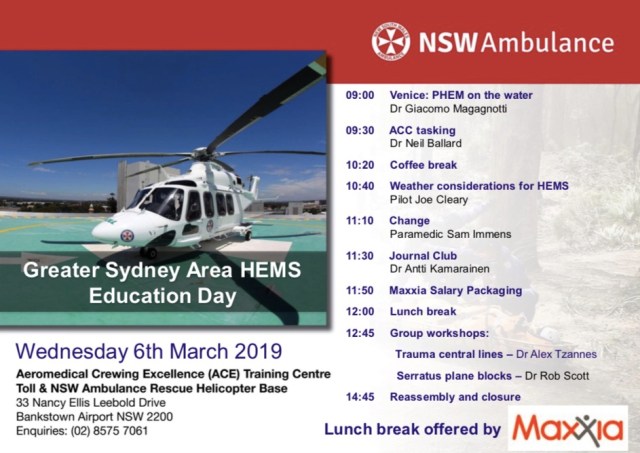
Education day – 6th March 2019

Education day 6 March

Posted in General PH&RM | Leave a comment

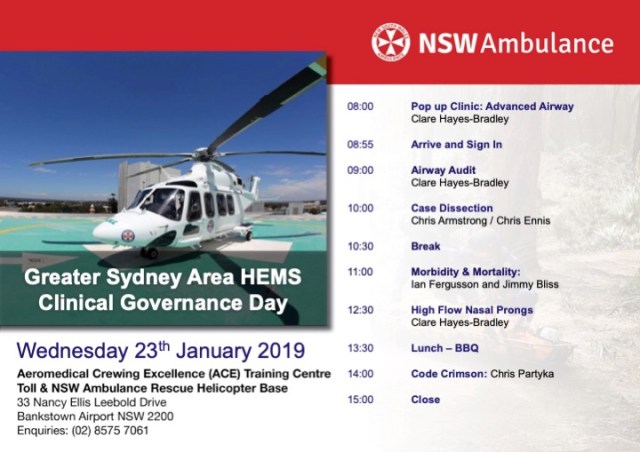
Clinical Governance Day – Wed 23rd January

slide1

Posted in General PH&RM | Leave a comment

Cardiac Arrest Presentations

Here are slides from Dr David Gale’s two presentations given at the HEMS Education Day on 9 January 2019


Posted in General PH&RM, Presentations | Tagged | Leave a comment

Education Day – Wed 9th of January

education day 9 jan

Posted in General PH&RM | Leave a comment

AiR – Learning from the Airway Registry (August 2018)

Intubations this month:         30

Airway Registry learning points reflect the challenges described and wisdom shared by Sydney HEMS personnel and guests at the Clinical Governance Airway Registry presentations for August 2018. Cases are discussed non-contemporaneously, anonymised and amalgamated over a time period to draw together unifying take-home messages. Details of specific cases are removed and/or changed, such that any similarity to real-life patients or scenarios is coincidental.

All CMAC videos are shared under a Creative Commons Licence: Attribution 2.0 Generic. Please familiarise yourself with the terms of the licence before reusing our videos.

To view these videos, you will need this password: AiRblogVideos

Focus on: Paediatric Airway

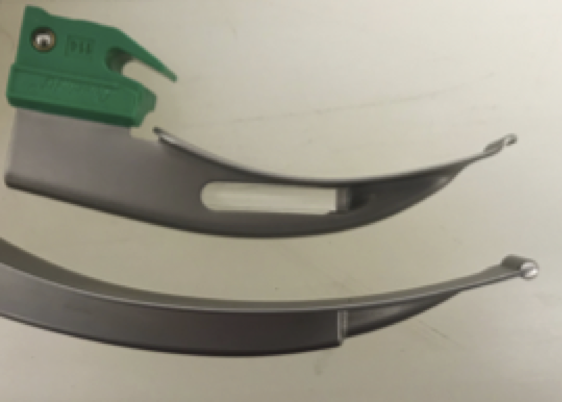
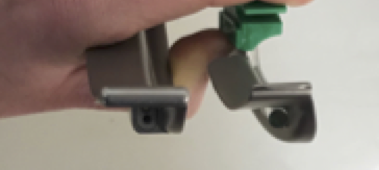
Paediatric intubations with CMAC Pocket Monitor Mac 4 blade

Since we started using the CMAC Pocket Monitor (Oct/Nov 2017), we’ve noticed our team has been choosing to use the CMAC in paediatric age groups (as opposed to a standard direct laryngoscopy approach with a short laryngoscope handle and Miller 1 or Mac 2 blade).

The CMAC Mac 4 blade was used to team satisfaction recently in a 7-year-old, a 4-year-old, a 3-year-old and now an 18-month-old. Teams used this Mac 4 in preference to a direct laryngoscope Mac 2 blade, citing the team benefits of the video screen:

  • allowing optimal external laryngeal manipulation by an assistant using VL
  • ensuring both team members can maximally contribute to troubleshooting of any difficulties

Note the similarities in blade profile over the distal blade tip. We suspect the option of VL with our CMAC pocket monitors outweighs the slight difference in Mac 2 blade  shape. Of course teams must be aware of depth of blade insertion.

Video Focus on: Difficult Laryngoscopy

A case we discussed in greater detail was a patient who proved to be a difficult laryngoscopy.

After inserting the laryngoscope (CMAC pocket monitor Mac 4 blade), no identifiable structures were seen by the first practitioner. They performed 30s drills including fully inserting and withdrawing the laryngoscope blade, expecting to see the larynx appear from above on withdrawing the blade – which did not happen.

After a period of ventilation another practitioner performed a midline laryngoscopy revealing uvula and epiglottis leading to a successful intubation.  On reviewing the CMAC footage, it appears the first laryngoscopy was along the right border of the pharynx up against the tonsillar pillars, which might explain why fully inserting and withdrawing did not help. Following the identifiable midline structures from teeth to uvula to epiglottis is another technique which can lead to the epiglottis, especially when no structures have been found on initial attempt.

Further CMAC Videos: Surprises on Laryngoscopy

A 60kg 14yo was intubated uneventfully, but the team noted the ETT was sitting at 18cm to lips. Concerned about the ETT being too short, they repeated laryngoscopy and saw this.

The ETT cuff balloon is herniating above the cords. The balloon was deflated and tube inserted with the cuff beyond the cords.

An adult laryngoscopy revealed a hole – but an oesophageal hole not a trachea – note the arytenoids and posterior glottis structures that define the glottic opening.

An adult male had taken an overdose and was initially managed by lateral positioning, nasopharyngeal airway and a nasogastric tube. His GCS was dropping so he was intubated for transfer. At laryngoscopy the team got a surprise; the NGT was seen coiled in the pharynx. His nasopharyngeal airway is also seen in this video.

You can see all the AiR videos here on our Vimeo page or here on the blog.

Posted in Airway, Airway Registry, General PH&RM | Tagged , , , , | 1 Comment

AiR – Learning from the Airway Registry (July 2018)

Intubations this month:         30

Airway Registry learning points reflect the challenges described and wisdom shared by Sydney HEMS personnel and guests at the Clinical Governance Airway Registry presentations for July 2018. Cases are discussed non-contemporaneously, anonymised and amalgamated over a time period to draw together unifying take-home messages. Details of specific cases are removed and/or changed, such that any similarity to real-life patients or scenarios is coincidental.

All CMAC videos are shared under a Creative Commons Licence: Attribution 2.0 Generic. Please familiarise yourself with the terms of the licence before reusing our videos.

To view these videos, you will need this password: AiRblogVideos

Focus on: Epiglottoscopy

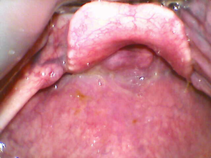
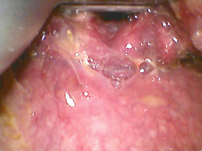
These stills are taken from CMAC footage of a prehospital patient – see how lifting the epiglottis directly has improved the view of the tracheal opening.

Mac blade in vallecula

Mac blade as Miller – elevating epiglottis for improved view

You might remember this technique from our earlier video “Mac as a Miller”, which demonstrates how scooping the epiglottis with the Mac blade – as you would intentionally with the straight Miller blade – does not preclude intubation and may improve your chances in event of a grade II-III view.

Other discussions

Dry mucosa

As in our video focus section for May/June‘s clinical governance day, we were reminded that lubricating the laryngoscope blade can be particularly helpful for interhospital missions where patients often have very dry tongue mucosa from non-invasive ventilation or general dehydration. Intensivists present at CGD admitted they routinely lubricate a laryngoscope blade. We don’t think this point ever makes it onto an ‘airway assessment’ list but it should; keep it in mind. Here’s that double-learning-point video to remind you.

Bougie control

Trying to get a bougie to pass into the trachea can be a very frustrating experience. Practice can help – to aid us in identify when curving (or other manoeuvres to move the bougie tip anterior) are necessary, and to practice the ‘feel’ of rotation for moving the tip right to left.

Try practising laryngoscopy on a manikin and intentionally touching different parts of the laryngeal structures with your bougie tip to practice that control. Remember to practice with gloves & safety glasses on!

Video Focus on: the effects of blood and secretions

We discussed two videos. In the first, there are significant facial injuries. A gloved hand just visible providing good mouth opening – note how despite facial injuries, the larynx is quite identifiable and not flooded with blood.

In the second video, there are pooled airway secretions. You can see clear secretions filling the NPA visible in pharynx.

Other discussions

Bougie reflections

As mentioned in the May/June post, we carry a blue coudé tip bougie and a white straight bougie.

During this intubation, it was noted by the team member watching the screen (VL) that the approach of the white bougie caused a significant change in the screen image brightness, which dulled the view of the larynx in the background by comparison.

In the same patient the blue bougie had much less effect and the view of the larynx was maintained, allowing intubation.

Presumably this is the CMAC camera auto-adjusting for brightness in the visualised field on the video screen, so not an issue when using the CMAC for DL – but it is worth considering as a sudden reduction in illumination at the point of intubation could be most unhelpful when using the CMAC VL! We intend to discuss this with Storz, the manufacturer of the CMAC.

ELM obstructing the airway

In this video, a team member is providing external laryngeal manipulation in an attempt to improve the view at laryngoscopy which is released after bougie insertion. Note how on release of ELM, the cords appear to open wider. Care should be taken with any ELM (or cricoid, when used) to avoid closing the cords and making laryngoscopy more challenging.


You can see all the AiR videos here on our Vimeo page or here on the blog.

Posted in Airway, Airway Registry, General PH&RM | Tagged , , , , , | Leave a comment

Joint HEMS/NETS Education Day 12th December

Posted in General PH&RM | Leave a comment

AiR – Learning from the Airway Registry (May & June 2018)

Intubations this May:         31

Intubations this June:         28


Airway Registry learning points reflect the challenges described and wisdom shared by Sydney HEMS personnel and guests at the Clinical Governance Airway Registry presentations for May & June 2018. Cases are discussed non-contemporaneously, anonymised and amalgamated over a time period to draw together unifying take-home messages. Details of specific cases are removed and/or changed, such that any similarity to real-life patients or scenarios is coincidental.

All CMAC videos are shared under a Creative Commons Licence: Attribution 2.0 Generic. Please familiarise yourself with the terms of the licence before reusing our videos.

To view these videos, you will need this password: AiRblogVideos

Focus on: Getting Stuck

In May we reviewed some videos to talk about how our intubation equipment – bougie or ETT – can get stuck, and what we can do about it.

Stuck bougie

This patient has been exposed to fire/flames with a presumed inhalational injury – note sooty secretions and swollen arytenoids/posterior glottis structures.

We can see the blue (coudé-tip) bougie passes the cords but following that there is resistance to further advancement – seen as the glottis being moved by attempts to advance the bougie. The team remove the blue bougie and use the white bougie which is less curved.

Problem:

The coudé tip is likely impacting on the tracheal cartilages of the anterior tracheal wall.

This is more common with hyperangulated video laryngoscopy but occurs here with a Mac shaped blade.

Solutions:

  • Rotate the bougie (twist it) to disimpact the coudé tip from the anterior wall
  • Reshape the bougie to lessen the tip
  • Exchanged the coudé-tip bougie for a straighter bougie (as was done here – we carry a non-coudé-tip white bougie in addition to the blue bougie).

Stuck tube

We use Parker Flex-Tip‘GlideRiteTM’ tracheal tubes to reduce the potential for the leading edge of the endotracheal tube to ‘catch’ on glottic structures while railroading over a bougie, as is classically described for the arytenoid cartilages.

This video shows the gap that can exist between bougie and ETT tip that could lead to ‘catch’ (risking failure to advance and laryngeal trauma).

Other discussions

Identifying airway anatomy

This CMAC video is a great example of how the oesophageal inlet can look a lot like a trachea – re-emphasising the need to see arytenoids cartilages in order to positively identify the trachea prior to passing a bougie or ETT.

Soiled airway in cardiac arrest

A medical cardiac arrest can present healthcare workers with an airway flooded with gastric contents. Such soiling can be particulate and thick which can block common Yankauer suckers.

A work-around can be to remove the blocked Yankauer sucker and simply use the end of the suction hosing itself. The hosing is a much larger diameter and is often very successful at clearing the pharynx when used directly.

Be aware that small portable units may have a volume capacity that can be easily exceeded by large volumes of soiling; vehicle-based suction units have a larger capacity.

At Sydney HEMS we carry a longer suction tubing set so we can connect to the in-ambulance vehicle suction while intubating at the back of the ambulance.

Video Focus on: two learning points from one video

This CMAC video from June has two separate learning points! The learning points below both refer to this CMAC video:

1. Dry mouth

Patients who have spent some time prior to intubation breathing non-humidified wall O2 (for example, via a non-rebreathe mask) can have very dry mucosa in their oral cavity on airway assessment. An assessment of the dryness of oral mucosa is not classically part of a pre-intubation airway assessment but it can cause issues, so it is important to notice. Pre-lubricating the blade can make the laryngoscopy much easier; lubricating gel can be Lseen on the blade in this video.

You might remember similar “dry mouth” issues from this earlier CMAC video:

2. DL to VL

Initial attempts to intubate this patient were made using a direct laryngoscopy technique. During DL, the operator struggled to identify the inter-arytenoid notch landmark. The intubator proceeded to use the video screen (VL technique) which gave them a clearer view of the glottis and allowed placement of the bougie.

It became evident that a sputum plug was obscuring the inter-arytenoid notch landmark that the operator had been trying to visualise. Having the back-up of video laryngoscopy on this Mac 4 blade intubation was very useful.


You can see all the AiR videos here on our Vimeo page or here on the blog.
Posted in Airway, Airway Registry, General PH&RM | Tagged , , , , , , , | 1 Comment

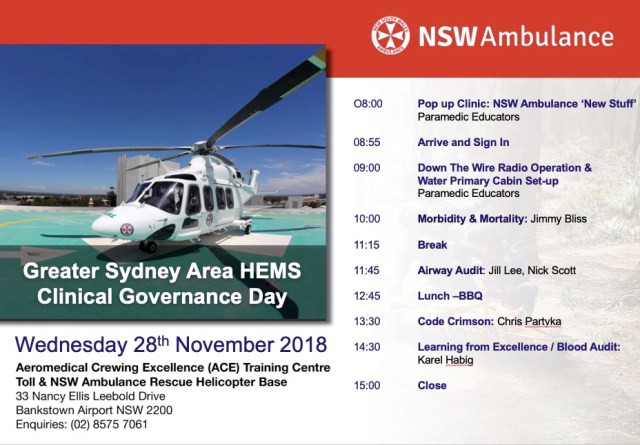
Clinical Governance Day – Wed 28th November

CGD 28:11

Posted in General PH&RM | Leave a comment

Burns education day wrap up

(Courtesy of Dr Sandeep Gadgil)

Burns Education Day – Summary

On 14thNovember we had the pleasure of hosting members of the Concord Hospital Burns team for our Burns Education Day.

NSW Ambulance Burns Audit

Dr Clare Richmond kicked us off with data on burns patients from the last 3 years, prepared by Dr Efrem Colonetti. The key findings for this period (2015 to 2018) were:

  • 241 burns patients, 141 were intubated, 46 by the retrieval team
  • 8 escharotomies were performed by the retrieval team
  • 58% of cases were flame burns, 19% were flash / explosion
  • 67% of burns case sheets had a documented TBSA
  • 73% of those with documented TBSA were consistent with hospital findings
  • 95% of the burns patients did not have any significant concomitant trauma

These findings were compared with the Audit published by Dr Brian Burns last year (https://www.researchgate.net/publication/317316935_A_review_of_the_burns_caseload_of_a_physician-based_helicopter_emergency_medical_service).

The main take home points highlighted by Clare were to ensure documentation of TBSA and airway findings, assess for concomitant trauma and consider transfer to Concord if nil significant trauma. We were reminded of the feature on the ITIM app to assist in TBSA burns calculations (https://www.aci.health.nsw.gov.au/networks/eci/clinical/clinical-resources/ed-applications/trauma-apps)

Concord burns team

We had a fantastic set of presentations from the burns team covering burns assessment, pathophysiology, first aid, fluid resuscitation, airway considerations and surgical options. Throughout the day, the team emphasised that they want to be consulted early in relation to burns patients. For those interested in learning more about burns management they recommended the EMSB course (https://anzba.org.au/education/emsb/).

Dr Justine O’Hara (Plastics / Burns Surgeon) discussed the assessment and initial management of burns and provided some key messages:

  • Accurate assessment of burns area and depth can be difficult
  • Importance of good first aid (running or sprayed / sponged tap water for 20 minutes)
  • No ice or iced water, no antibiotics
  • Appropriately dress burns, do not debride (covering with cling wrap is ok)
  • Know the NSW burns transfer guidelines
  • If large burns (>15%) – IV fluids, analgesia, IDC & retrieve to burns unit

She also described a range of current and emerging surgical options (traditional debridement, fascial excision, hydrosurgical debridement) and wound closure options (allografts, xenografts and cultured epithelial autografts).

Dr Mark Kol (Intensivist) gave an overview of fluid management and the pathophysiology of shock in a burns patient. Points he highlighted were that fluid resuscitation in burns improves outcomes, the modified parkland formula (3ml/kg/%TBSA with half in the 1st8 hours) was an appropriate starting point with lactated ringers being the preferred fluid. Ongoing fluids are titrated to clinical endpoints, with urine output being commonly used.

He also gave a summary of the ventilation strategies used to manage the ARDS-like picture seen in burns patients.

Dr Kar-Soon Lim (Anaesthetist) spoke about airway considerations in burns patients. His take home points were:

  • In large TBSA burns, the airway will swell even without airway burns (consider early intubation)
  • An endotracheal tube is the definitive airway – have a low threshold for front of neck access if failed intubation (LMA likely to fail)
  • Use normal sized tubes (larger ETTs are not necessary and may cause future vocal cord morbidity)
  • Consider the need for chest escharotomy with trunk burns that are difficult to ventilate

Dr Andrea Issler-Fisher (Plastics / Burns Surgeon) gave an excellent description of burns wounds and the assessment of burn depth in relation to skin layers. She also described the indications and technique for performing an escharotomy (if in doubt, do it!) and contrasted this with performing fasciotomy (preferably in theatre by a surgeon).

The afternoon was spent with small group interactive workshops led by the Burns team consolidating three main topics covered in the morning lectures – airway considerations, fluid management and escharotomy. They provided valuable insights and tips from the Burns team and nicely rounded out a day addressing burns care in both the pre-hospital and hospital settings.

Posted in General PH&RM | 2 Comments