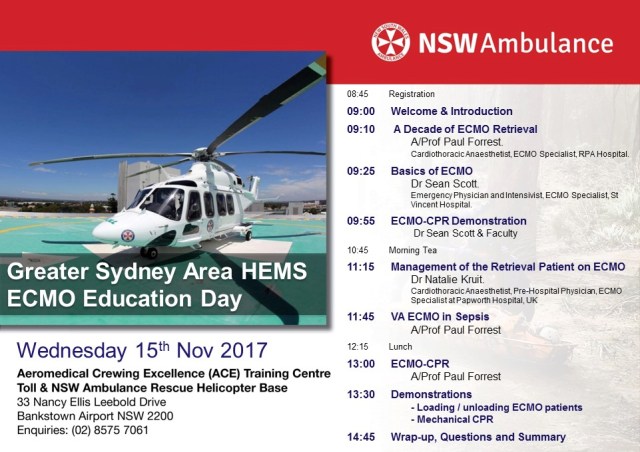
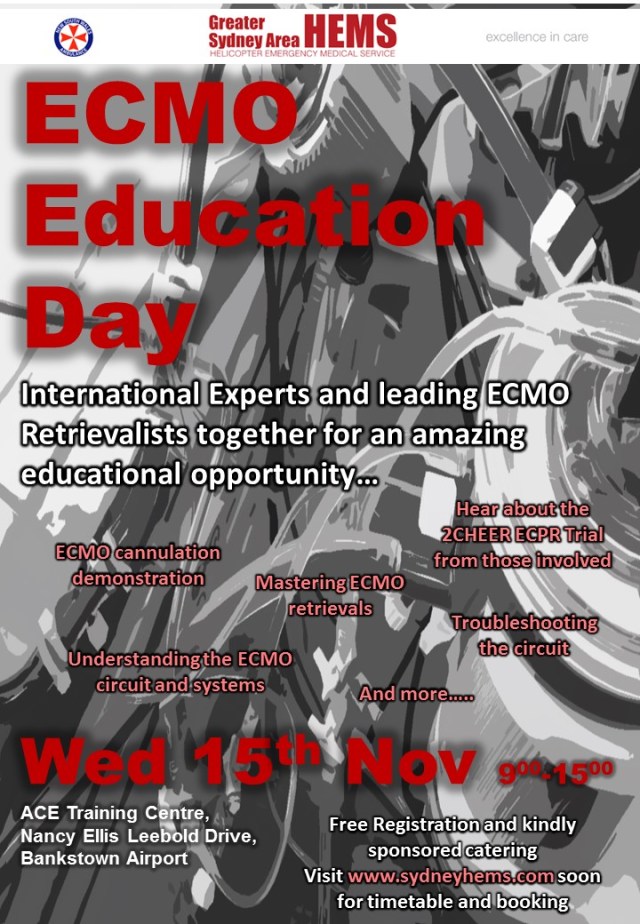
Clinical Governance Day – 1st November

Slide1

Posted in General PH&RM | Leave a comment

REALITi User Manual

In 2017 we upgraded our iSimulate system to the new REALITi system. This allows improved fidelity in simulation by accurately replicating our Zoll monitors. This is just the tip of the iceberg when it comes to new and improved features, including remote audio and video display for observers, an electronic patient record with a huge database of ECGs and imaging, and many others. We used it successfully in the August 2017 HEMS Team Induction course and several software updates have been provided since.

The set up involving multiple iPads is more complex than that of its predecessor, so helpfully there is a YouTube Channel devoted to using the system.


Posted in simulation | Tagged | Comments Off on REALITi User Manual

Clinical Governance Day – Wednesday 4th October

REBOA – The What, Why, How and When – Dr Jamie Moran, Retrieval Registrar, Sydney HEMS

This week Jamie Moran presented a summary of Resuscitative Endovascular Balloon Occlusion of the Aorta, or REBOA, based on his expereince with London HEMS.

The talk focused on zone III REBOA in the pre-hospital setting; the equipment needed to perform it, insertion technique and the ongoing care in the Emergency Department once the patient reaches hospital. Clinical examples were given to highlight some of the issues relating to patient selection and challenges of the technique in the field.

What

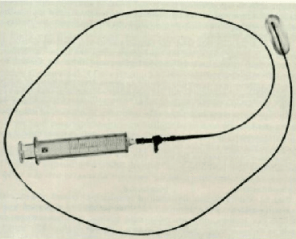
Resuscitative Endovascular Balloon Occlusion of the Aorta (REBOA) is an interventional technique, which may save lives in patients dying from catastrophic, non-compressible haemorrhage from severe pelvic trauma or junctional vascular injury. It involves placement of an endovascular balloon in the aorta to control haemorrhage and to augment afterload in traumatic arrest and haemorrhagic shock states

Screen Shot 2017-10-10 at 10.06.18 am

London’s Air Ambulance has used it in the pre-hospital setting since 2014 and within the Emergency Department at The Royal London Hospital. The numbers of cases so far are small.

Why

Experience from the Royal London Hospital and London’s Air Ambulance shows that non-compressible torso haemorrhage is the leading cause of preventable trauma deaths. Severe pelvic fractures and torso vascular injuries are two important sources of this bleeding and contribute up to one third of all trauma deaths seen by the service. Trauma systems have optimized access to definitive haemorrhage control but many patients die from blood loss before this can be achieved.

REBOA may save lives in this patient group by reducing blood loss in the prehospital and resuscitation room phase, which buys time to get the patient to either the operating room or interventional radiology suite. Experimental evidence, mainly from large animal models, suggests that REBOA may increase myocardial and cerebral perfusion in the shocked state, reduce distal blood loss and promote clot formation. REBOA is likely to cause less physiological stress as a means of haemorrhage control than thoracotomy and aortic cross clamping.

How

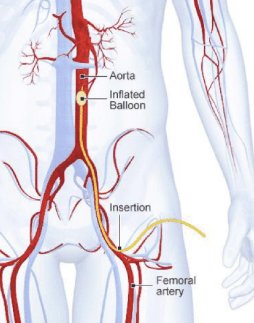
Via a simple Seldinger technique – that is; needle puncture, guide wire insertion, over-the-wire balloon catheter. It is inserted under ultrasound guidance via the common femoral artery.

Screen Shot 2017-10-10 at 10.49.53 am

The REBOA catheter is inserted into zone three (based on proven measurements in adults) of the aorta – a region between the most caudal renal artery and the aortic bifurcation.

Screen Shot 2017-10-10 at 10.07.06 am

When

In any adult patient believed to be bleeding to death from a severe pelvic injury or junctional injury, after/during a simultaneous treatment bundle to stabilize the patient and promote blood clot formation. This includes blood transfusion, pelvic splintage, tranexamic acid, intubation and IPPV and addressing of other concurrent life threatening injuries.

By definition, these patients are bleeding to death and the massive transfusion pathway is activated in the receiving trauma unit in a timely manner so that blood products are available as soon as the patient arrives in the hospital or on the helipad. In addition, a specific REBOA activation call is made. This brings the additional expertise of a specifically trained REBOA operator, interventional radiologist and orthopaedic surgeon (in the case of pelvic injury) to the usual trauma response for these patients.

The Future

The UK REBOA trial is a Bayesian group sequential Randomised Controlled Trial (RCT) which will evaluate the use of REBOA in addition to standard treatment alone across the UK. The primary outcome measure is 90-day mortality in each group.

The study will also look into Zone 1 REBOA (insertion of REBOA balloon into the region of the aorta from the left subclavian artery to the coeliac trunk) as a means of controlling more proximal blood loss from, for example, blunt liver and splenic injuries.

DDqB2iNXUAAc4Du


Posted in General PH&RM | Leave a comment

HEMS Education Day – Wednesday 18th October 2017

Slide1

Posted in General PH&RM | Leave a comment

Clinical Governance Day – Wednesday 4th October 2017

Slide1

Posted in General PH&RM | Leave a comment

Clinical Education Day – 20/9/17

The day was all about the management of bariatric patients which is becoming an increasing issue with the rise of obesity rates in Australia. We were appropriately supplemented with doughnuts at morning tea and hot dogs at the lunch time BBQ.

 Case Review – Dr Geoff Healey, Staff Specialist, Sydney HEMS

Geoff kicked off with an educational case highlighting some of the difficulties in bariatric transfers.

A patient weighing over 180 kg who was initially admitted to a regional centre with an MI. The patient underwent unsuccessful cardiac stenting, was intubated and started on inotropes. The patient was transferred to a tertiary centre for consideration of CABG but found not to be suitable. The mission the group was presented with for discussion was to transfer the patient back to the referring hospital as a non urgent transfer. At time of transfer the patient was ventilating easily and still requiring inotropes.

The patient suffered a VT arrest on being lifted out of the aircraft at the destination site requiring CPR. ROSC was achieved but a further cardiac arrest occurred in the ED and resuscitation was unsuccessful.

Discussion:

  • There was significant discussion around the risks of bariatric patient transfers.
  • Transfers from tertiary hospitals to peripheral hospitals represent a different risk benefit compared to transfers from peripheral hospitals to tertiary care for the purposes of facilitating a meaningful intervention.
  • Non acute bariatric transfers should occur in daylight and be well planned. They should be assigned to the most senior doctor available.

Learnings:

Identify the red flags present and have a predetermined “deal breaker” that would preclude transfer.

Be aware of the human factors issues that are invariably present with bariatric cases due to increased length and complexity.

Identify the risks and try to mitigate e.g. iv line failure, inadvertent extubation

Guest speaker – Dr David Barbic, University of British Columbia, Vancouver

David Barbic, a Sydney HEMS alum, was the guest speaker and presented an enlightening talk on the challenges of managing bariatric patients., via skype from Canada.

Classification and prevalence of Obesity

 Obese: BMI 30-39.9

Morbidly obese: >40

Super obese: >50

In Australia 28% of the population currently meet the criteria for obesity which represents 142,600 people in the greater Sydney area.

 Physiological challenges:

Respiratory

  • Reduced compliance
  • Reduced FRC
  • Increased airway resistance
  • Increased prevalence of OSA
  • Rapid desaturation after apnoea
  • Increased V:Q mismatch
  • Plateau pressures typically higher
  • Higher PEEP needed
  • Difficult BMV

Cardiovascular

  •  Increased myocardial oxygen demand
  • Obesity cardiomyopathy – both diastolic and systolic failure
  • Poor tolerance of fluid boluses
  • Increased risk of DVT

Gastrointestinal

  • Reduced lower oseophageal sphincter tone
  • Increased risk of aspiration

Other challenges:

Imaging

  • Bedside US challenging
  • CT machines weight limited
  • CXR often underexposed

Drugs

  •  Increased GFR leads to more rapid drug excretion
  • Volume of distribution altered for lipophilic drugs

Challenges with specific clinical scenarios

Trauma

  •  Less likely to be wearing a seatbelt
  • 37% increased mortality in trauma
  • Higher mortality from TBI
  • Higher rate of complications (e.g VAP)
  • Increased length of stay and increased rate of ICU admissions

Burns

  •  Higher rate of complications
  • Difficult fluid resus (fluid requirement often underestimated)
  • Rule of 9’s inaccurate (can use modified Lund-Bowder chart)

Recommendations

  • Anticipate and plan for difficult airway (often difficult BMV rather than difficult intubation)
  • Preoxygenate with CPAP/BIPAP
  • Place patient in reverse trendelenburg
  • Ramp the patient with 30 degrees head elevation
  • Apnoeic oxygenation essential
  • Roc provides a longer safe apnea time than sux due lower o2 consumption
  • Give small fluid boluses
  • Ventilate to ideal body weight

To hear more on this topic from David, have a listen to this excellent podcast:  https://emergencymedicinecases.com/obesity-emergency-management/

Installation and removal of the SPS (special purpose stretcher) – James Koens (Aircrewman)

James then talked us through how to install the SPS. While this is performed by the aircrewman, all staff should be familiar with the process.

Learnings:

There is a checklist available to assist with bariatric transfers -you can find it here AOC CLIN 10 – Bariatric Tfr – vrs 1-02

 Hover Mat demonstration – Stu Gourlay (Paramedic)

 Stu took us through how to transfer a patient on the hover mat.
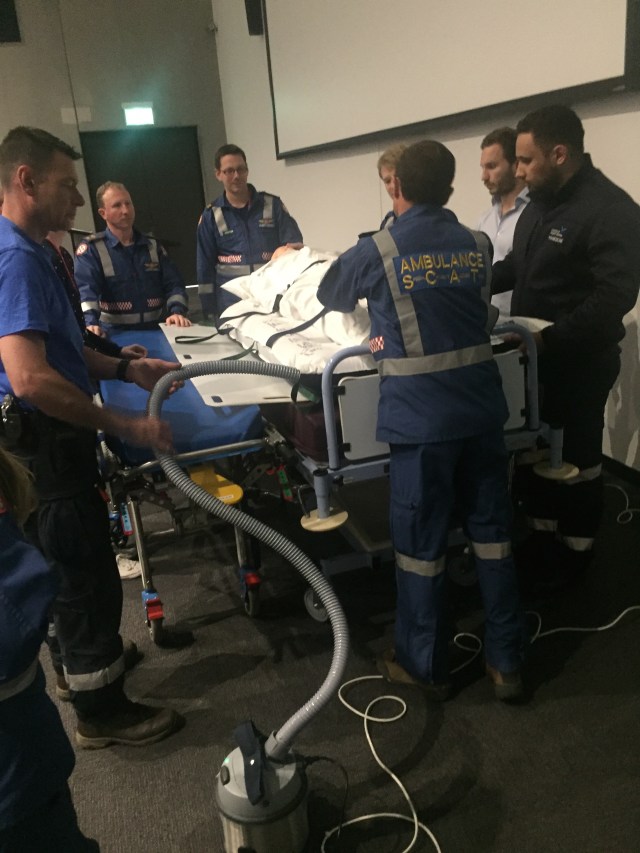
Hover mat 1

Learnings:

Doctor will take the airway/head and the paramedic will always “catch” the patient due to the risk of overshoot

Log roll the patient onto the hover mat and then inflate using the blowing device

Leave the patient harnesses as loose as possible during inflation so that they don’t constrict the patient once the mat is inflated.

Move feet over first and then push rather than pull the patient over onto the stretcher

Simulated exercise – Dr Chris Partyka (Staff specialist, Sydney HEMS)

Chris facilitated a sim involving a 140kg male who had come off his mountainbike sustaining a fractured femur and a mild head injury. The medical crew were winched in and then had to determine the most appropriate method of retrieving the patient.
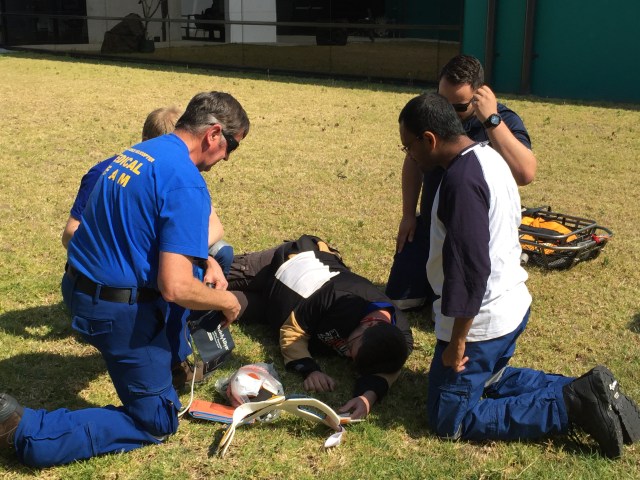
Sim

Learnings:

Weight limit for winch is 240kg. This includes the patient, the doctor, the stretcher (10kg) and any equipment.

Unaccompanied stretcher winches are not permitted

Medical team may need to wait for a road crew – be prepared for a prolonged stay on scene.

Journal Club – Dr James Moran (Retrieval Registrar, Sydney HEMS)

 Jamie presented this month journal club article which reviewed the challenges of managing a bariatric patient in ED. There is very little literature on the management of these patients in the prehospital environment and the ED experience probably provides the best surrogate. The full paper can be found here Journal Club 20:9:17.pdf
Posted in General PH&RM | Tagged , | Leave a comment

HEMS Education Day Wed 20th Sept 2017

Click here for journal article Sept_20

Posted in General PH&RM | Leave a comment

3 Minutes of Preoxygenation

This presentation by retrievalist/anaesthetist/intensivist Dr Clare Hayes-Bradley summarises recent Sydney HEMS research into optimal preoxygenation techniques prior to rapid sequence induction.


References:

1. Hayes-Bradley C, Lewis A, Burns B, Miller M. Efficacy of Nasal Cannula Oxygen as a Preoxygenation Adjunct in Emergency Airway Management. Ann Emerg Med. 2016 Aug;68(2):174–80.

2. Hayes-Bradley C, McQuade D, Miller M. Preoxygenation via a non-rebreather mask comparing a standard oxygen flowmeter rate of 15 Lpm to maximally open. Emerg Med Australas. 2017 Jun;29(3):372.

3. McQuade D, Miller MR, Hayes-Bradley C. Addition of Nasal Cannula Can Either Impair or Enhance Preoxygenation With a Bag Valve Mask: A Randomized Crossover Design Study Comparing Oxygen Flow Rates. Anesth Analg. 2017 Jul 26.


Posted in Airway, General PH&RM | Tagged , , | Leave a comment

Clinical Governance Day Wed 6th Sept 2017

CGD Sept 6th

Posted in General PH&RM | Leave a comment

HEMS Education Day Wed 26th July

1Education Day Flyer 26th July

Posted in General PH&RM | Leave a comment